


Carved Coat Peg Stand
These carved coat peg stand pieces organise an entranceway with traditional utility, offering sturdy hooks and rich timber character for daily use.
Carved Coat Peg Stand
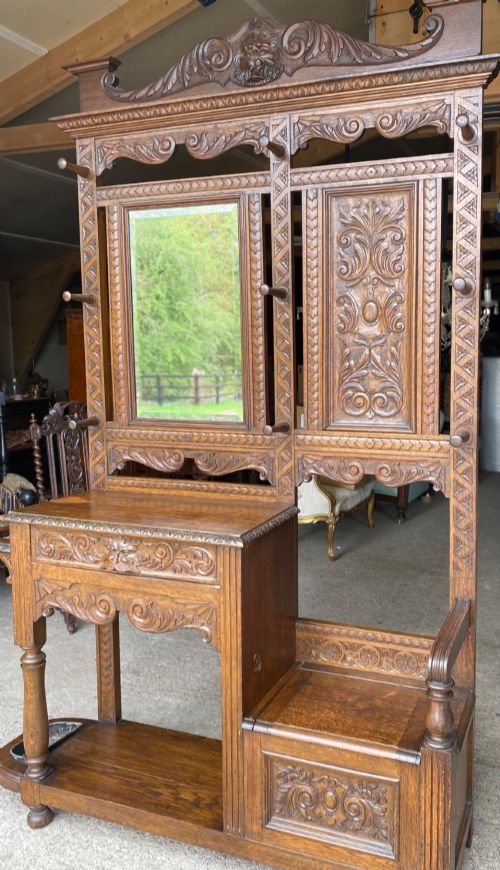
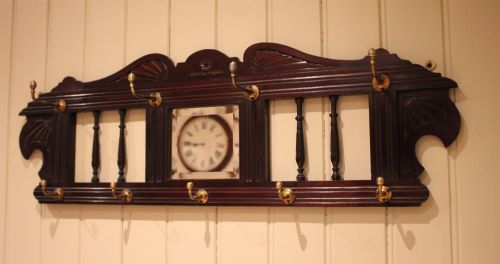
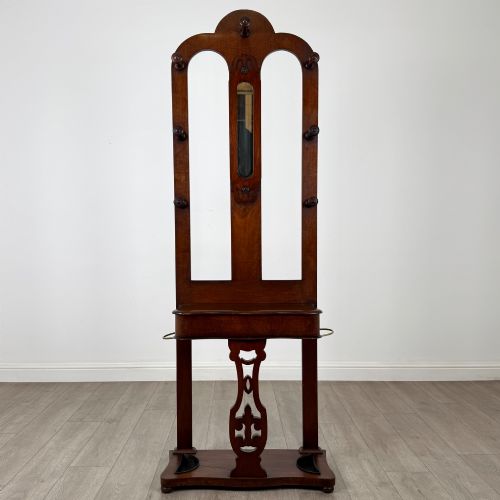
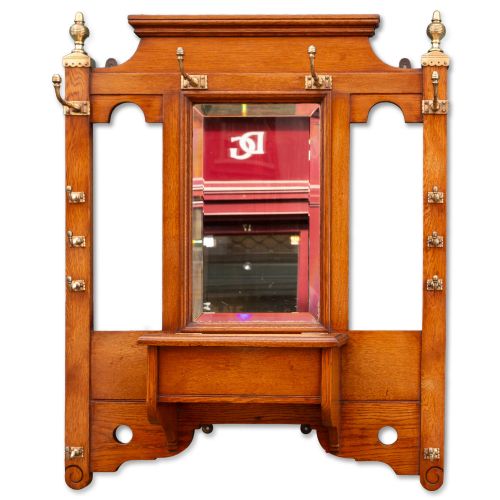
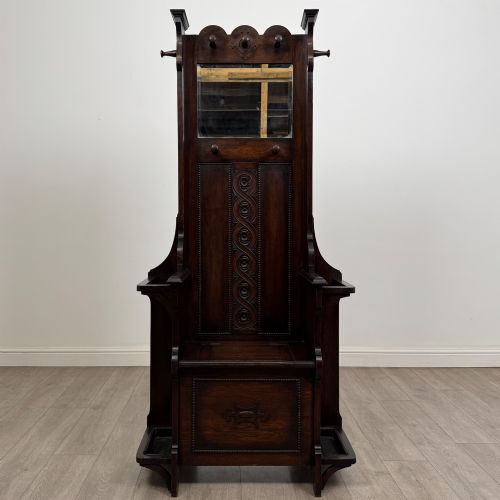
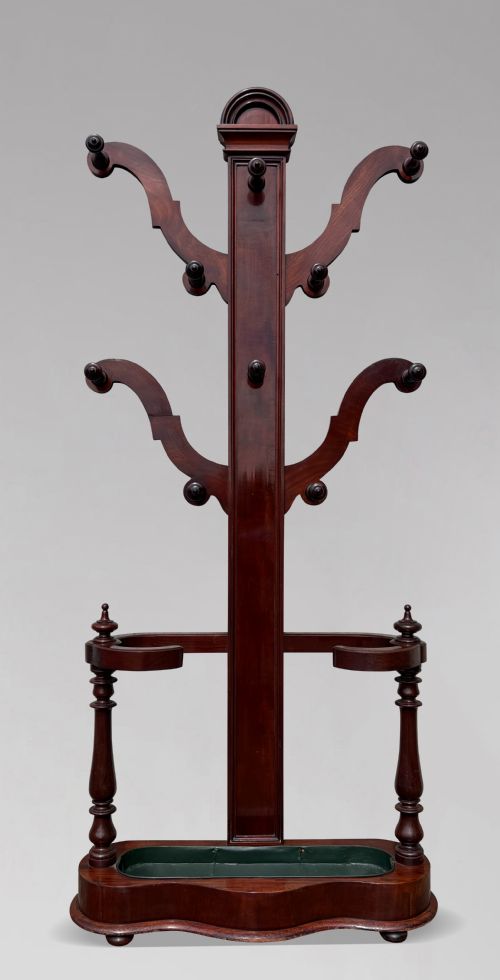
A carved coat peg stand provides an organised station for hanging garments and hats while anchoring an entranceway. These items range from wall mounted racks to substantial freestanding hall stands incorporating mirrors and storage.
Victorian and Edwardian examples dominate the selection, spanning periods from the late nineteenth century into the early twentieth century. These pieces reflect the functional demands of period hallways, utilising timber structures designed to handle heavy outerwear.
Materials and construction methods
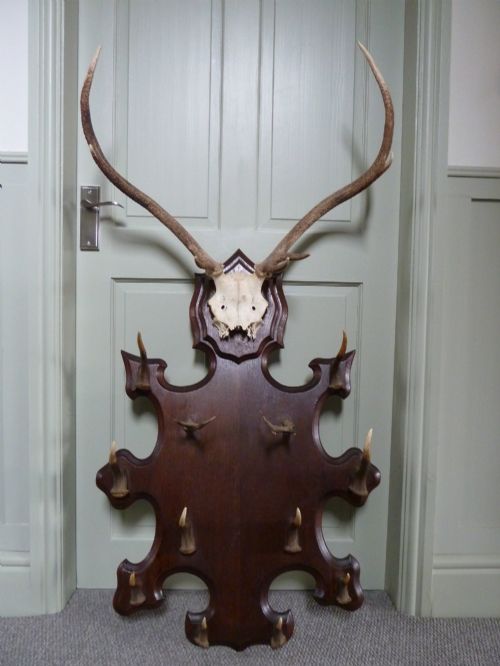
Makers relied primarily on timbers such as oak, mahogany, and walnut to build these pieces, often selecting quartersawn oak for its prominent medullary rays. Brass hardware and glass mirrors were frequently integrated into the designs, alongside unusual biological elements like stag horn and carved animal heads.
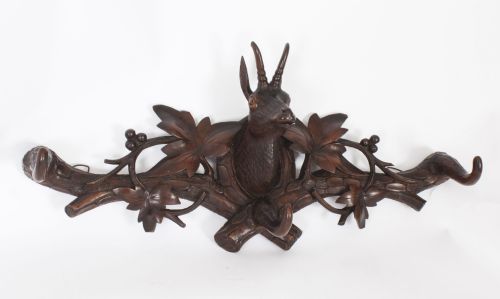
Hand carving defines the decorative surface work on these pieces, particularly within styles associated with Black Forest production or Victorian country house aesthetics. Joinery methods of the period ensure structural rigidity under the weight of garments.
Periods represented in the selection range from Victorian and Edwardian eras through to the nineteen-twenties.
Distinguishing quality across examples
The depth and execution of the hand carving separate standard production from superior examples, where intricate details such as chamois goat heads or foliate motifs display high artistic competence. The choice of timber also dictates quality, with golden oak and figured mahogany representing better material selection.
Integration of secondary functions, including fitted barometers, bevelled mirrors, and heavy brass hooks, elevates the utility and visual weight of a piece. The preservation of original surface finishes and structural integrity preserves the authenticity of each item.
The Carved Coat Peg Stand Glossary
- Hall Stand
- A freestanding entrance furniture piece combining coat hooks, a mirror, and umbrella storage. These items served as central organizational hubs in period hallways.
- Black Forest
- A nineteenth-century style of intricate wood carving originating from the German region, typically featuring naturalistic animal forms and foliage. Pieces in this style display deeply undercut relief work.
- Stag Horn
- Antler material utilised to form durable and decorative coat hooks on nineteenth-century hall stands. This organic medium provided natural strength and texture.
- Barometer
- A meteorological instrument occasionally integrated into the framework of larger hatstands. It allowed residents to check weather conditions before departing the house.
- Wall Mounted Coat Rack
- A horizontal timber board fitted with metal or horn pegs designed for direct attachment to a wall. This format suited narrower hallways lacking floor space for a freestanding stand.
Carved Coat Peg Stand: Frequently Asked Questions
What periods do these stands cover?
The pieces span from the late nineteenth century through the Edwardian era and into the early twentieth century. This encompasses Victorian production and styles influenced by country house aesthetics.
Manufacturing dates generally cluster around the eighteen-eighties to nineteen-twenties, reflecting the domestic habits of those periods.
How were hall stands used?
They functioned as the primary organizational unit in a home entranceway, where guests and residents hung hats, coats, and scarves. Integrated umbrella stands and mirrors added practical utility for outdoor preparation.
Some examples also incorporated small compartments for gloves, calling cards, or keys.
What materials are most common?
Solid hardwoods form the structural core of these pieces, with oak, mahogany, and walnut appearing frequently. Metal fittings, brass hooks, and glass mirror plates are standard auxiliary materials.
Unusual items may incorporate biological specimens such as stag horn or carved wooden animal heads.
How do I identify a Black Forest piece?
Black Forest pieces are characterised by elaborate, naturalistic hand carving depicting animals, foliage, or rustic scenes. The carved chamois goat head serves as a distinct example of this sculptural tradition.
These items often feature dark, waxed timber surfaces highlighting the detailed relief work.
Are these pieces suitable for modern hallways?
Their enduring utility makes them practical for contemporary entranceways requiring clothes storage. Wall mounted variants suit compact spaces, while freestanding hall stands provide a strong focal point in larger rooms.
Sturdy timber construction ensures they continue to support heavy coats and daily use.