






Engraved Sterling Vessel
An engraved sterling vessel brings centuries of silver-working into daily use, combining domestic service with intricate hand-cut decoration.
Engraved Sterling Vessel
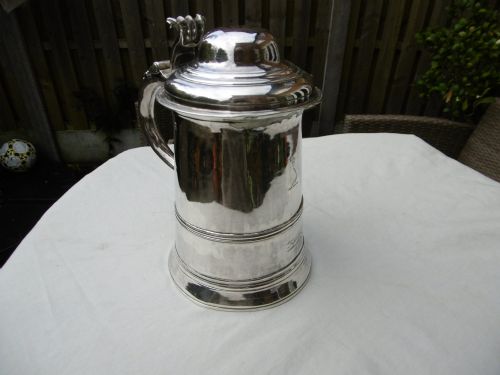
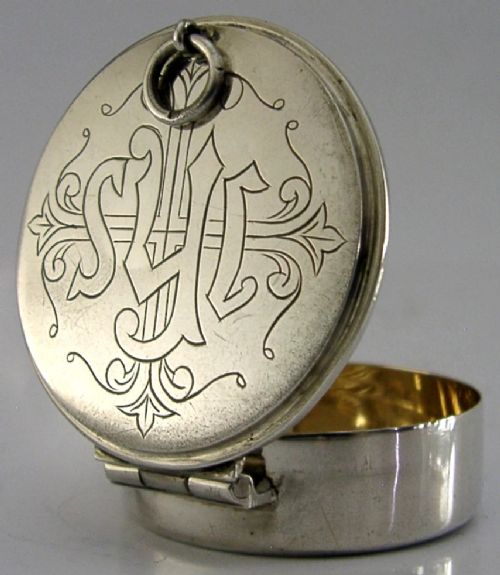
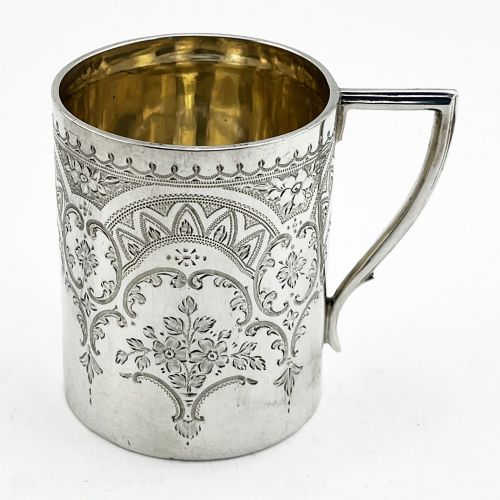
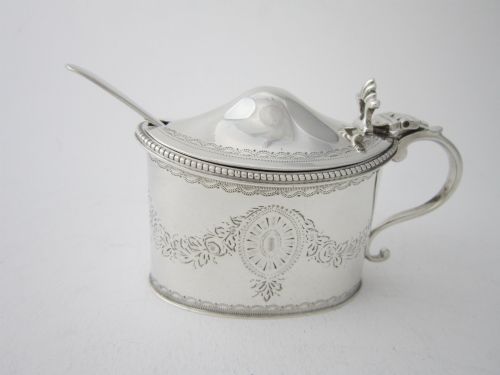
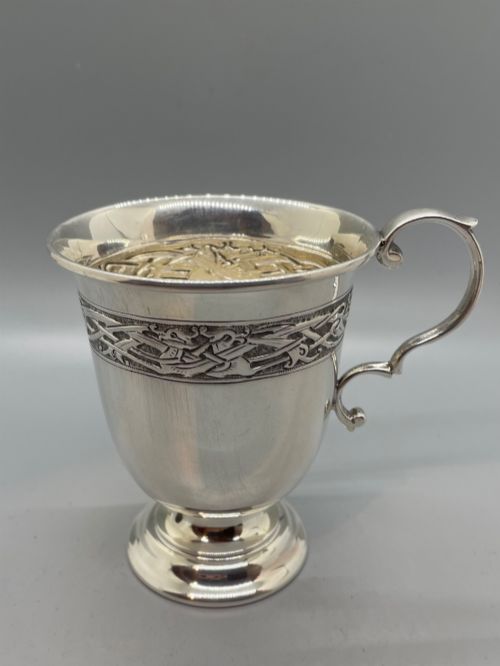
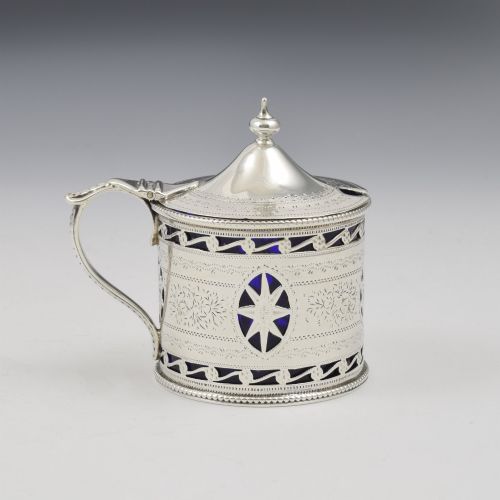
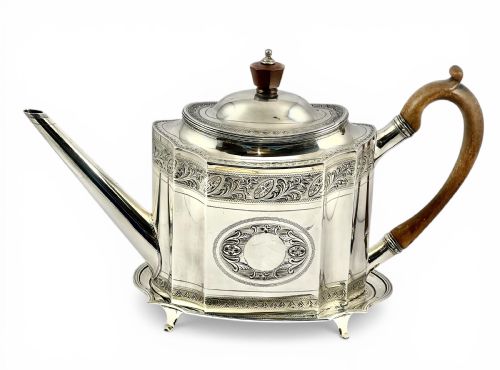
When you search for an engraved sterling vessel, you encounter domestic items spanning the Georgian, Victorian, and George V periods, with mustard pots and mugs appearing most frequently alongside teapots, goblets, and watering cans.
The assortment ranges from early provincial teapots to ornate Victorian presentation pieces and Arts and Crafts mugs. These pieces reflect shifting domestic habits, moving from formal tea service to tabletop condiment serving and personal presentation.
Victorian examples dominate the selection, often featuring pierced work, drum shapes, or elaborate claret jugs alongside standard mustard pots. Alongside these sit Georgian bullet teapots and later George V tankards.
Materials and construction methods
Silversmiths shaped these items primarily from sterling silver, occasionally incorporating glass liners such as cobalt glass into mustard pots or pairing silver with wood, cane, and gold plate or silver gilt finishes.
Makers employed techniques like hand piercing, casting, and manual engraving to decorate surfaces with neoclassical, aesthetic movement, or chinoiserie motifs. Structural elements like handles and rims were frequently soldered to raised or spun bodies.
Engraved Sterling Vessel Retail Price Guide 2026
Typical asking prices for engraved sterling vessel among the pieces listed under this phrase on Sellingantiques today, from the lower quarter to the upper quarter. They describe what is for sale here now, not the wider market.
Object forms range widely from miniature watering cans and christening mugs to heavy presentation claret jugs and provincial teapots.
Factors of craftsmanship and distinction
The crispness and depth of the hand engraving distinguish superior pieces from utilitarian production, separating sharp, deliberate toolwork from shallow or worn surface scratching. Well-defined chased details and clean piercing lines show superior hand-skill.
Substantial gauge metal provides structural integrity, ensuring that bodies resist denting and hinged lids align precisely without looseness. Maker marks and clear hallmarks add provenance and verify the purity of the metal.
Nathan and Hayes·Robert Hennell I·George Unite·Bernard Muller·Charles Stuart Harris
The Engraved Sterling Vessel Glossary
- Sterling silver
- An alloy containing 92.5 percent silver by mass, forming the primary metal standard for British and colonial plate. This composition balances durability with a bright metallic lustre suitable for domestic items.
- Pierced work
- A decorative technique involving the cutting or sawing of openings through the metal sheet to create geometric or floral patterns. It appears frequently on Victorian mustard pot bodies.
- Gilding
- The application of a thin layer of gold to the interior or exterior surface of a silver object, producing a warm finish known as silver gilt. This treatment prevented acidic contents from tarnishing the base metal.
- Hallmark
- An official stamp applied to precious metals indicating the standard of purity, the assay office, and the date letter. These marks allow collectors to trace the exact origin of a piece.
- Porringer
- A small, two-handled bowl used historically for porridge, broths, or soups. Early examples feature embossed decoration and sturdy cast handles.
Engraved Sterling Vessel: Frequently Asked Questions
What is an engraved sterling vessel?
An engraved sterling vessel refers to functional silver tableware and hollowware adorned with hand-cut patterns, ranging from small condiment pots to large presentation jugs.
These items were produced primarily across the eighteenth, nineteenth, and early twentieth centuries for domestic dining and social rituals.
How were mustard pots used?
Victorian and Georgian mustard pots held prepared mustard on the dining table, typically accompanied by a small spoon and a blue glass liner.
The piercing on the outer silver sleeve allowed the coloured glass insert to show through while keeping the condiment contained.
How do I clean antique silver?
Antique silver requires gentle washing with warm water and mild soap, followed by thorough drying with a soft cotton cloth.
Avoid abrasive dips or harsh commercial polishes that remove the fine layer of original patina accumulated over generations.
How do I identify the date?
Dating relies on reading the hallmarks stamped into the metal, which include a specific letter code corresponding to the assay year.
Style indicators, such as neoclassical urn shapes or aesthetic movement foliage, also provide a reliable guide to the period of manufacture.