


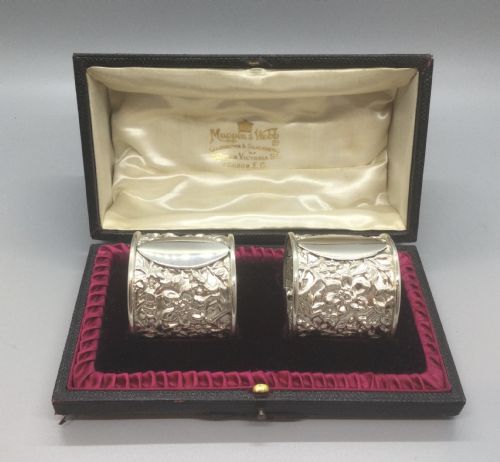


Engraved Sterling Serviette Rings
These engraved sterling serviette rings are classic silver tableware pieces designed to mark individual dining places with enduring personal style.
Engraved Sterling Serviette Rings
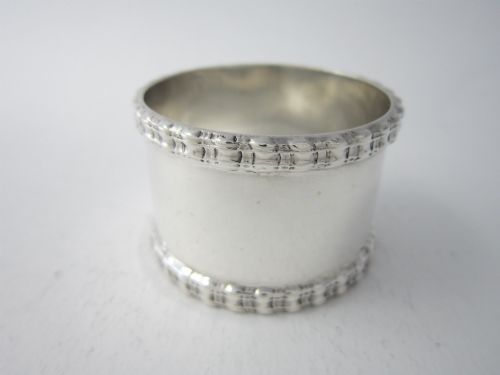
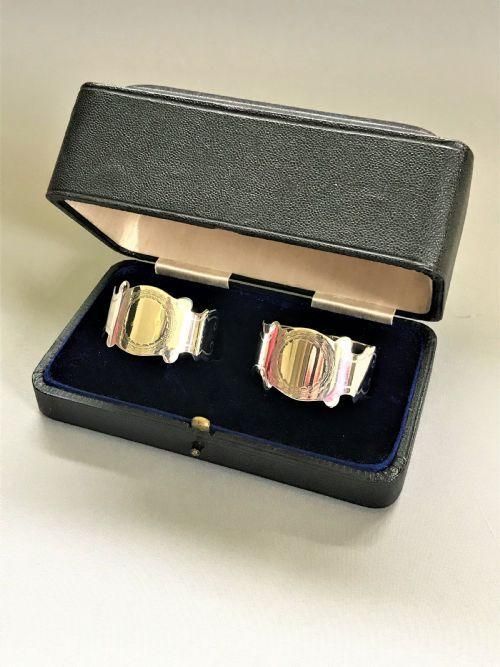
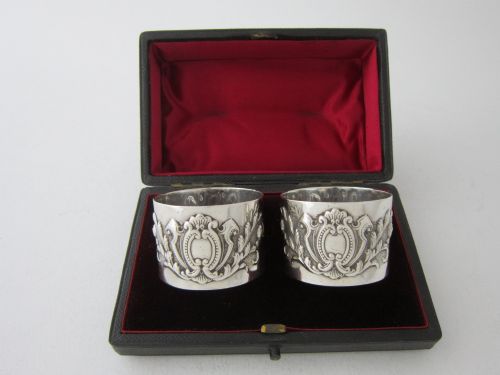
When you search for engraved sterling serviette rings, you are looking at functional table silver designed to hold individual dining napkins at formal or family meals. These pieces appear in forms ranging from plain polished bands to elaborate novelty shapes and structured pairs housed in fitted presentation cases.
The versions you are most likely to meet on this page hail from the Victorian, Edwardian, and George V periods, alongside later twentieth-century examples. Many examples feature detailed hand engraving, floral motifs, or geometric patterns that reflect the aesthetic tastes of their respective decades.
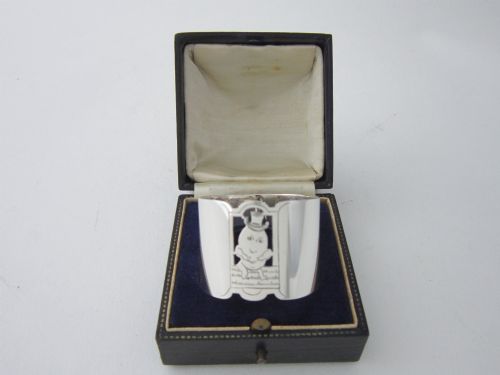
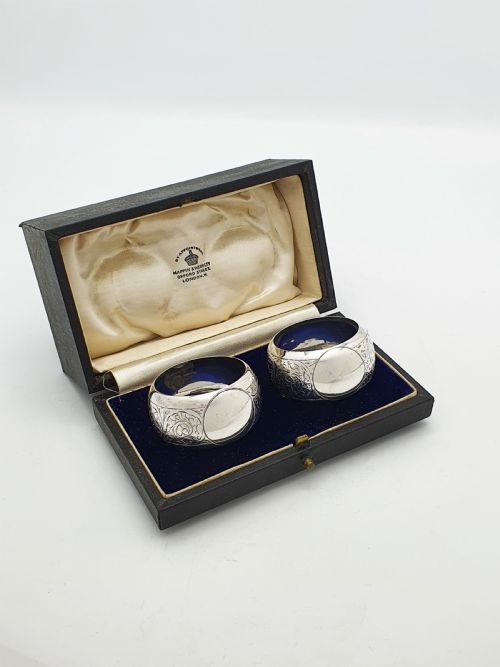
Most items on offer originate from British silversmiths and carry hallmarks indicating their assay office and exact year of manufacture. Collectors often encounter them individually or as matched pairs, sometimes accompanied by original velvet or silk-lined presentation boxes.
Materials and methods
The primary material underpinning these items is solid sterling silver, worked into rigid cylindrical or slightly curved bands. Silversmiths utilised traditional techniques such as hand-raising, stamping, and rolling to shape the metal before applying decorative surface treatments.
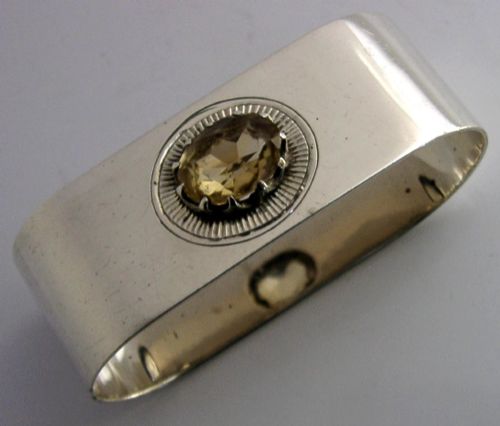
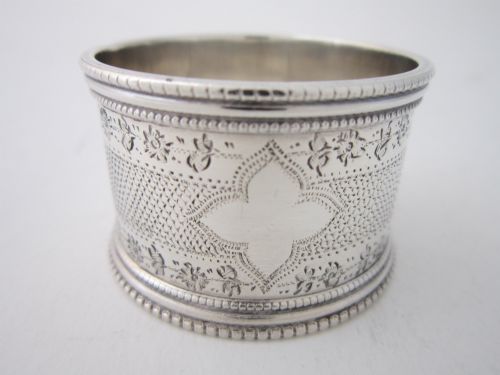
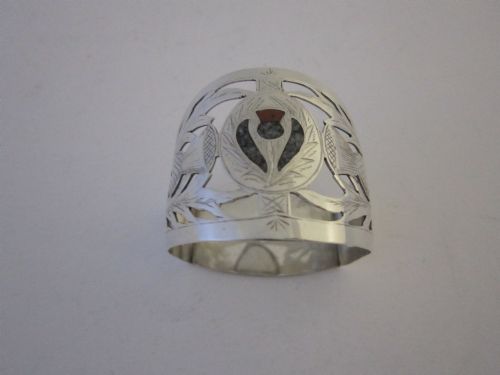
Engraving was executed by hand using sharp gravers to cut decorative scrolls, initials, or floral patterns directly into the silver surface. Certain pieces incorporate applied edgings, raised borders, or even inset semi-precious stones like citrine and agate for added visual texture.
Some Victorian examples are shaped specifically like tiny belts with buckles, reminding diners to keep their table manners firmly fastened.
Assessing quality and craftsmanship
Quality in these silver pieces rests on the crispness and depth of the hand engraving rather than mere surface shine. Sharply defined cuts that retain their geometric precision or floral detail without blurring indicate superior artisan skill during production.
Substantial metal gauge and structural weight distinguish finer examples from lighter, more utilitarian productions that bend easily under pressure. Furthermore, the presence of crisp, legible hallmarks and original fitted cases elevates the desirability and integrity of a piece.
Mappin and Webb·Henry Wilkinson
The Engraved Sterling Serviette Rings Glossary
- Hallmark
- Official stamps struck into precious metals to guarantee their standard of purity, originating from authorized assay offices. These marks typically include a maker's mark, standard mark, and date letter.
- Sterling silver
- An alloy of silver containing ninety-two point five percent silver by mass and seven point five percent other metals, usually copper. This standard ensures the necessary durability for functional tableware.
- Serviette ring
- A small ring used to contain a table napkin or serviette, usually assigned to a specific diner through engraving or numbering. They became staple dining accessories during the Victorian period.
- Assay office
- A body charged with testing the purity of precious metal items and stamping them with official hallmarks. Prominent British offices include London, Birmingham, and Sheffield.
- George V
- The period of British history spanning the reign of King George the Fifth from nineteen-ten to nineteen-thirty-six. Silverware from this era often blends traditional craftsmanship with emerging modernist styles.
Engraved Sterling Serviette Rings: Frequently Asked Questions
How do I clean antique silver rings?
Clean silver items gently using a soft microfibre cloth and a dedicated silver polish formulated to remove tarnish without stripping surface detail. Avoid harsh abrasive cleaners that can wear down hand-engraved lines over time.
Store your pieces in a dry environment, preferably wrapped in anti-tarnish tissue or within their original lined cases, to minimise exposure to atmospheric sulfur that causes discoloration.
Were these always sold in pairs?
These table accessories were produced both as individual pieces for solo diners and as matched pairs or larger sets intended for household dining. Cased sets were particularly popular as wedding gifts or presentation items during the Victorian and Edwardian eras.
Individual rings often turned up singly due to family dispersion over generations, while boxed pairs managed to survive intact because their protective cases kept them together.
How do I date a silver ring?
Dating relies primarily on the assay office hallmarks stamped into the metal, which include a specific letter code corresponding to the year of manufacture. Comparing the maker's mark and style of engraving against known historical periods also helps narrow down the production era.
Victorian and Edwardian pieces often display floral scrollwork, whereas nineteen-twenties and thirties examples frequently lean towards geometric or aesthetic movement designs.
Can I use them for daily dining?
Solid silver is durable enough for regular daily use, provided you handle the pieces with reasonable care during meals and cleaning. The metal develops a gentle patina from handling over time, which many collectors consider part of its charm.
If your pieces feature delicate openwork, inset stones like citrine or agate, or antique gilding, you might prefer to reserve them for special occasions to protect their fragile decorative elements.