






Engraved Steel Firearm
An engraved steel firearm carries the weight of centuries in its metalwork, combining functional defence with intricate artistic design.
Engraved Steel Firearm
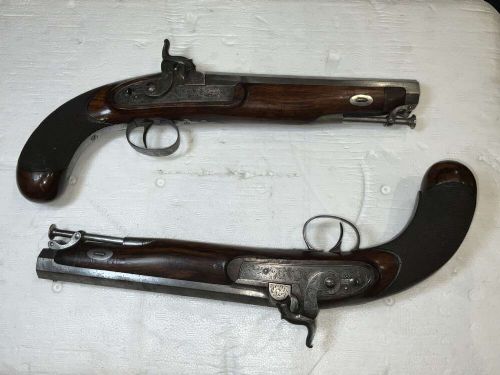
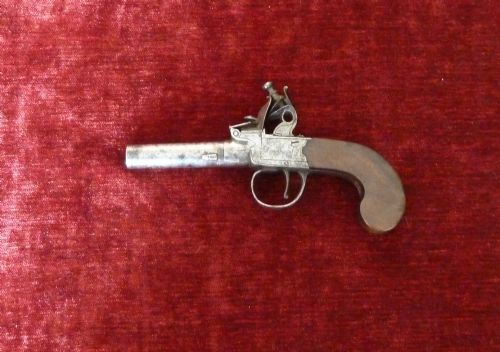
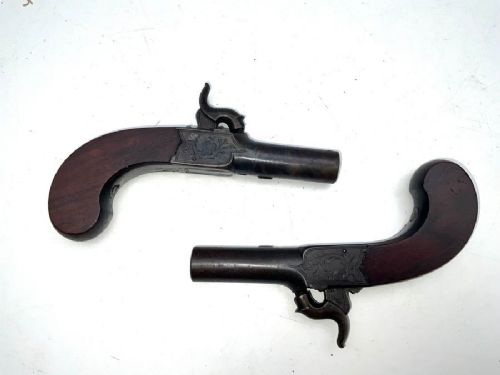
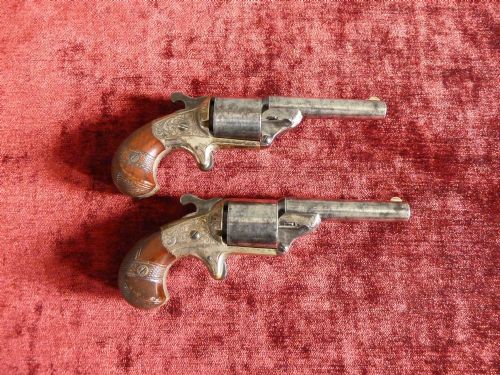
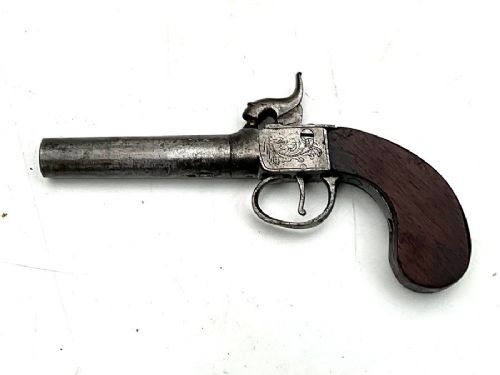
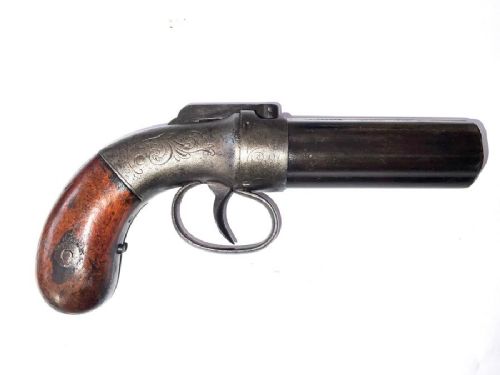
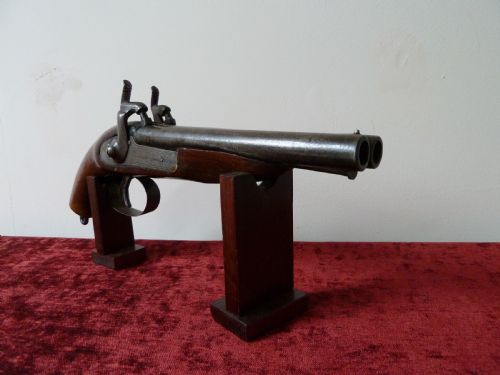
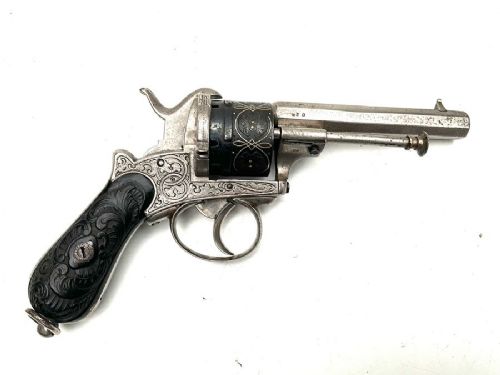
When searching for an engraved steel firearm, buyers encounter a range of antique weaponry spanning from the seventeenth century through the nineteenth century. These artefacts encompass flintlock pistols, percussion pocket pistols, and early revolvers originating from British, European, and American makers.
The selection on this page focuses heavily on personal defence arms such as travelling pistols, muff pistols, and boxlock pocket pistols. Examples from the Georgian, Regency, and Victorian periods demonstrate how utilitarian military and civilian pieces received decorative treatment.
Originating from workshops across London, Birmingham, Scotland, and continental centres, these items reflect regional mechanical developments alongside local aesthetic preferences. Buyers find both matching pairs and individual pieces showing diverse mechanical systems from snaphaunce to percussion ignition.
Materials and Construction
Makers built these firearms using forged steel and iron for barrels and lock mechanisms, pairing them with stocks carved from dense hardwoods like walnut and ebony. Structural integrity required durable metals capable of withstanding explosive force, while the mounts frequently incorporated brass or silver elements.
Craftsmen applied surface decoration through hand-engraving directly onto the steel plates, sometimes accentuating the grips with silver wire inlay. Locksmiths and gunsmiths shaped each component individually, integrating mechanical triggers, cocks, and rotating barrels into cohesive functional units.
Engraved Steel Firearm Retail Price Guide 2026
Typical asking prices for engraved steel firearm among the pieces listed under this phrase on Sellingantiques today, from the lower quarter to the upper quarter. They describe what is for sale here now, not the wider market.
Some pocket pistols included folding bayonets, ensuring an argument could be settled even after the gunpowder ran out.
Markers of Quality
The distinction between standard production arms and superior work lies in the depth and precision of the steel engraving. Master gunsmiths executed complex scrollwork and borders that harmonised with the overall geometry of the piece rather than appearing as an afterthought.
Superior examples display balanced proportions between the metal barrel and the wooden stock, often featuring signed locks from known makers. The crispness of the checkering on the grips and the smooth integration of precious metal inlays separate workshop pieces from mass production.
John Campbell of Doune·Auguste Francotte·Thomas Henshaw·Meyer and Mortimer·George Sherwood·Allen and Thurber
The Engraved Steel Firearm Glossary
- Flintlock
- An ignition mechanism utilising a piece of flint struck against a steel frizzen to create sparks that ignite the gunpowder charge. This system dominated firearm design for nearly two centuries.
- Percussion
- A later ignition system relying on a percussion cap struck by the hammer to detonate the powder charge. It replaced the flintlock during the nineteenth century.
- Boxlock
- A firearm design where the lock mechanism is integrated directly into the breech frame rather than being mounted on a separate sideplate. This layout improved mechanical reliability in pocket pistols.
- Turn-off
- A barrel design that unscrews from the breech to allow loading from the front of the cylinder. It eliminated the need for a separate ramrod in small pocket arms.
- Snaphaunce
- An early type of flintlock ignition using a manually operated steel cover over the pan. It represents an intermediate technological step in the evolution of firearms.
Engraved Steel Firearm: Frequently Asked Questions
How do I date an engraved steel firearm?
Dating relies upon identifying the ignition mechanism, proof marks, and stylistic indicators associated with periods like the Georgian or Victorian eras. Makers' names and city hallmarks engraved on the lockplate provide a reliable temporal anchor.
Changes from flintlock to percussion systems mark distinct technological shifts through the seventeenth, eighteenth, and nineteenth centuries. Comparing barrel construction and mounting styles against documented workshop periods narrows down the decade of production.
Were these pistols used in military service?
Many surviving examples served military officers, naval personnel, and militia members who purchased their own sidearms. Sea service pistols and officers' flintlocks were built for active duty rather than mere display.
Other pieces served civilian roles for personal protection during travel. Pocket pistols, muff pistols, and boxlock designs suited merchants and gentlemen navigating high-risk routes.
What is the difference between flintlock and percussion?
Flintlock firearms rely on a flint striking a steel frizzen to produce sparks that ignite the priming powder. This mechanical setup requires exposed priming pans and frequent flint adjustments.
Percussion firearms use an enclosed hammer striking a small metal cap containing an explosive compound. This innovation improved reliability in wet weather and simplified the loading process.
How should I display an antique firearm?
Displaying antique weaponry requires a stable environment away from high humidity and direct sunlight to protect the wooden stocks and steel surfaces. Wall mounts or enclosed cabinets must support the weight securely.
Maintaining a consistent indoor temperature prevents the walnut or ebony wood from warping and protects the engraved steel from surface oxidation. Periodic light maintenance preserves the metal finish.