



Engraved Silver Visiting Case
An engraved silver visiting case is a pocket-sized repository for calling cards, combining intricate metalwork with Victorian and Edwardian social etiquette.
Engraved Silver Visiting Case
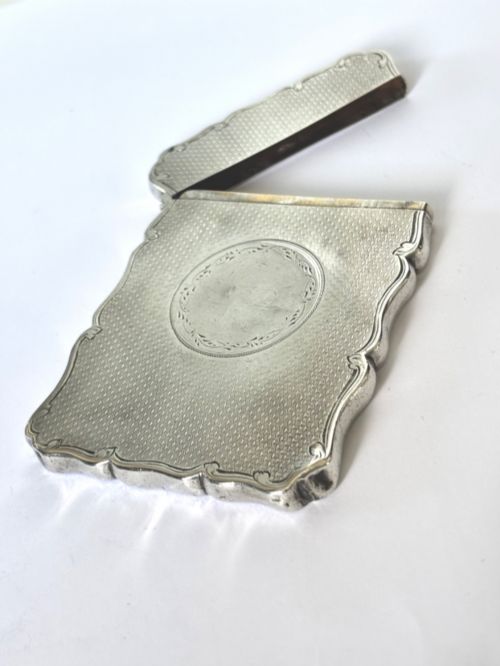
An engraved silver visiting case is a portable holder designed to carry calling cards during social calls, taking the form of card cases, card boxes, and aide-mémoire pieces. These items emerge chiefly from the Victorian and Edwardian eras, spanning from the mid nineteenth century into the early twentieth century.
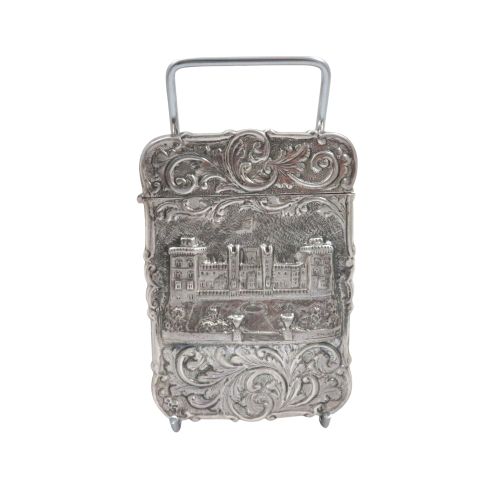
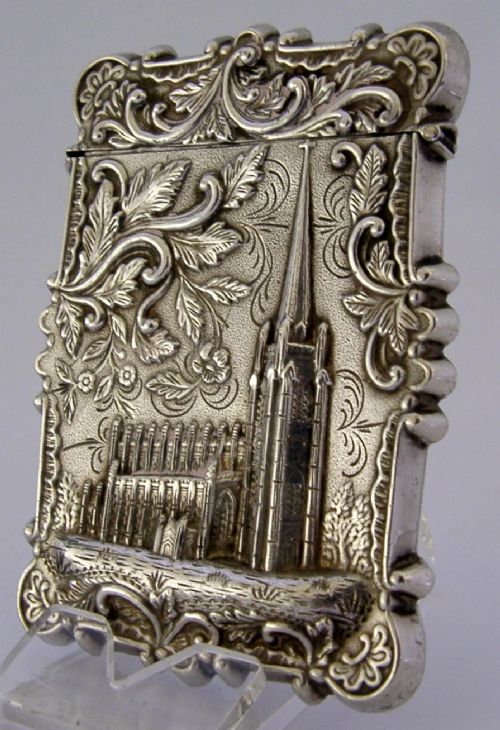
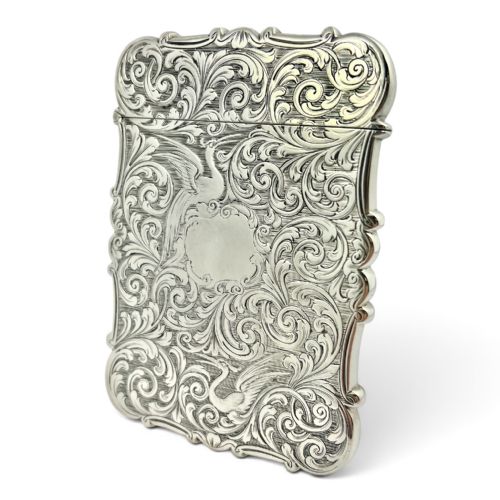
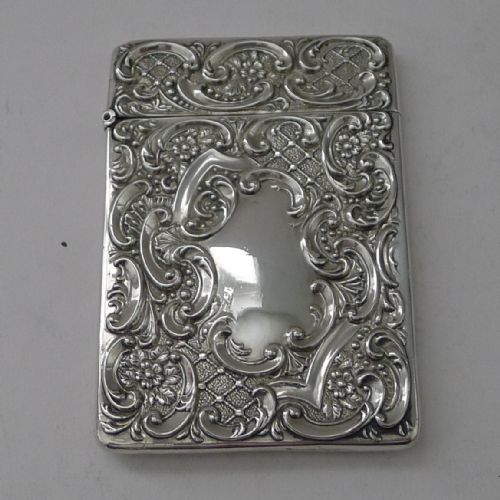
The objects appear in various configurations including solid silver, sterling silver, silver gilt, and examples incorporating Connemara marble. Many specimens feature floral, scroll, or architectural motifs, while specific notable pieces display castle top depictions of landmarks such as Windsor Castle, Trinity Church, and St Paul's Cathedral.
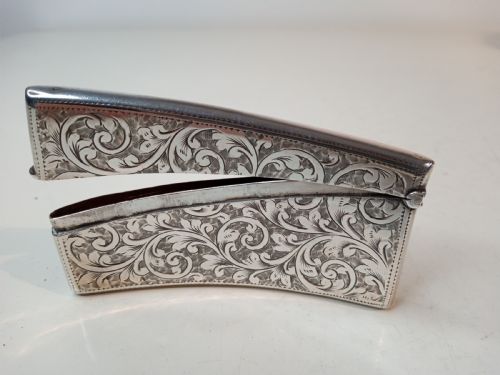
Makers and silversmiths such as Nathaniel Mills and George Unite produced significant examples bearing Birmingham hallmarks. Buyers meet both slim slip-in cases and hinged spring clip novelty folding boxes designed to fit neatly into a pocket or attach to a chatelaine.
How they were made
Silversmiths utilised sterling silver and solid silver sheets, shaping them through pressing, casting, and folding techniques to form the rigid body of each visiting case. Silver gilt interiors appear in select boxes, providing a contrasting golden finish inside the container.
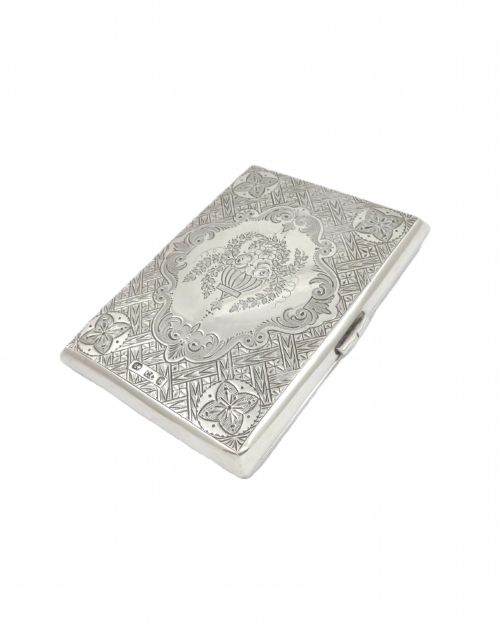
Surface decoration relies heavily on hand engraving, chasing, and repoussé work to map out dense foliate scrolls, geometric patterns, or detailed architectural vistas. Relief scenes of buildings require specialised die-sinking or meticulous chasing to achieve the dimensional depth seen on castle top pieces.
Hinges, spring clips, and catches are integrated into the metal framework to ensure the lid secures tightly over the cards. Specialised variants incorporate stone inserts such as Connemara marble, fitted precisely into the silver chassis.
Listings feature sterling silver and solid silver forms spanning the Victorian, Edwardian, and Art Deco periods, alongside novelty folding designs.
What varies in quality
The crispness of the hand engraving dictates much of the visual merit, where sharp, deep incisions retain their clarity and definition across the silver surface. Shallow or worn engraving softens the architectural details and floral patterns, diminishing the impact of the design.
The complexity of the form sets standard pieces apart from exceptional ones, particularly when architectural scenes or novelty folding mechanisms are involved. High-tier items feature distinct, recognizable buildings executed in high relief rather than generic foliate decoration.
The integrity of the structural elements, including the spring action of the lid and the snugness of the internal hinge, influences the daily utility of the piece. Well-preserved hallmarks and intact silver gilt linings further distinguish superior specimens.
Nathaniel Mills·George Unite·Foxall and Co
The Engraved Silver Visiting Case Glossary
- Castle top
- A descriptive term for a silver card case featuring a high-relief engraving or cast depiction of a specific famous building or landmark on the cover. These pieces are particularly sought after by collectors of mid nineteenth-century silver.
- Aide-mémoire
- A small notebook or card case combined with a writing tablet and pencil, used for keeping notes alongside calling cards. This variant often incorporates an internal leaf or card arrangement.
- Chatelaine
- A decorative belt hook or clasp worn from the waist with suspended chains to carry utilitarian items such as visiting cases, dance cards, and keys. It was a staple accessory of nineteenth-century costume.
- Silver gilt
- Silver that has been coated with a thin layer of gold on its surface, usually applied to the interior of a card box for decorative contrast. This technique protects the inner metal from tarnishing.
- Hallmark
- An official stamp applied by an assay office to indicate the purity of the metal, the place of origin, and the year of manufacture. British pieces typically show standard marks for sterling silver alongside city and date letters.
Engraved Silver Visiting Case: Frequently Asked Questions
What is a castle top card case?
A castle top card case is a specialised silver holder featuring a detailed three-dimensional or high-relief engraving of a recognised building on the exterior. These architectural subjects include landmarks such as Windsor Castle and St Paul's Cathedral.
Such pieces represent a pinnacle of mid nineteenth-century silversmithing. Collectors prize them for the precision required to render complex masonry in miniature silver relief.
How were visiting cases used?
These cases held engraved paper calling cards that individuals left at the homes of acquaintances as part of formal nineteenth-century social etiquette. Leaving a card signified a visit had been paid even if the host was not home.
The slim profile of the silver case protected the paper cards from bending or moisture while carried in a pocket or suspended from a chatelaine. The spring-loaded or hinged lid allowed for quick access when arriving at a residence.
How do I date a silver card case?
Dating relies primarily on the stamped hallmarks found on the rim or interior lip of the silver case. These assay marks indicate the specific year letter, city of testing, and standard of silver.
Stylistic cues also help narrow down the period, as Victorian examples frequently display dense floral scrolls and architectural reliefs, whereas Edwardian pieces often lean toward cleaner lines or lighter Art Deco influences.
Can modern business cards fit inside?
Most antique visiting cases were made to accommodate nineteenth-century calling card dimensions, which are typically smaller and narrower than modern business cards. Standard modern cards will usually not slide into the older compartments.
Buyers intending to use the case practically should check the interior measurements against current card sizes. Many owners prefer to display them as decorative objects rather than carrying them daily.
What is Connemara marble?
Connemara marble is a distinctive Irish stone characterised by various shades of green, ranging from pale olive to deep forest tones. It appears inlaid within the silver framework of select Edwardian card cases.
This natural material provides a smooth, polished contrast to the engraved sterling silver surroundings. Pieces featuring this stone combine local mineral craft with traditional silversmithing.