




Engraved Silver Snuff Container
An engraved silver snuff container is a pocket-sized vessel designed for tobacco, forged in the Georgian, Regency, and Victorian eras.
Engraved Silver Snuff Container
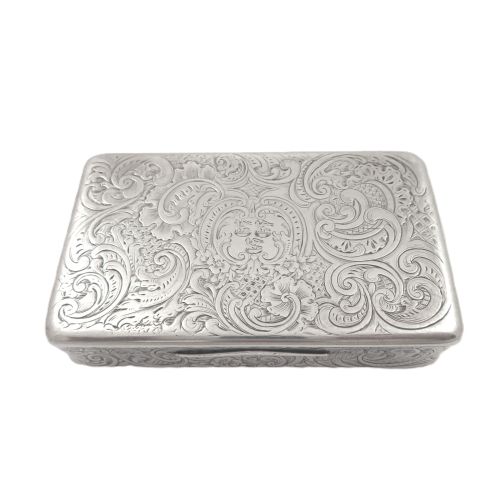
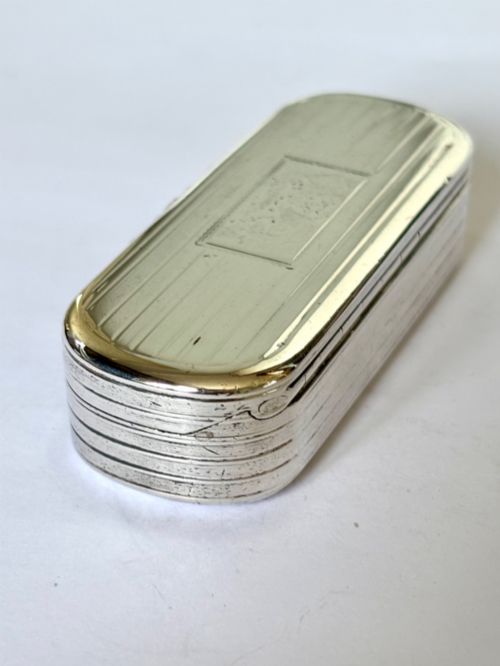
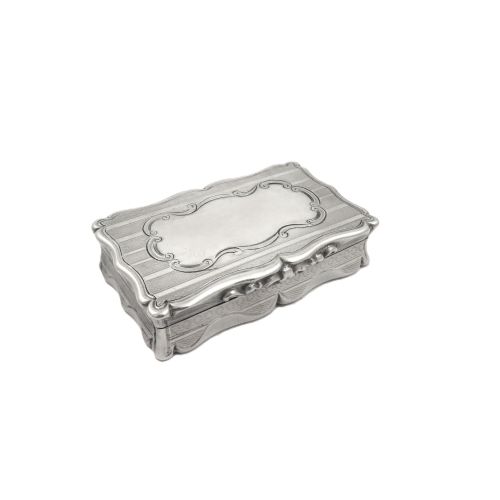
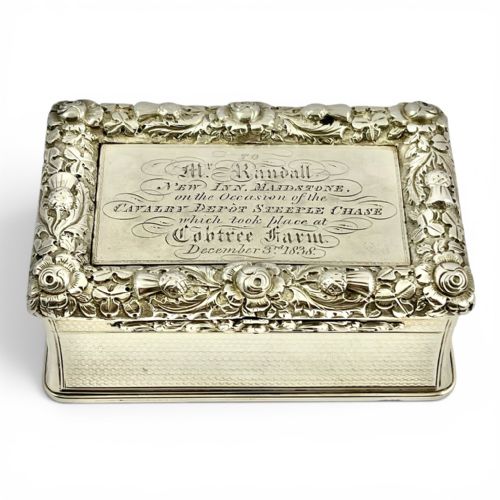
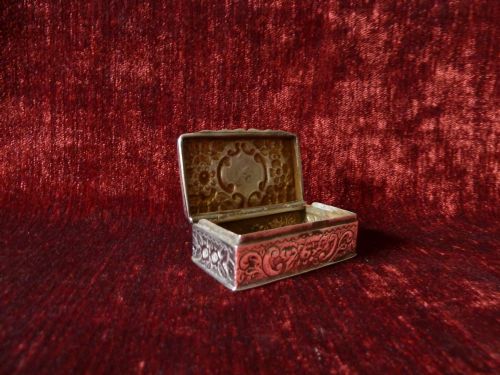
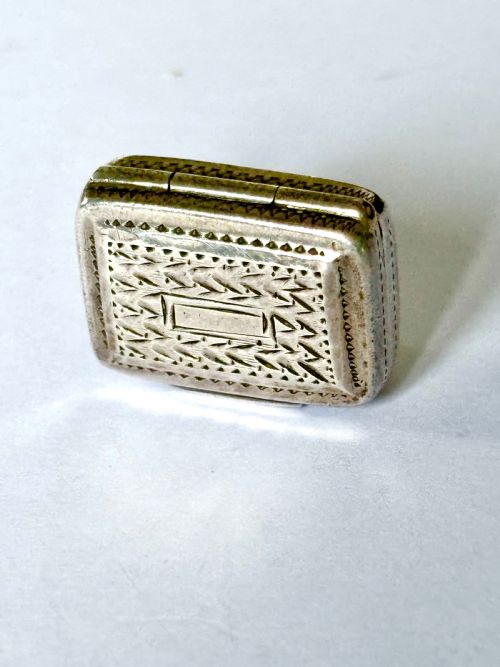
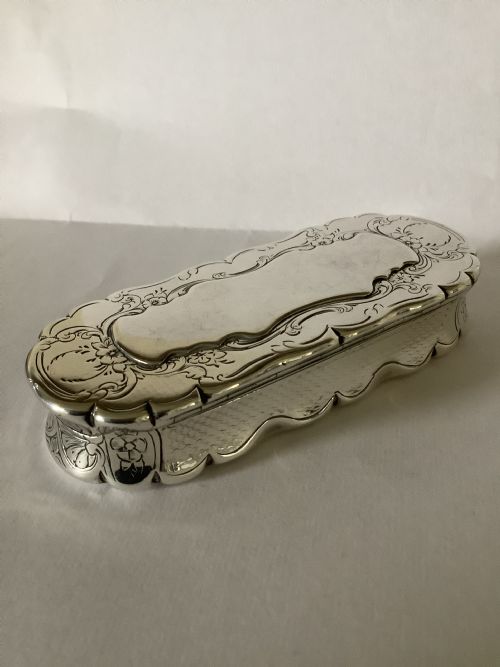
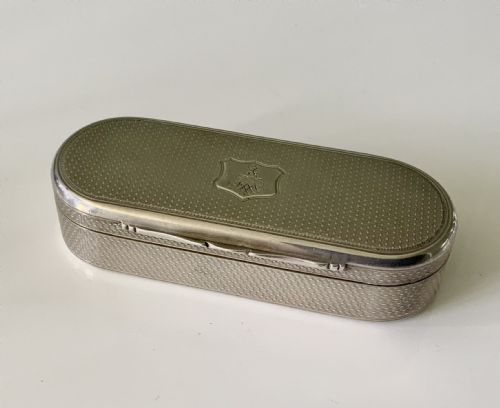
An engraved silver snuff container represents a personal pocket case used for holding powdered tobacco during the eighteenth and nineteenth centuries. The examples met on this page span the Georgian, Regency, and Victorian periods, taking forms such as snuff boxes, vinaigrettes, and tobacco boxes.
Makers fashioned these pieces in sterling silver, silver gilt, and occasionally combined them with leather or yellow gold. Many items display detailed hand engraving, coin embellishments, or engraved crests upon their surfaces.
How they were made
Silversmiths utilised sterling silver and silver gilt to construct the structural bodies of these containers, often applying fire gilt interiors to protect the metal from tobacco corrosion. Workers shaped the metal through forming and casting techniques before adding surface decoration.
Engravers carved detailed patterns, armorial crests, and coin embellishments directly into the exterior silver plates using hand tools. Workshops in centres such as Birmingham and London marked their output with assay office stamps.
Makers recorded in the evidence operated workshops in Birmingham and London during the eighteenth and nineteenth centuries.
What varies in quality
Quality rests upon the crispness of the hand engraving and the structural integrity of the box hinges and closures. Pieces by known makers or those incorporating silver gilt and gold elements display greater refinement in execution.
Larger table snuff boxes and military commissions demonstrate heavier gauge silver and more ambitious decorative programmes than standard pocket versions.
Robert Thornton·John Bettridge·Frederick Mason·James Phipps I·Nathaniel Mills
The Engraved Silver Snuff Container Glossary
- Snuff box
- A small pocket container with a tight-fitting lid designed to hold ground tobacco. These pieces were carried by gentlemen and ladies in the Georgian and Victorian periods.
- Vinaigrette
- A small ornamental box featuring an internal pierced grille that held a sponge soaked in aromatic vinegar. They share similar construction methods with snuff containers.
- Silver-gilt
- Silver that has been coated with a thin layer of gold through a process called fire gilding. This technique prevented the acidic tobacco from tarnishing the interior metal.
- Assay mark
- A stamped symbol indicating the purity of the metal and the city where it was tested. British pieces commonly show town marks for Birmingham or London alongside date letters.
Engraved Silver Snuff Container: Frequently Asked Questions
What is an engraved silver snuff container?
An engraved silver snuff container is a small historical box used for carrying powdered tobacco in the pocket or on a table. Silversmiths decorated the exteriors of these vessels with intricate hand-carved patterns, crests, and coin motifs.
Most examples date from the Georgian, Regency, and Victorian eras, reflecting the high standards of British silversmithing in cities like Birmingham and London.
How were these boxes used?
Owners carried these containers in pockets or waistcoats to social gatherings where taking snuff was a common custom. The tightly fitted lids kept the dry tobacco fresh and prevented powder from spilling.
Some variants, such as vinaigrettes, held aromatic vinegars behind pierced internal grilles to refresh the senses in crowded rooms.
How do I date a silver snuff box?
Dating relies heavily upon the hallmarked stamps punched into the metal by official assay offices. These marks reveal the specific year of production, the town of origin, and the maker's initials.
Stylistic shifts also help determine age, moving from plain Georgian surfaces to heavily chased Victorian designs and coin embellishments.
How do I care for antique silver?
Antique silver requires gentle handling and minimal cleaning to preserve the original surface and historical patina. Avoid harsh chemical dips that strip away the subtle details of the hand engraving.
Store the containers in dry environments away from direct sunlight and excessive humidity to protect any internal gilding or paired materials like leather.