


Engraved Silver Smoking Case
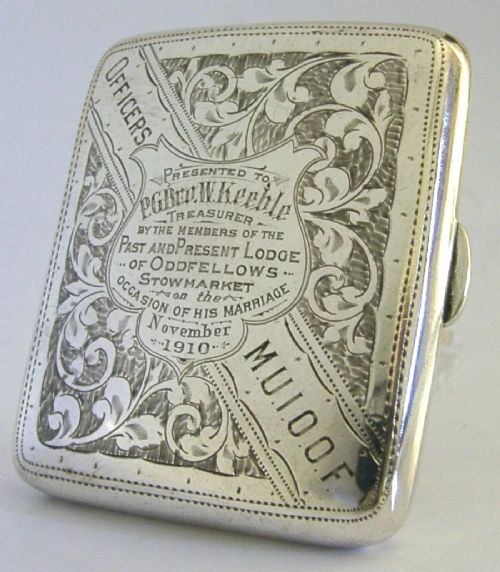
These engraved silver smoking case pieces are pocket-sized vessels of sterling silver and silver gilt made to hold cigarettes, cigars, or vestas with distinct period ornamentation.
Engraved Silver Smoking Case
An engraved silver smoking case is a pocket accessory designed to protect and transport cigarettes, cigars, cheroot holders, or matches. The examples available span from the Georgian era through the Victorian period into the Art Deco style of the 1930s.
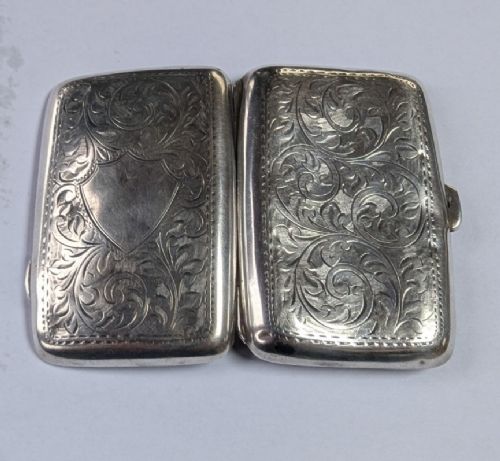
You will most frequently encounter sterling silver cigarette cases and vesta cases bearing period hallmarks from Birmingham and London. These range from plain curved forms to heavily decorated pieces featuring intricate scrollwork and crests.
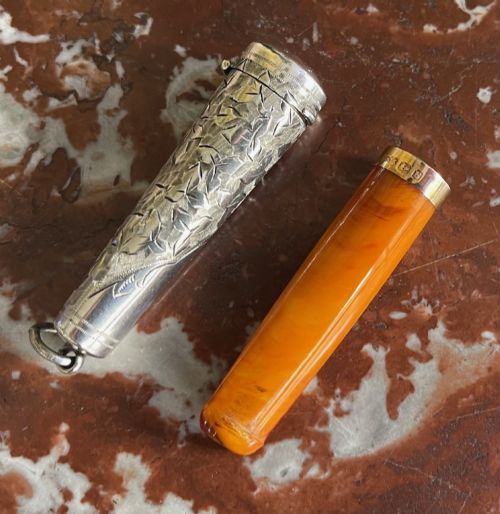
The selection also encompasses specialist formats like cigar cases and amber cheroot holder containers paired with silver outer cases. Each object reflects the smoking habits and social rituals of its specific decade.
How they were made
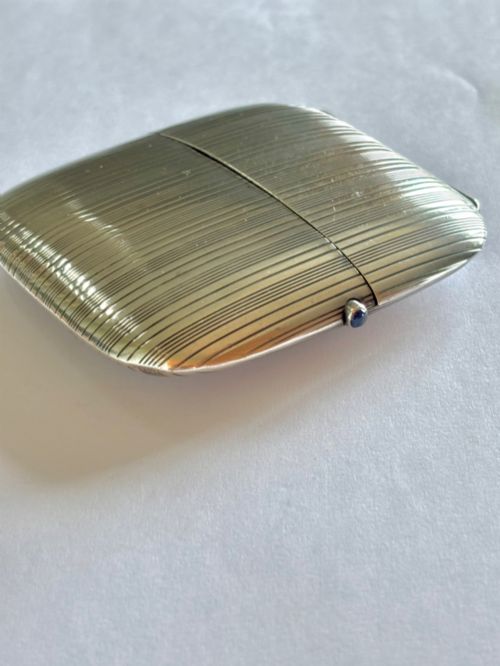
Makers utilised sterling silver and silver gilt, frequently applying mechanical engine turning or hand engraving with leaf and scroll motifs. Solid silver panels were shaped to fit the curve of a pocket or house specialised internal mechanisms.
Some examples incorporate precious highlights such as 9ct gold mounts, amber inserts, and blue gemstone cabochons. Hallmarks stamped directly into the metal record the assay office, city, and year of production.
Several cases feature internal compartments specifically sized to cradle amber cheroot holders alongside your smoking supplies.
What varies in quality
Quality rests in the crispness of the hand engraving and the precision of the opening mechanisms. Standard production pieces display machine engine turning, while superior examples feature deeply carved scrolls, custom crests, or unusual structural designs.
The choice of secondary materials also elevates the work, such as interior silver gilt washes, gemstone thumbpieces, or fitted amber cheroot holders. Maker attribution to notable silversmiths adds further distinction to the object.
Edward Edwards·Sampson Mordan
The Engraved Silver Smoking Case Glossary
- Sterling silver
- A silver alloy containing 92.5 percent pure silver and 7.5 percent other metals, usually copper, ensuring durability for pocket items.
- Vesta case
- A small pocket box designed to hold matches and keep them dry, typically fitted with a striking stripe on the base.
- Silver gilt
- Silver that has been coated with a thin layer of gold on its surface, creating a rich interior or exterior finish.
- Engine turned
- A geometric pattern of precise fine lines mechanically cut into the metal surface.
- Cabochon
- A gemstone shaped and polished with a smooth convex dome rather than faceted edges.
Engraved Silver Smoking Case: Frequently Asked Questions
What fits inside an engraved silver smoking case?
These cases were manufactured to hold hand-rolled cigarettes, full cigars, cheroots, or wooden vestas depending on the specific internal depth and shape. Many accommodate specific lengths common to the period of their manufacture.
Some specialist containers also house amber mouthpieces alongside the smoking medium itself.
How do I read the hallmarks?
British hallmarks stamped on the interior or rim indicate the assay office, such as London or Birmingham, alongside a date letter for the year of production. Standard marks also confirm the sterling silver standard.
Continental pieces often display alternative purity numbers like .900 instead of traditional British assay symbols.
Why do some cases have curved bodies?
Pocket cases were intentionally curved to sit comfortably against the body within a waistcoat or jacket pocket. This ergonomic shaping prevented the metal from digging into the wearer.
Victorian cigarette cases frequently utilised this subtle contour alongside hinged lids.
What is an unusual opening mechanism?
Certain Victorian and Edwardian makers designed proprietary spring latches and sliding catches that required specific pressure points to release the lid. These mechanisms added security to prevent accidental opening in the pocket.
They represent the inventive engineering applied to everyday accessories during the period.