



Engraved Silver Card Tray
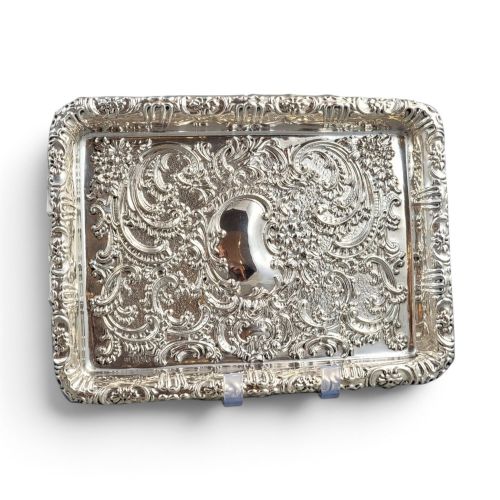
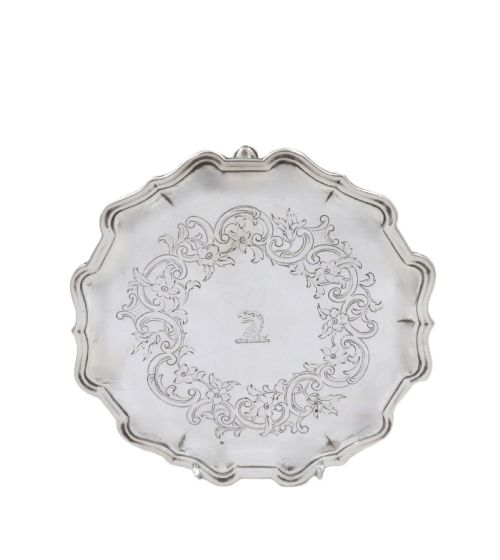
These engraved silver card tray pieces offer a refined method for presenting visiting cards, spanning Georgian to Edwardian periods.
Engraved Silver Card Tray
When you search for an engraved silver card tray, you examine small serving pieces designed for social calling and correspondence. The examples recorded here cross several distinct eras, including Georgian, Victorian, Edwardian, and the early twentieth century.
You are most likely to encounter sterling silver and Old Sheffield Plate forms on this page. These objects appear in styles such as Rococo Revival, Regency, and Anglo-Indian, reflecting changing tastes across generations.
The diverse origins encompass English, Irish, and continental workshops. Each specimen demonstrates the specific aesthetic priorities of its decade, from plain surfaces to heavily chased borders.
How they were made
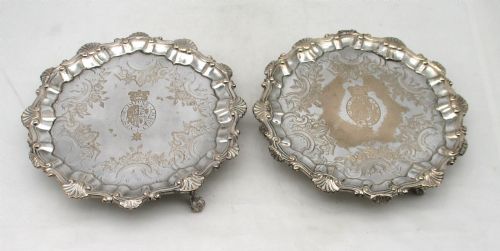
Makers utilised sterling silver, copper, and silver plate to construct these items. Old Sheffield Plate combines a thin layer of silver fused to a copper core, a method visible along cut edges where the base metal shows.
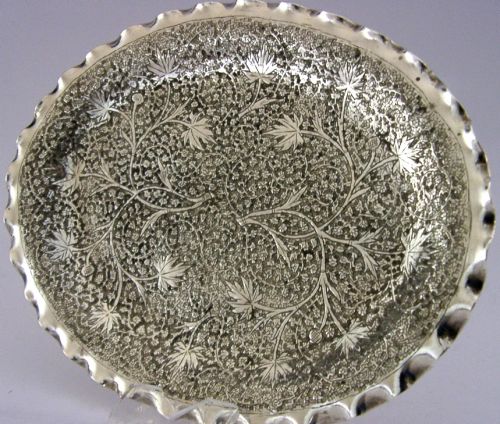
Engraving techniques involved hand-cutting decorative motifs directly into the metal surface using sharp gravers. Silversmiths also employed casting for feet and borders, soldering them to the main tray body.
Callers once dropped pasteboard rectangles onto these silver surfaces to signal they had stopped by for a chat.
What varies in quality
Quality depends upon the crispness of the hand engraving and the structural integrity of the metal. Superior pieces maintain deep, sharp incisions that retain their geometric or floral clarity without wearing flat from past polishing.
The weight and gauge of the silver or plate dictate the substance of the tray. Better examples demonstrate balanced proportions between the central field and any applied cast rim.
Robert Abercromby·Robert Pringle & Sons
The Engraved Silver Card Tray Glossary
- Sterling silver
- A standard alloy consisting of a high proportion of pure silver combined with other metals for durability. It provides the primary material for many trays listed here.
- Old Sheffield Plate
- An early fusing technique where silver is fused to a copper base before rolling into sheets. This method predates modern electroplating.
- Salver
- A plate or tray used for serving food, drinks, or visiting cards. The terms salver and tray frequently interchange in these listings.
- Guilloche enamel
- A decorative technique involving precise mechanical engraving beneath translucent enamel layers. It appears on continental pieces from the twentieth century.
- Rococo Revival
- A nineteenth-century style drawing inspiration from eighteenth-century asymmetrical ornamentation. It incorporates scrolls, shells, and floral motifs.
Engraved Silver Card Tray: Frequently Asked Questions
What is an engraved silver card tray?
These items are small metal dishes utilised historically for receiving visiting cards left by callers. They served as a social intermediary in formal households.
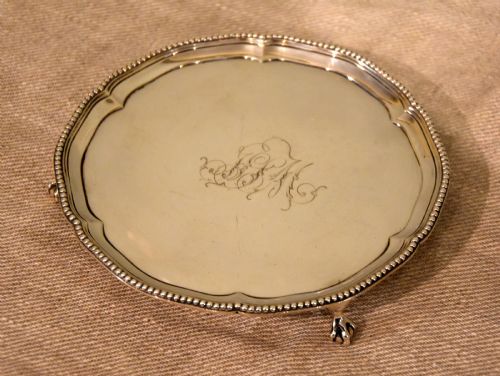
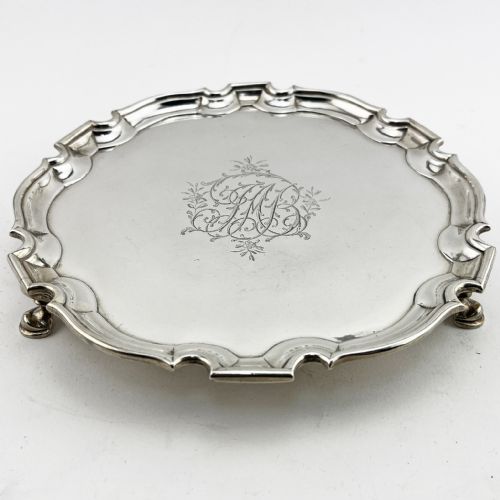
The surface engraving typically displays crests, monograms, or floral patterns unique to the original owner. Collectors value them for their craftsmanship and historical association.
How do I date an engraved silver card tray?
Dating relies upon hallmarks, style characteristics, and manufacturing techniques recorded in the piece. Assay office marks and maker stamps provide precise chronological markers for British items.
Items lacking full hallmarks require stylistic analysis of the border design and engraving style to place them within periods like Georgian or Victorian.
What is Old Sheffield Plate?
Old Sheffield Plate is a composite material created by fusing a sheet of silver to a copper ingot. The combined block was then rolled into thin sheets for fabrication.
This technique produced durable domestic items before the invention of electroplating in the nineteenth century. Trays made this way often reveal a thin copper line along exposed edges.
How were these trays used?
Households placed them in hallways or reception rooms to collect calling cards left by visitors. A neatly presented tray indicated the social standing and etiquette of the resident.
Over time, their domestic function shifted towards general tabletop display and small serving duties. Today they survive primarily as decorative antiques.