


Engraved Serviette Holders
Engraved serviette holders are tactile silver table accessories that bring personal character to dining, and these pieces span from Victorian times to the mid-twentieth century.

Engraved Serviette Holders
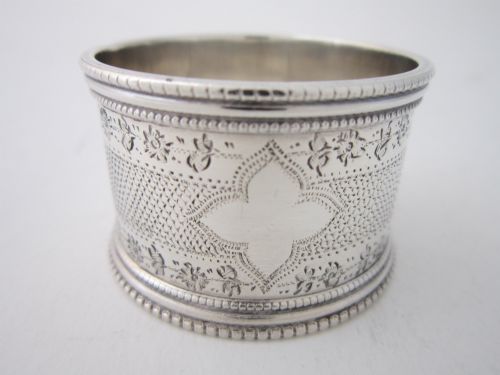
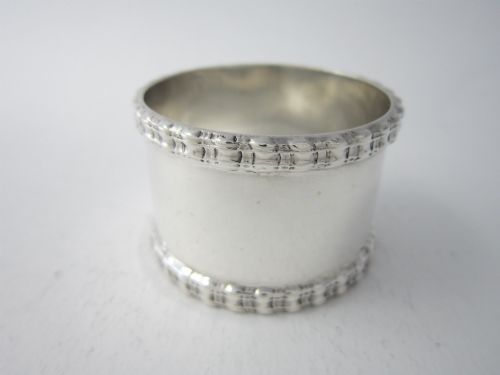
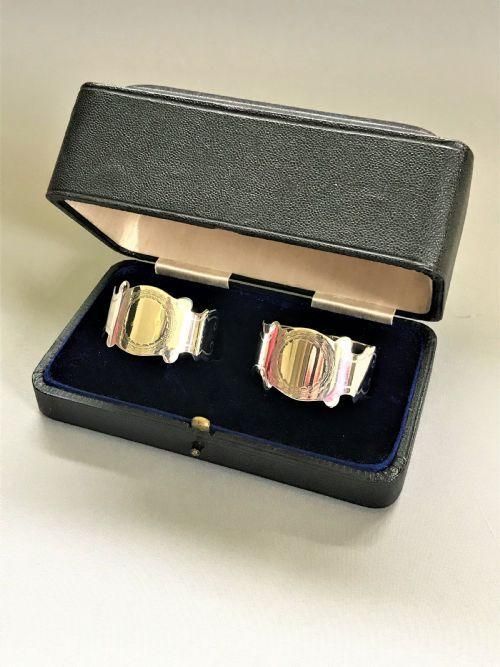
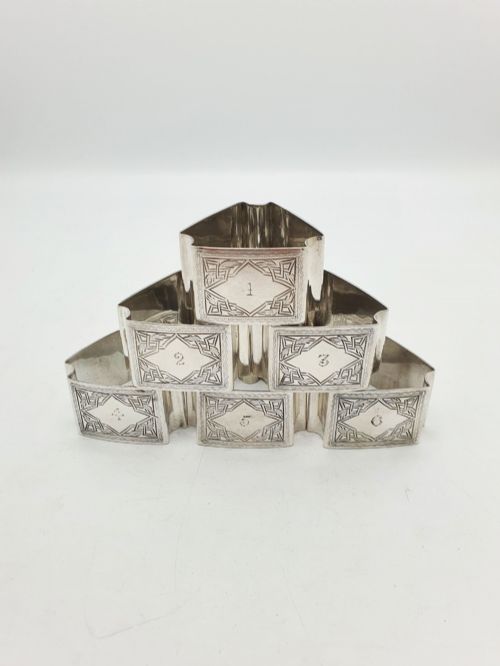
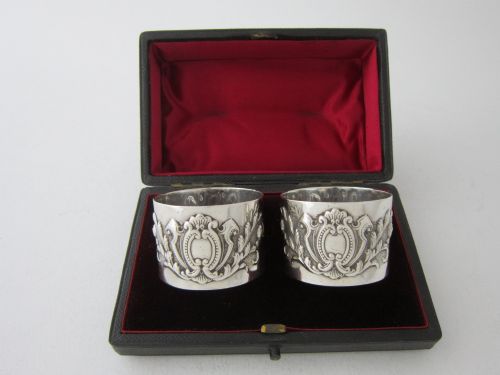
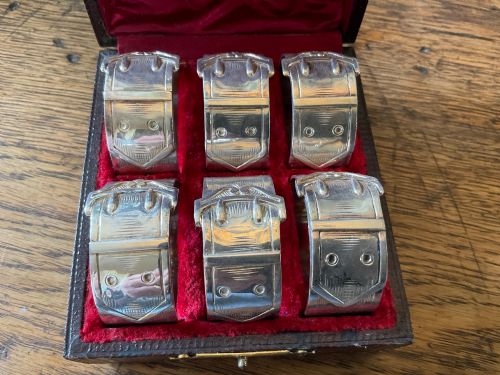
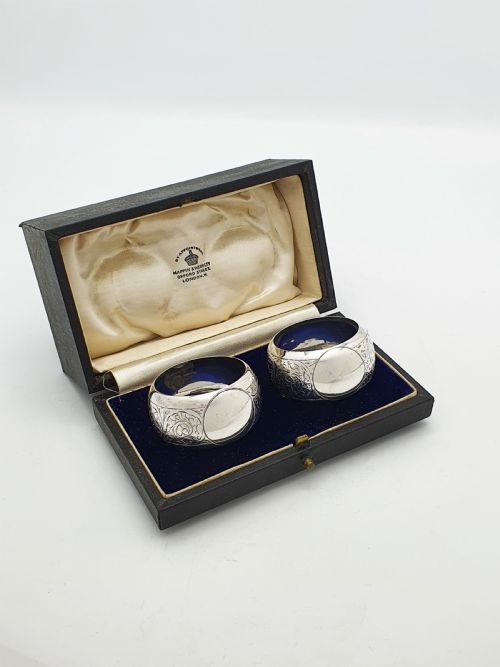
Engraved serviette holders, most frequently found here as napkin rings and napkin clips, belong to domestic dining traditions from the Victorian, Edwardian, and George V periods. You will regularly encounter single pieces, matched pairs, and cased sets of six carrying fine hand-engraved patterns.
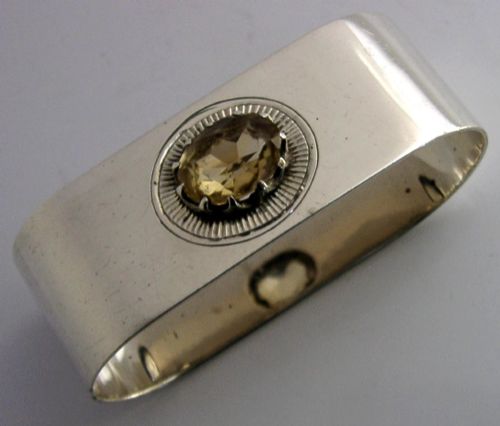
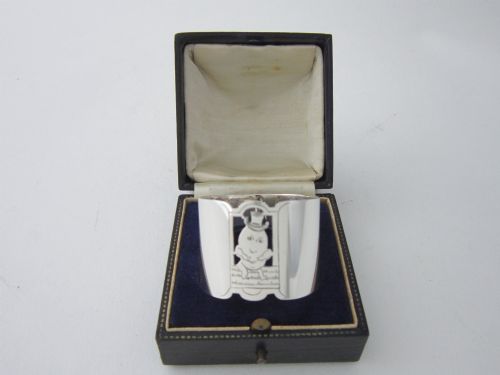
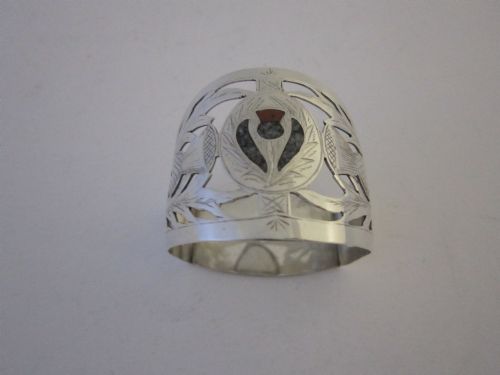
The forms extend from traditional cylindrical rings to novelty designs modelled as belt buckles or shield shapes. Makers utilised various materials including sterling silver and silver plate, sometimes incorporating stones like citrine and agate or housing the items in fitted boxes lined with velvet and silk.
Materials and construction
Silversmiths formed these napkin rings and clips primarily from solid sterling silver or durable silver plate, relying on sheet metal manipulation and soldering techniques. Many examples display detailed surface decoration applied through hand engraving and chasing.
Sets often arrived housed in specialised presentation cases featuring leatherette exteriors and internal linings of velvet and silk. Particular pieces integrate natural gemstones such as citrine and agate into their metalwork.
Listings span from the Victorian period through the Edwardian era, George V, and into the mid-twentieth century.
Assessing quality and craftsmanship
The standard of an engraved serviette holder rests upon the crispness and depth of the hand-engraved ornamentation. Superior items maintain sharp, defined patterns without the smoothing wear that comes from decades of polishing.
Completeness also dictates value, particularly with cased pairs and numbered sets of six that retain their original fitted boxes. Heavier gauge metal and uncommon structural forms, such as novelty belt buckles or shield shapes, demonstrate higher initial craftsmanship.
Mappin & Webb·Henry Wilkinson
The Engraved Serviette Holders Glossary
- Sterling silver
- A silver alloy containing 92.5 percent pure silver and 7.5 percent other metals, usually copper. This standard composition appears across the majority of Victorian and Edwardian examples.
- Silver plate
- A base metal coated with a thin layer of genuine silver. Manufacturers utilised this method to offer decorative tableware at a more accessible cost.
- Napkin clip
- An alternative table accessory designed to secure a serviette to clothing or a table edge. These frequently take unusual forms such as shields or buckles.
- Cased set
- A collection of tableware housed in a fitted presentation box. These often feature protective interiors lined with velvet and silk.
- Hallmark
- An official stamp applied to precious metals indicating the assay office, metal purity, and date of manufacture. These marks help verify the period of older items.
Engraved Serviette Holders: Frequently Asked Questions
How do I clean antique silver napkin rings?
Use a soft microfiber cloth and a mild silver cleaning agent designed for delicate surfaces. Avoid abrasive pads that can wear down the engraved details.
Store them in dry conditions, preferably inside lined presentation cases, to slow down natural tarnishing over time.
Were these items used daily?
Serviette holders served regular dining purposes in middle and upper-class households from the Victorian era onward. Families often kept numbered sets so each person retained their specific ring at every meal.
Special occasions also prompted the use of cased pairs or novelty designs presented in fitted boxes.
What is the difference between sterling and plated rings?
Sterling silver contains a guaranteed high percentage of pure metal regulated by official hallmarks stamped into the surface. Silver plate consists of a base metal core covered by a thin outer layer of genuine silver.
Plated items generally weigh slightly less and lack the official assay office marks found on solid silver pieces.
How can I tell the period of a piece?
Examine the piece for official hallmarks that indicate the assay office and the specific year of manufacture. Stylistic clues such as Edwardian shield shapes or Art Deco geometric lines also point toward specific decades.
Matching presentation cases and materials like velvet or leatherette further help narrow down the historical era.