




Engraved Mantel Clock
An engraved mantel clock brings precision timekeeping together with intricate surface decoration, offering a focal point for a room.
Engraved Mantel Clock
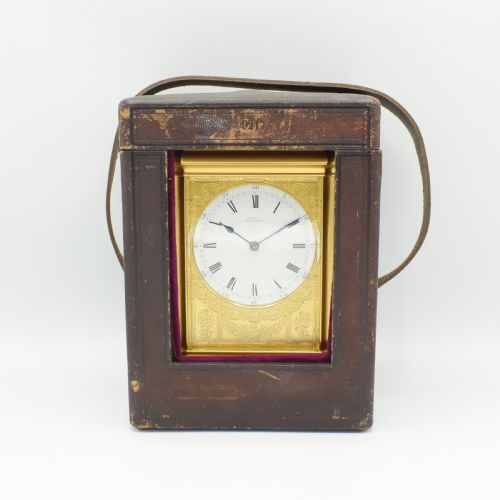
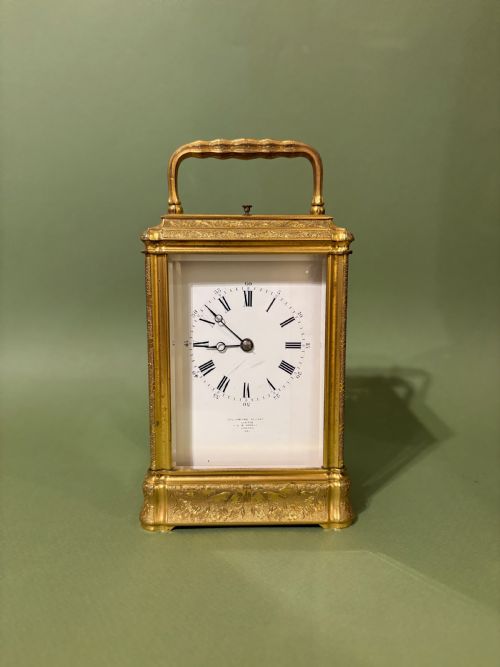
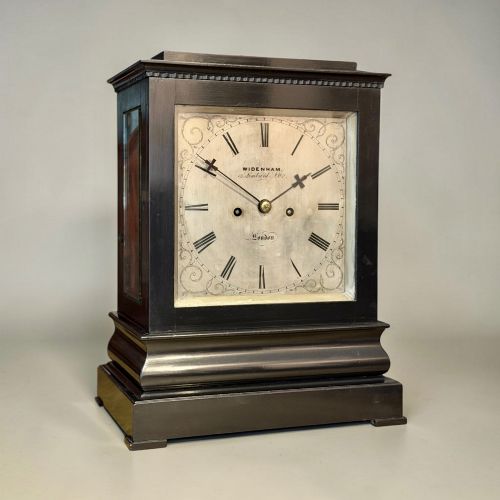
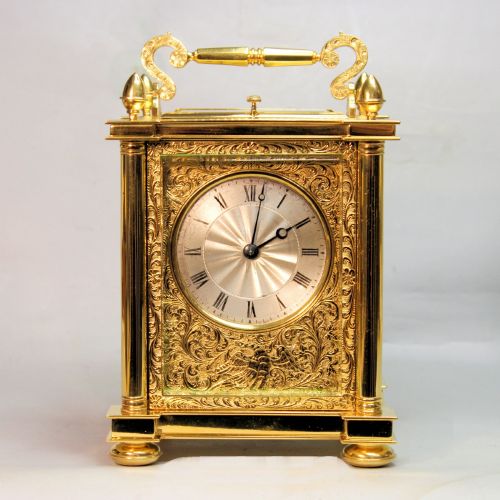
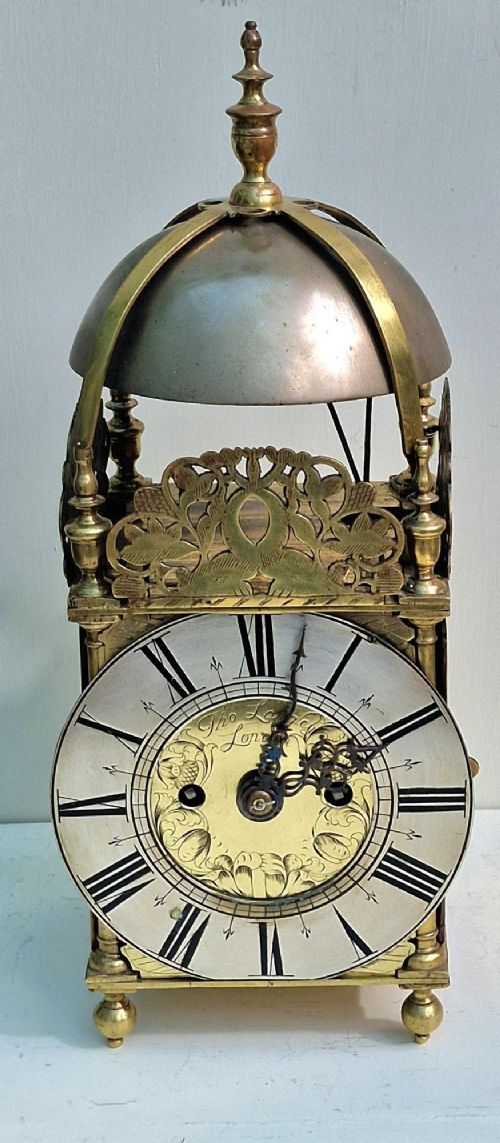
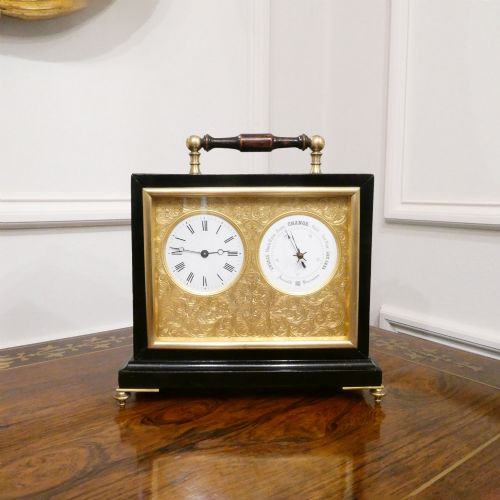
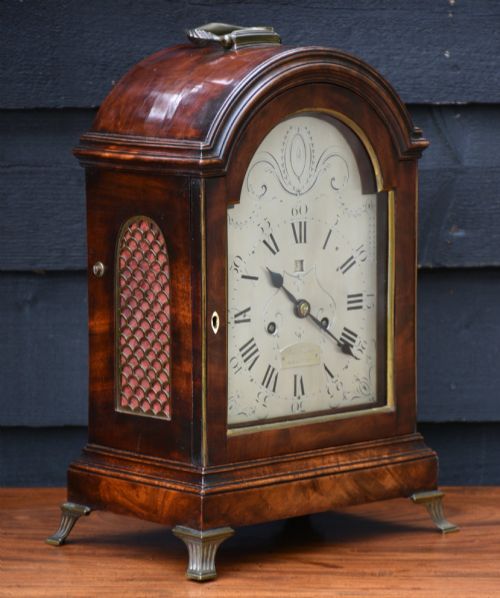
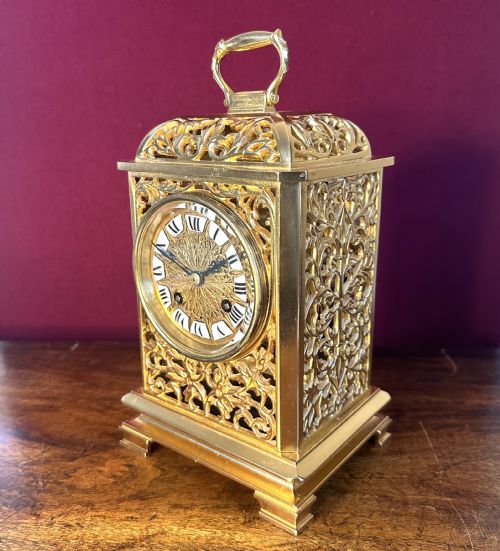
An engraved mantel clock unites the functional purpose of a timepiece with the decorative artistry of surface engraving, spanning periods from the seventeenth century through the Victorian era. The selection includes carriage clocks, lantern clocks, bracket clocks, and four-glass library clocks enclosed in brass, gilt brass, mahogany, and glass.
The most frequent examples encountered on this page are nineteenth-century French carriage clocks and English bracket or lantern clocks featuring detailed hand-engraved brass cases or movements. These pieces range from miniature travel timepieces to substantial library clocks and giant carriage models.
Makers and retailers represented across the selection include established horologists such as Charles Frodsham, Dent, Mappin and Webb, and Thomas Cole, alongside historic lantern clock smiths like Thomas Langley and Peter Closon.
Materials and Construction
Makers utilised cast and forged metals such as brass, gilt brass, iron, and steel for the structural frames and movements, frequently pairing them with enamel dials and silvered metal components.
Cabinetmakers constructed the wooden housings using dense timbers like mahogany, while specialists applied hand-engraving directly to metal plates, bezels, and gilt brass carriage cases to produce intricate foliate and geometric patterns.
Listings span seventeenth-century brass lantern clocks to Edwardian mantel timepieces, incorporating mahogany cases, gilt brass carriage frames, and glass panels.
Factors of Distinction
Quality rests in the crispness and depth of the hand-engraving across the brass case or movement plates, as well as the complexity of the internal mechanism, such as fusee movements or striking trains.
The reputation of the maker or retailer adds distinction, alongside the preservation of original gilding, glass panels, and matching components like keys and mercury pendulums.
Henri Jacot·Widenham of London·Cousens And Whiteside·Thomas Langley·John Spershott·Margaine Of France·Dent·Howell And James·Peter Closon·John Waller·James Ogden Senior·Mappin And Webb·Arnold And Frodsham·Grey Of Edinburgh·D Munsey·Thomas Cole·Hunt And Roskell·Charles Frodsham·Holingue Freres·Budgen Croydon·Drocourt·Paul Garnier·Bourdin·Tiffany·William Clement
The Engraved Mantel Clock Glossary
- Carriage clock
- A portable spring-driven timepiece designed for travel during the nineteenth century, usually housed in a brass frame with glass panels.
- Fusee
- A conical pulley used in mechanical clocks to maintain an even pull on the gear train as the mainspring unwinds.
- Lantern clock
- An early form of weight-driven or spring-driven brass chamber clock from the seventeenth century, suspended on a wall or placed on a bracket.
- Four-glass clock
- A mantel clock enclosed by glass panels on all four sides, permitting a clear view of the mercury pendulum and movement.
- Grande-sonnerie
- A complex striking mechanism that sounds both the hours and the quarters automatically on every quarter-hour.
Engraved Mantel Clock: Frequently Asked Questions
What is an engraved mantel clock?
An engraved mantel clock is a mechanical timepiece housed in a decorative case featuring hand-cut surface ornamentation on the metal elements.
These clocks range from small carriage clocks to large wooden bracket clocks designed for domestic display.
Where should I place my clock?
Mantel clocks require a stable, level surface away from direct sunlight, excessive moisture, and temperature fluctuations.
Placing them on a firm mantelpiece or sideboard ensures the pendulum or balance wheel operates with consistent rhythm.
How do I identify the period?
Dating relies on stylistic clues in the case design, signature formats on the dial, and the evolution of mechanical escapements.
Consulting maker records and comparing movement architecture helps narrow down the decade of production.