

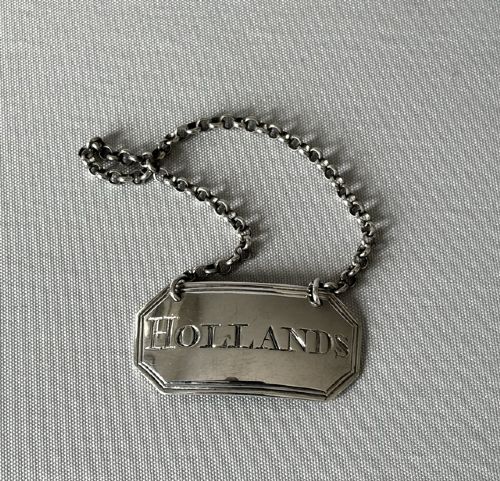
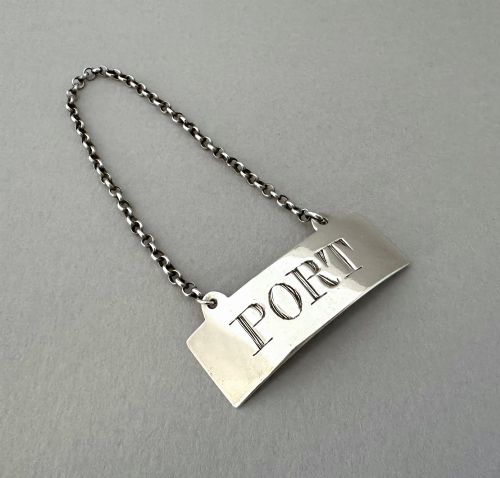
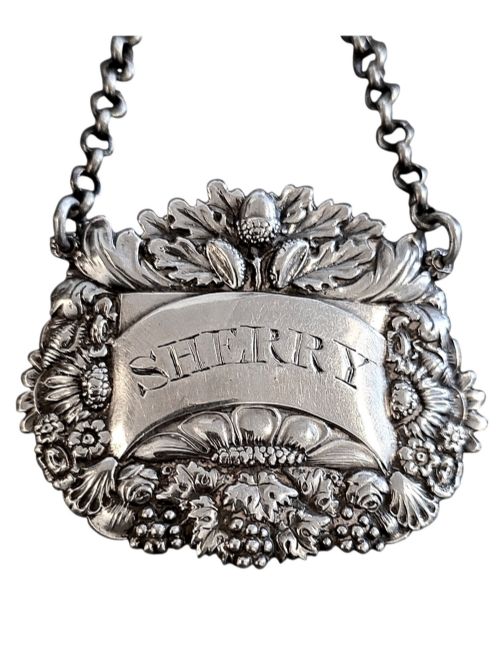
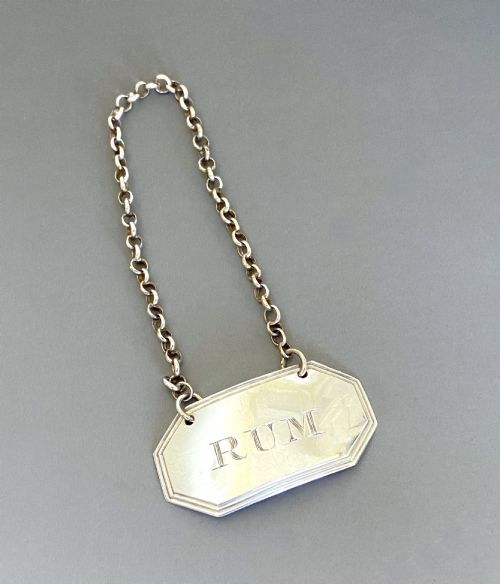
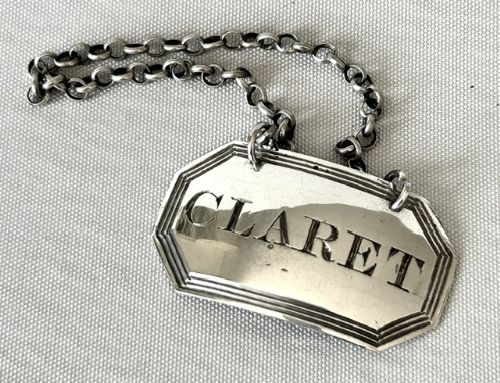
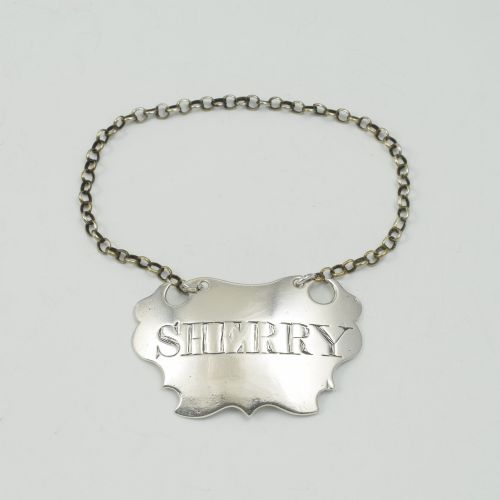
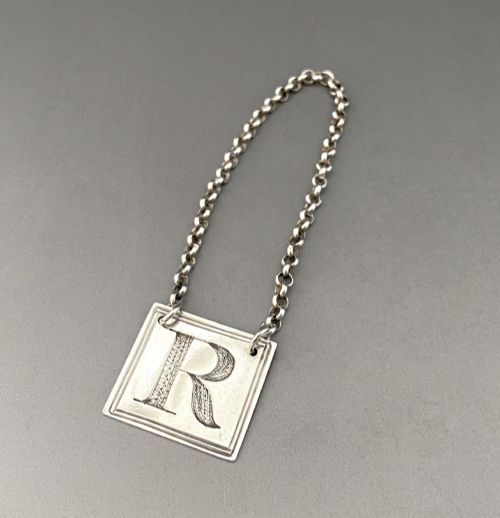
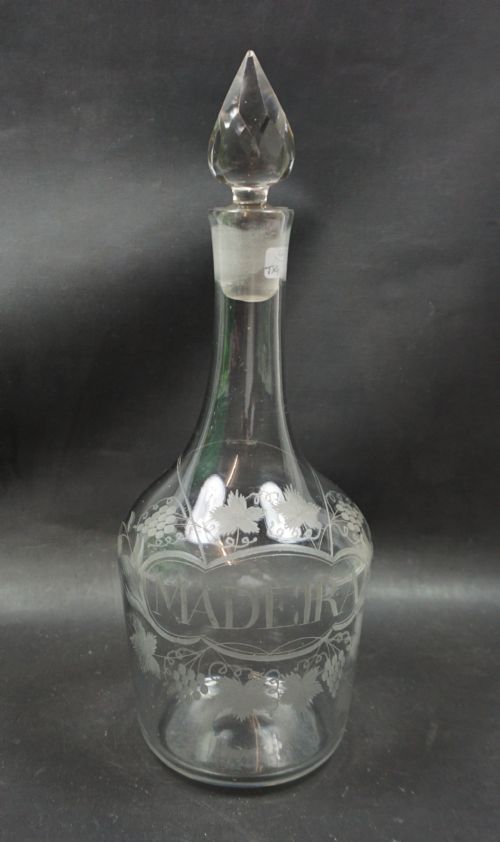


Engraved Label Decanters
Engraved label decanters and their matching tags are classic British drink-servicing accessories designed to identify bottle contents clearly on the dining table.
Engraved Label Decanters
When you search for engraved label decanters, you encounter both the glass vessels themselves and the distinct silver tags that hang around their necks. These pieces span Georgian, Regency, William IV, Victorian, and Edwardian periods, alongside occasional later items.
The objects take the form of individual labels marked for spirits and wines such as Sherry, Port, Claret, Madeira, Rum, Gin, Hock, Moselle, and Brandy. You also find larger glass shoulder decanters with labels engraved directly onto the body, or separate tags suspended on silver chains.
How they were made
Makers produced these items primarily from lead glass and solid sterling silver. Silversmiths shaped the metal tags through cutting, stamping, and piercing, then hand-engraved the beverage titles across the surface.
Glass vessels feature blown and cut execution, sometimes incorporating engraved label text directly into the shoulder profile of the bottle during production.
Engraved Label Decanters Retail Price Guide 2026
Typical asking prices for engraved label decanters among the pieces listed under this phrase on Sellingantiques today, from the lower quarter to the upper quarter. They describe what is for sale here now, not the wider market.
The listings show items spanning the 18th century, Georgian, Regency, William IV, Victorian, and Edwardian eras, executed in silver and lead glass.
What varies in quality
The standard of an engraved label decanter piece rests on the crispness of the silversmith's engraving and the weight of the metal. Thicker gauge silver and well-defined lettering separate standard examples from finer outputs.
Design complexity also marks the division between basic items and superior pieces, particularly where silversmiths utilised escutcheon shapes, Rococo Revival ornamentation, or provincial hallmarks.
William Barrett II·Elizabeth Morley·John Reily·Peter and Anne Bateman
The Engraved Label Decanters Glossary
- Escutcheon shape
- A shield-like outline commonly utilised for silver wine labels during the Georgian period. This format provided a traditional heraldic backdrop for the engraved beverage title.
- Shoulder decanter
- A specific bottle form with a distinct sloping shoulder, frequently found in 18th-century English glass production. These vessels often carried direct wheel-engraved bottle ticket inscriptions.
- Sterling silver
- A silver alloy containing 92.5 percent pure silver by mass, with the remainder composed of copper. This standard metal underpins the majority of the antique tags recorded here.
- Lead glass
- Heavy glass containing lead oxide, which increases brilliance and workability for cutting. It forms the body of the glass decanters carrying these engraved inscriptions.
- Provincial silver
- Silver items manufactured and hallmarked outside major assay towns like London. Scottish provincial pieces from towns such as Peterhead represent regional variations of this work.
Engraved Label Decanters: Frequently Asked Questions
What drinks do the labels name?
The labels identify traditional table wines and spirits, including Sherry, Port, Claret, Madeira, Rum, Gin, Hock, Moselle, and Brandy.
These specific titles directed guests and hosts at the dining table when multiple decanters circulated.
Are the labels attached with chains?
Many individual silver labels include their original silver suspension chains for hanging around the neck of a bottle or decanter.
Other examples appear as matching sets or as glass decanters with the label engraving executed directly onto the glass.
How do I date these pieces?
Dating relies on hallmarks stamped into the silver, stylistic shifts from Georgian rococo to Victorian ornamentation, and specific bottle forms.
Makers' marks and provincial assay town symbols further pinpoint the exact period of production.
Did women make these silver labels?
Historical records show female silversmiths operating independently during the Georgian era. Makers such as Elizabeth Morley and the partnership of Peter and Anne Bateman produced marked silver wine labels.