

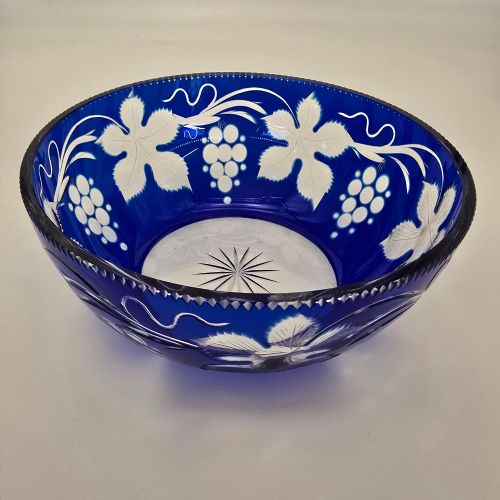
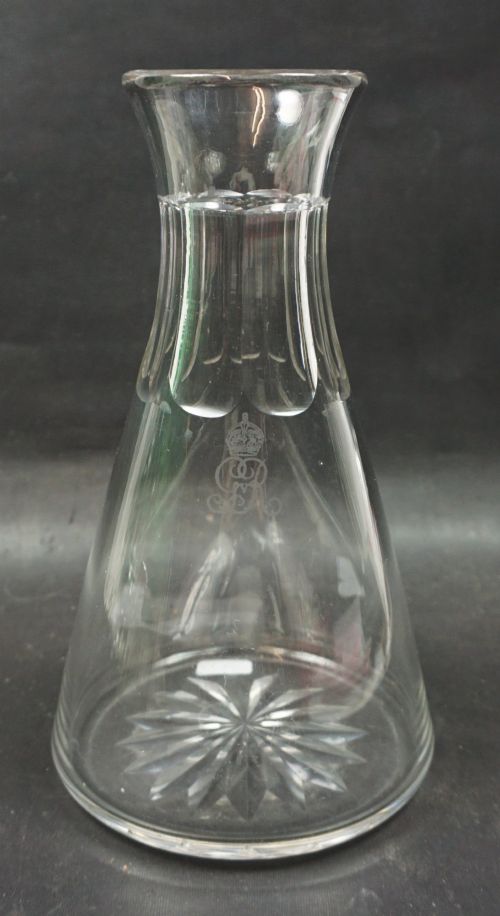

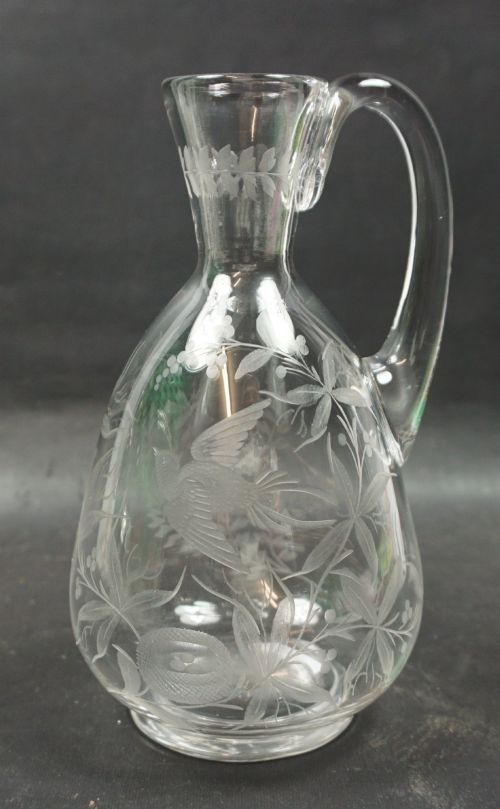





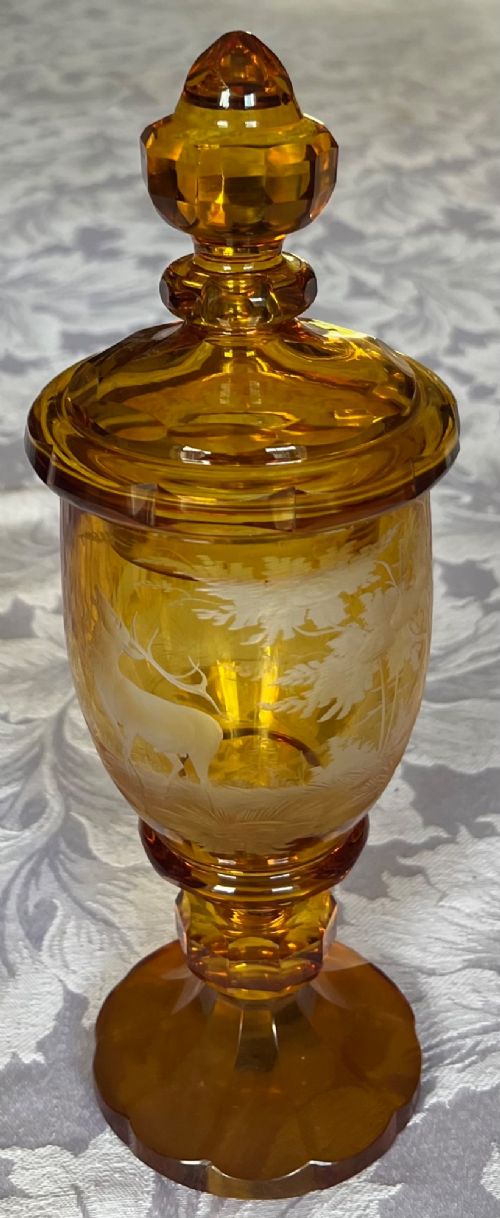



Engraved Crystal Glassware
Engraved crystal glassware encompasses drinking vessels and decorative pieces spanning Georgian, Victorian, and later periods, offering tactile weight and intricate surface detail.
Engraved Crystal Glassware
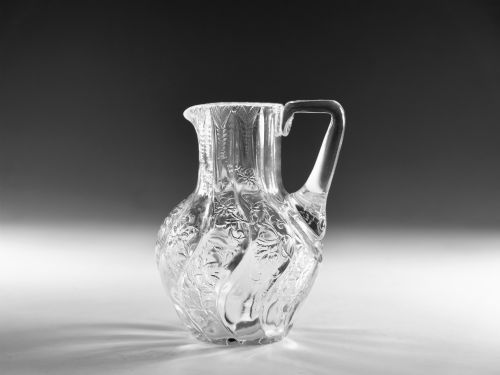
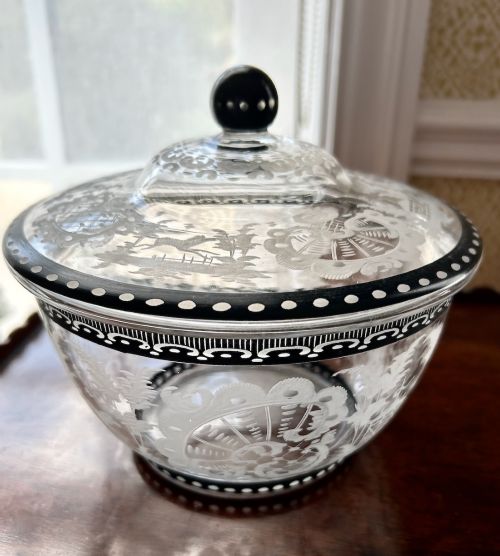
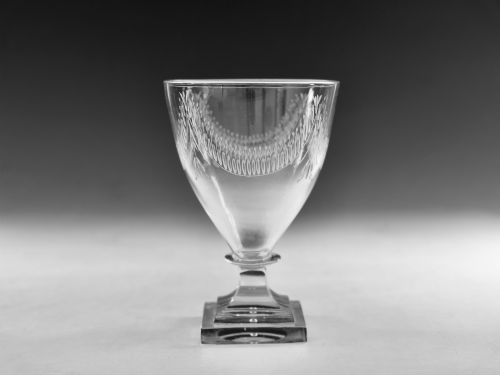
Engraved crystal glassware covers practical drinking vessels and decorative items ranging from 18th-century wine glasses and ale flutes to Victorian rummers, decanters, and large vases. The forms reflect shifts in social habits, moving from early tavern and toast glasses to comprehensive dining services.
The material traditions span English lead glass and flint glass alongside continental Bohemian and French outputs. Pieces appear in clear crystal as well as coloured overlays including cranberry, ruby, and amber.
Earlier examples frequently feature symbolic motifs such as hop and barley or Jacobite emblems, while later pieces adopt floral sprays, geometric cuts, and commemorative subjects.
Materials and technique
Makers utilised heavy lead crystal and flint glass to provide the clear, dense substrate required for deep wheel-engraving and diamond-point work. The addition of lead oxide increased the refractive index, giving the material its characteristic weight and brilliance.
Decoration was applied through wheel-engraving, intaglio cutting, and acid etching, allowing craftsmen to produce detailed botanical studies, armorial bearings, and commemorative text. Stems on drinking vessels were formed using air twist, opaque twist, or faceted techniques during the 18th century before shifting to moulded and pressed stems in the 19th century.
Engraved Crystal Glassware Retail Price Guide 2026
Typical asking prices for engraved crystal glassware among the pieces listed under this phrase on Sellingantiques today, from the lower quarter to the upper quarter. They describe what is for sale here now, not the wider market.
Certain rummers rest on square feet moulded to mimic kitchen lemon squeezers, bringing geometry to the tavern.
Quality factors
Distinctions in quality rest on the clarity of the metal and the precision of the engraving. Superior pieces exhibit high optical purity without internal flaws, alongside crisp, deeply cut motifs that retain sharp contours rather than shallow surface scratching.
Proportion and form dictate the success of a vessel, where slender stems, balanced feet, and well-weighted bases indicate skilled execution by the glasshouse. The complexity of the decorative scheme, from simple stem twists to elaborate intaglio landscapes, separates standard production ware from masterworks.
Baccarat Vallee·Stevens & Williams·Moser·James Powell
The Engraved Crystal Glassware Glossary
- Lead glass
- Glass containing lead oxide, which increases the weight, refractive index, and working time for cutting and engraving. This material forms the basis of most fine English drinking vessels.
- Opaque twist
- A stem form produced by enclosing white or coloured enamel threads within the molten glass before drawing and twisting the stem. It is characteristic of mid-18th-century drinking glasses.
- Rummer
- A large, sturdy drinking glass with a thick stem and foot, used for beer, ale, or wine during the Georgian and Victorian periods. Rummers often feature engraved hop and barley motifs.
- Intaglio
- A technique where the design is carved into the surface of the glass rather than raised in relief, creating frosted, cameo-like motifs when polished. It appears frequently on later Victorian and Edwardian services.
- Lemon squeezer base
- A square, moulded glass foot with a concave underside, resembling the shape of a kitchen lemon squeezer. This form provides added stability to heavy Georgian rummers and decanters.
Engraved Crystal Glassware: Frequently Asked Questions
How do I date an engraved glass?
Dating relies on a combination of form, pontil mark evidence, stem construction, and engraving style. Eighteenth-century pieces often display tapered bowls with air or opaque twists, while 19th-century examples tend towards heavier rummers and faceted stems.
Changes in glass chemistry and manufacturing techniques across the Georgian and Victorian eras provide further chronological markers for the collector.
Were these glasses used daily?
Many of these pieces served practical functions at the table, from drinking services for wine and beer to finger bowls and decanters. Durable lead glass allowed them to withstand regular use during formal dinners and social gatherings.
Heavier rummers and ale glasses saw service in domestic and tavern settings alike, while delicate twist stems were reserved for formal toasts.
What is an air twist stem?
An air twist is formed by trapping elongated bubbles of air inside the molten metal of a glass stem and twisting the cane as it is drawn. This technique creates spiral threads of air that catch the light.
Master glassmakers utilised this method extensively during the mid-18th century before shifting to opaque white enamel twists.
How should I clean antique glass?
Antique crystal requires careful hand washing in warm water using mild detergent. Avoid sudden temperature changes to prevent thermal shock and cracking in fragile historic vessels.
Dry and polish the surface gently with a lint-free cloth to maintain the clarity and brilliance of the lead crystal.