






Engraved Communion Cup
An engraved communion cup brings sacred history and fine metalwork into the home, offering collectors chalices, goblets, and loving cups fashioned for ritual use.
Engraved Communion Cup
When you search for an engraved communion cup, you examine sacred vessels including chalices, ciboria, and loving cups originating across the eighteenth and nineteenth centuries. These pieces span Georgian and Victorian periods, alongside earlier European examples like a Franco-Spanish copper ciborium.
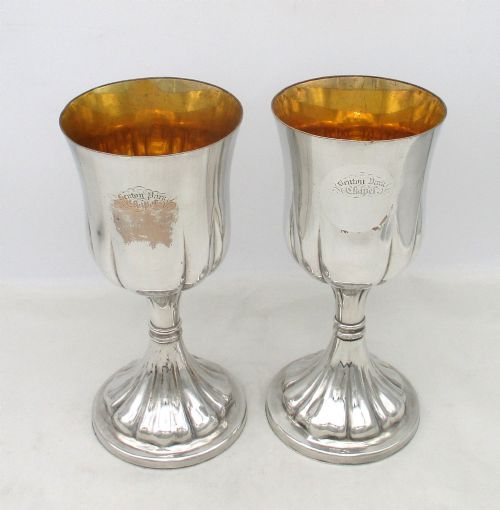
The version you most frequently meet on this page is the nineteenth-century silver plated church chalice or Old Sheffield plated goblet, often dated precisely between eighteen thirty and eighteen ninety. Alongside these stand sterling silver goblets bearing fine hallmarks and decorative bright cut engraving.
Makers such as George Unite or the firm of John Hunt and Robert Roskell appear among the sterling silver pieces, while many church vessels remain unmarked save for their plating technology and period form. Forms range from simple vase shaped bodies on circular feet to pairs of robust ecclesiastical goblets.
Materials and methods
Makers fashioned these vessels from sterling silver, copper, and base metals coated via Old Sheffield plating or later electroplating methods. Many sterling silver and plated examples employ parcel gilt interiors or full gold gilding to the bowl, contrasting with the exterior metal.
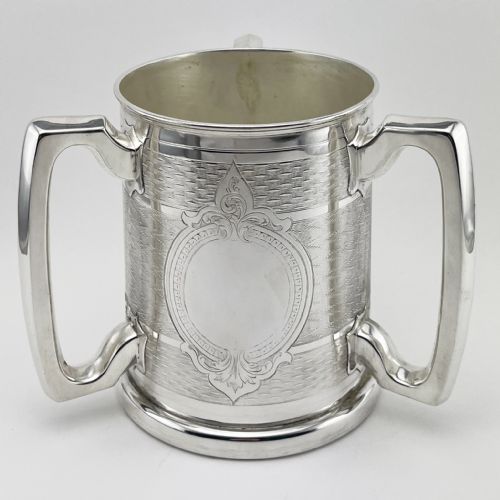
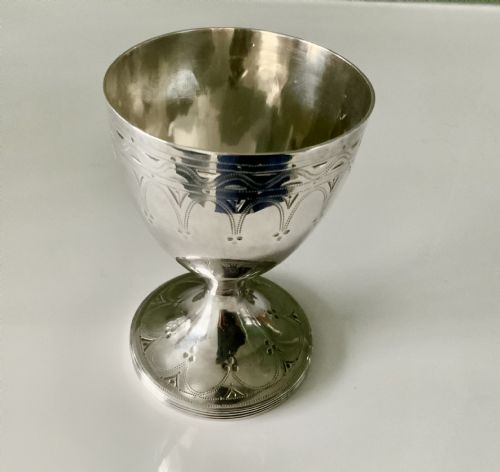
Craftsmen utilised techniques of surface engraving and bright cutting to adorn the bowls with foliage, crests, or ecclesiastical motifs. Structural forms were shaped through spinning, hammering, and soldering, joining the bowl to the stem and foot with precision.
A fifteenth-century Franco-Spanish copper ciborium sits alongside Victorian church chalices, bridging medieval devotion and industrial-era plating.
Measures of quality
Quality rests upon the crispness of the hand engraving and the integrity of the underlying metal, whether solid sterling silver or early fused Old Sheffield plate. Pieces that retain their original parcel gilt interior in good condition demonstrate superior preservation.
Proportion and weight distinguish utilitarian church vessels from domestic presentation pieces, with balanced stems and heavy gauge metal indicating superior workshop output.
George Unite·John Hunt and Robert Roskell
The Engraved Communion Cup Glossary
- Chalice
- A large cup used for drinking wine during religious services. These vessels usually feature a sturdy stem and a wide base.
- Old Sheffield Plate
- A composite material made by fusing a thin sheet of silver to a thicker copper core. This method predates nineteenth-century electroplating.
- Parcel Gilt
- A term describing an object gilt with gold on specific parts, such as the interior bowl of a chalice, while the exterior retains silver.
- Bright Cut Engraving
- A faceted engraving technique using a V-shaped chisel to cut bright, light-reflecting incisions into the metal surface.
- Ciborium
- A covered receptacle used in churches to hold the consecrated bread. Early examples often utilise engraved copper with gilding.
Engraved Communion Cup: Frequently Asked Questions
How were these cups used?
These vessels served primarily for sacramental wine during church communion services or as communal loving cups at formal gatherings.
Over time, many transitioned into domestic collections or presentation pieces, retaining their ceremonial forms and engraved decoration.
How do I clean silver plated cups?
Cleaning requires mild soapy water and a soft cloth to protect the underlying silver plate or Old Sheffield copper substrate from abrasive wear.
Avoid harsh chemical dips that strip away the antique patina and any delicate parcel gilt interiors found within the bowls.
How can I date a communion cup?
Dating relies on maker marks, assay office hallmarks on sterling silver pieces, and stylistic clues such as Georgian bright cutting or Victorian Gothic revival forms.
Manufacturing methods like Old Sheffield plating versus later electroplating also help narrow the period of production to the eighteenth or nineteenth century.