

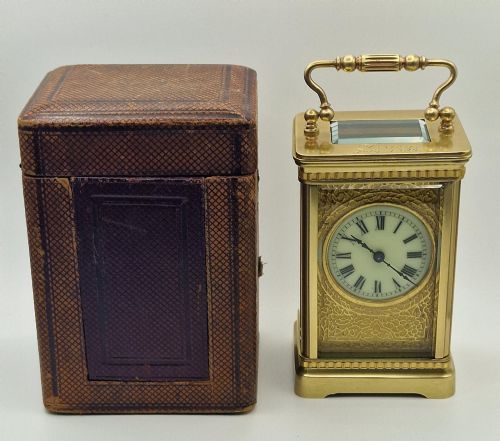
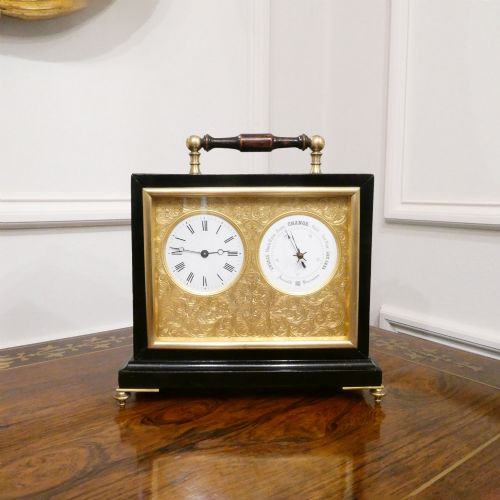
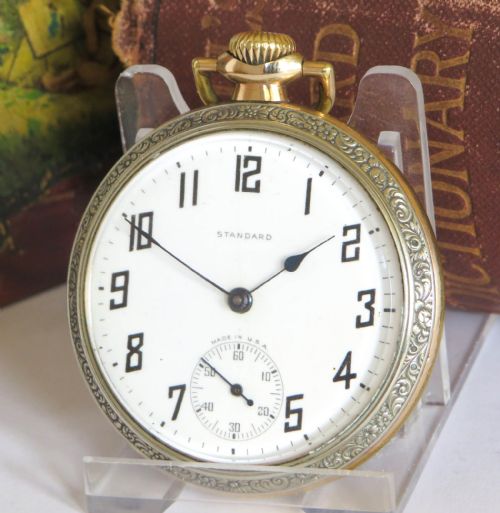
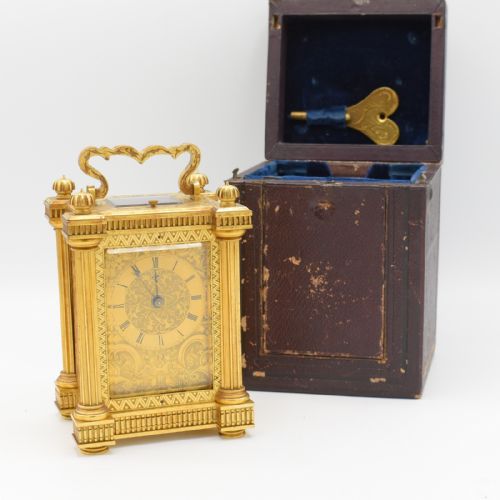


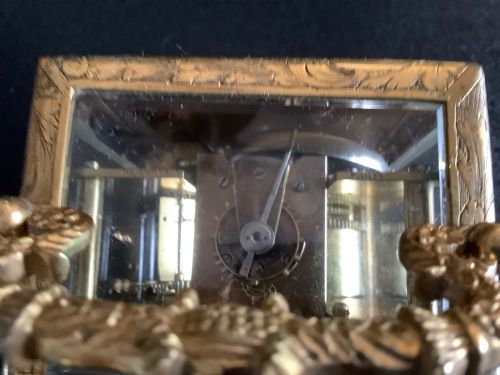


Engraved Brass Dial Timepiece
These engraved brass dial timepiece examples combine precision brass work and glass housing across Victorian, Edwardian, and nineteenth-century periods.

Engraved Brass Dial Timepiece
When you search for an engraved brass dial timepiece, you encounter portable carriage clocks, mantel pieces, and library clocks featuring detailed metal faces.
The selections span nineteenth century French workshops, Victorian English makers, and Edwardian designs housed in glass, gilt brass, and ebonised wood.
Carriage clocks with repeating movements and fully engraved brass cases dominate the available forms, alongside lantern clocks and pocket watches.
Materials and construction methods
The makers formed the main frames from solid brass and gilt brass, housing delicate steel gears and white enamel dials behind bevelled glass panels.
Engravers cut floral and geometric patterns directly into the brass dial plates, masks, and exterior cases by hand using sharp gravers.
Movements incorporate platforms, fusees, and escapements designed to maintain accurate time over eight-day runs or single-day periods.
Engraved Brass Dial Timepiece Retail Price Guide 2026
Typical asking prices for engraved brass dial timepiece among the pieces listed under this phrase on Sellingantiques today, from the lower quarter to the upper quarter. They describe what is for sale here now, not the wider market.
Materials span gilt brass, ebonised wood, silvered metal, leather, and bevelled glass.
Distinctions in execution and finish
The depth and clarity of the hand engraving across the brass mask and case separate standard production from master workshops.
Finely executed platform escapements and complex repeating or striking trains demonstrate superior horological skill in the movement.
The crispness of the silvered metal details and the precise fit of the bevelled glass panes indicate the original maker's standard.
Howell And James London·John Spershott·Gontard And Bolviller Paris·Mappin And Webb·Arnold And Frodsham·Thomas Cole·Charles Frodsham·Holingue Freres·Drocourt·Tiffany·John Massey·Alfred Hollinge
The Engraved Brass Dial Timepiece Glossary
- Escapement
- The mechanism that controls the release of power to maintain the motion of the clock. It regulates the movement by delivering impulses to the balance wheel or pendulum.
- Fusee
- A conical pulley used on chain-driven clocks to equalise the torque of the mainspring as it unwinds. This ensures steady power delivery for better timekeeping.
- Carriage clock
- A portable spring-driven clock developed for travel during the nineteenth century. These pieces usually feature brass frames with glass panels and a folding handle.
- Mask
- The decorative plate surrounding the central dial face. In many carriage clocks, this brass component carries detailed floral engraving.
- Repeater
- A mechanical complication that sounds the hours and quarters on demand when a lever or button is pressed. It allowed owners to check the time in darkness.
Engraved Brass Dial Timepiece: Frequently Asked Questions
What is a platform escapement?
A self-contained escapement unit mounted on a small platform visible through the glass top or dial face of a portable clock. This innovation allowed clocks to keep accurate time without a pendulum.
It forms the beating heart of nineteenth-century carriage timepieces and requires careful handling during transport.
How do I tell Victorian from Edwardian clocks?
Victorian pieces often display heavier ornamentation, deeply engraved gilt brass masks, and robust architectural cases from the mid to late nineteenth century. Edwardian examples tend toward lighter proportions and refined classical details.
Maker signatures and registration numbers stamped on the back plates often confirm the precise manufacturing era.
Why do some clocks have glass on all sides?
French library and carriage clocks utilised five-glass designs to showcase the interior brass movement from every angle. This allowed light to reach the escapement and highlighted the quality of the gear train.
Owners placed these timepieces on desks or mantels where observers could admire the internal mechanics while the clock operated.
What is a fusee movement?
A mechanical system featuring a cone-shaped pulley connected to the mainspring by a fine steel chain. As the spring unwinds, the chain moves to a wider part of the cone to maintain consistent power.
This traditional English method improves accuracy across the duration of the wind compared to standard barrel spring drives.