
English Writing Desk
An English writing desk is a practical companion for correspondence, spanning centuries of timber and craftsmanship.
English Writing Desk
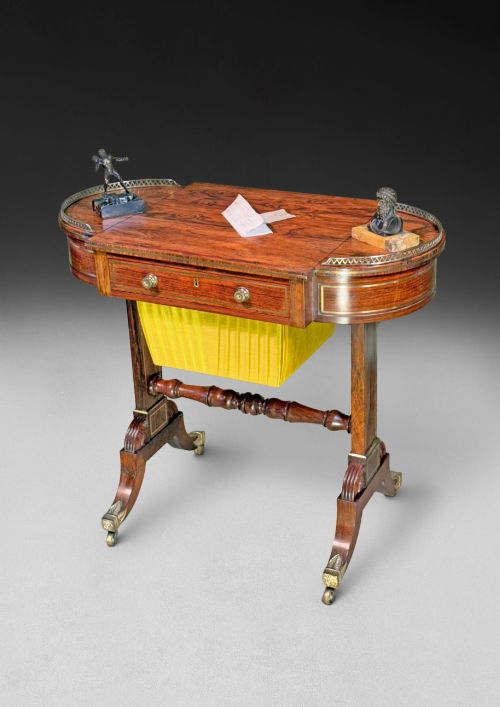
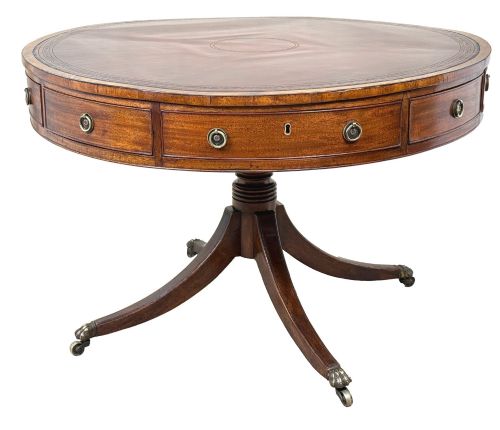
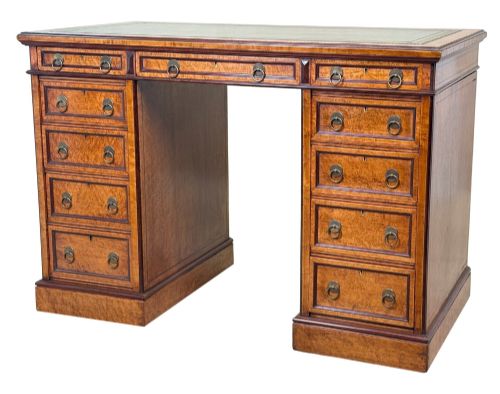
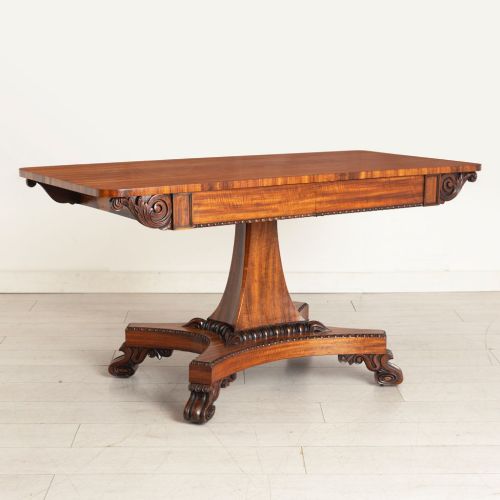
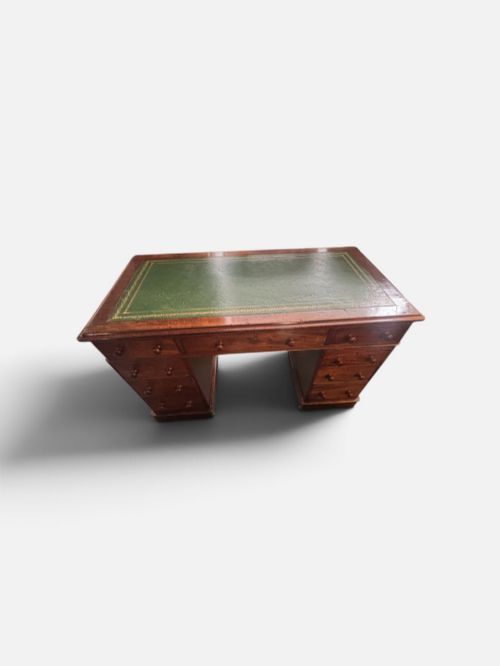
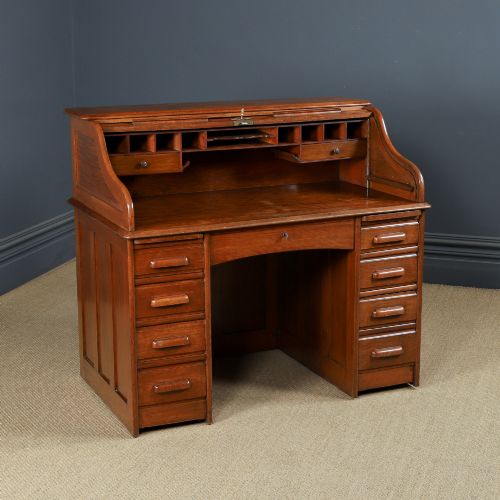
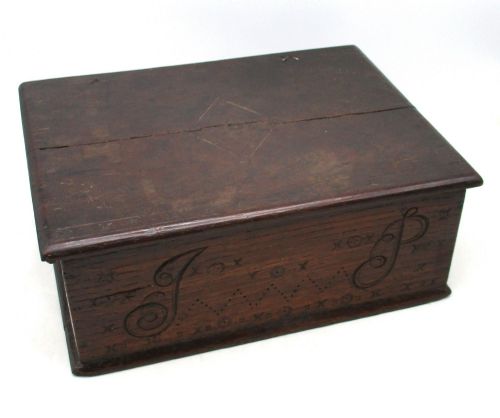
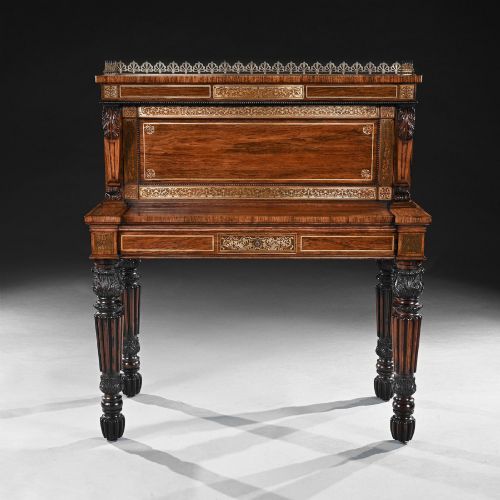
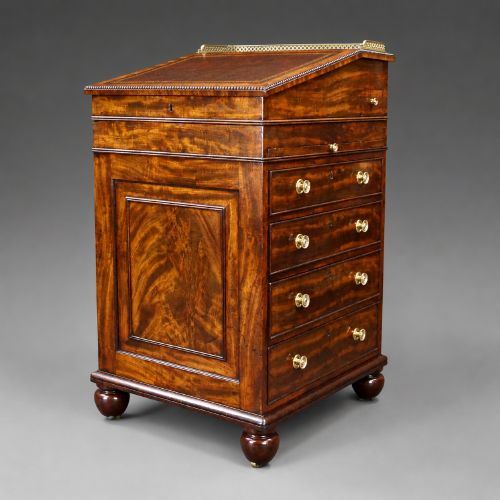
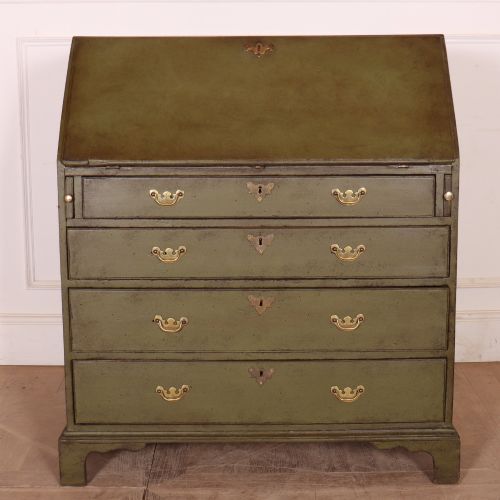
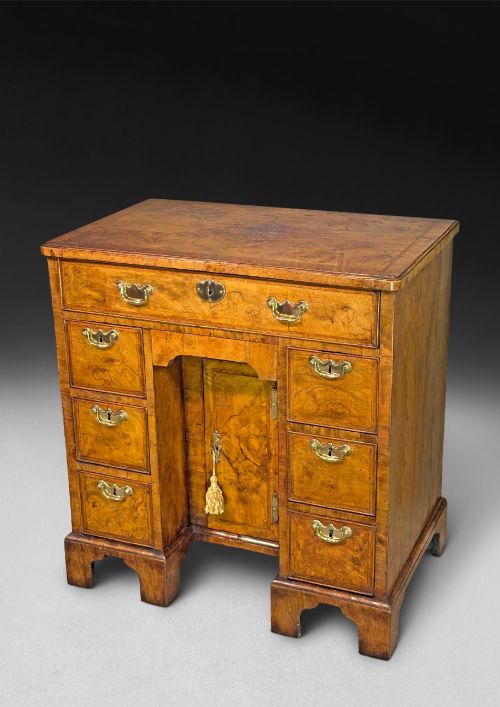
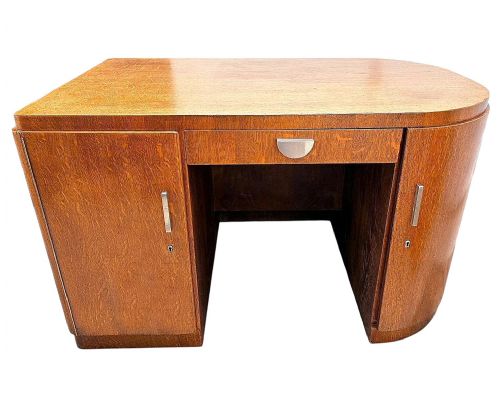
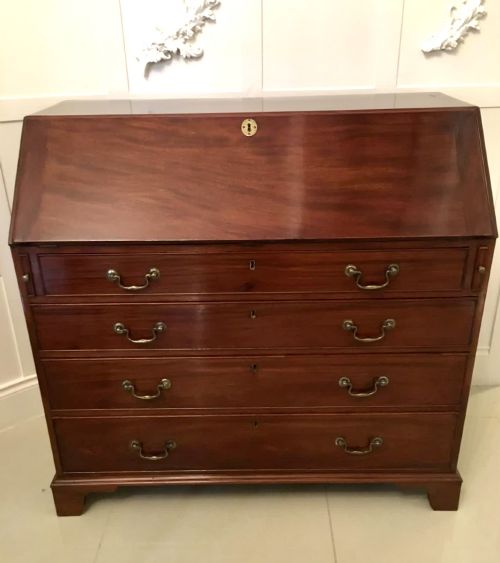
An English writing desk takes many forms across the centuries, from compact oak lowboys and document boxes of the seventeenth and eighteenth centuries to grand mahogany partners desks and rosewood writing tables of the Regency and Victorian eras. Bureaux with fall-front writing slopes and fitted compartments appear frequently, alongside pedestal desks and library tables.
The materials span native timbers like oak and walnut through to imported hardwoods including mahogany, satinwood, and rosewood. Surface treatments range from plain polished timber to intricate brass inlay, leather inserts, and painted finishes.
Buyers encounter pieces originating from provincial workshops as well as metropolitan centres, reflecting changing domestic habits and the evolution of the workspace within the British home.
Materials and Construction
Cabinetmakers utilised solid timbers and veneers applied to secondary woods, selecting oak for structural framing and drawer linings, whilst employing figured mahogany, walnut, or burr elm for visible surfaces. Brass hardware, handles, and escutcheons secured drawers and compartments, frequently paired with tooled leather writing surfaces.
Joinery techniques relied on dovetails for drawer construction and mortise and tenon joints for frames. Specialist touches included crossbanding, stringing in contrasting woods, and hand-carved details on legs and mouldings.
Secret compartments inside 18th-century bureaux often required sliding panels or hidden spring latches to reveal private caches for letters.
Assessment of Quality
The distinction between ordinary and superior pieces rests upon the selection of timber figure, the crispness of hand-cut joinery, and the retention of original brasswork and leather inserts. Finely figured flame mahogany or burr walnut elevates a piece, whereas standard straight-grained timber sits lower in the scale.
Proportion and execution define the standing of a desk, where harmonious dimensions and careful timber matching demonstrate the skill of the original workshop.
Gillows Oxford Street Workshop
The English Writing Desk Glossary
- Bureau
- A desk featuring a sloping fall-front that opens to reveal a fitted interior of small drawers and pigeonholes.
- Partners desk
- A large pedestal desk designed with drawers and cupboards on both sides to accommodate two users sitting opposite one another.
- Lowboy
- A small, low table with one or more rows of drawers, commonly used as a writing or dressing table in the seventeenth and eighteenth centuries.
- Secretaire bookcase
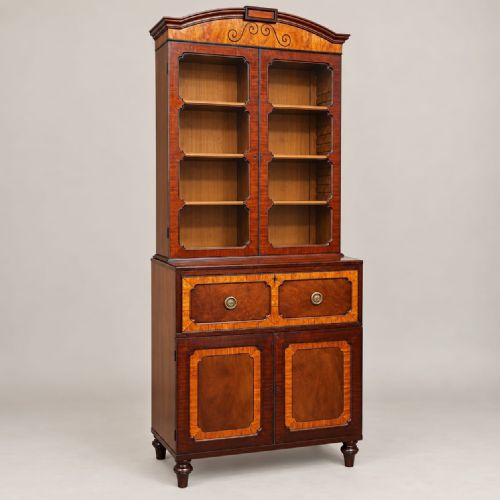
- A tall piece of furniture combining a bookcase upper section with a lower cabinet containing a pull-out writing drawer or fall-front desk.
- Crossbanding
- A decorative border of veneer laid with the grain running perpendicular to the main surface panel.
English Writing Desk: Frequently Asked Questions
What is a partner desk?
A partner desk is a large freestanding double-sided writing table designed for two people to work face-to-face. These pieces typically feature cupboards and drawers on both long sides.
They emerged to serve professional offices and libraries where colleagues needed shared workspace without sacrificing independent storage.
How do I identify a bureau?
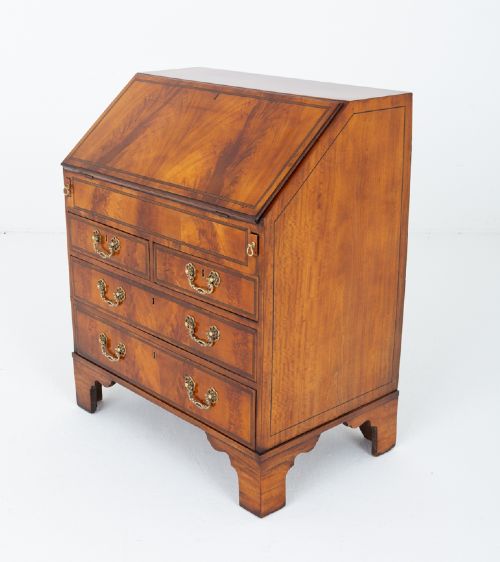
A bureau is characterised by a hinged sloping flap that drops down to form a writing surface. This flap conceals an interior arrangement of pigeonholes and small drawers.
Beneath the writing slope, standard drawer tiers provide storage for papers and personal items.
Where should I place an antique desk?
These desks suit studies, home offices, and living rooms where natural light falls across the writing surface. Freestanding library tables and partners desks look best positioned away from walls to display finished backs.
Keep wooden surfaces away from direct heat sources and strong sunlight to prevent timber warping and leather drying.