

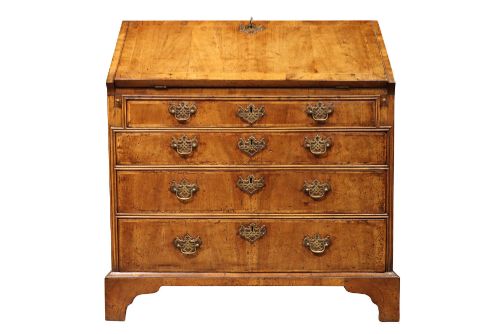
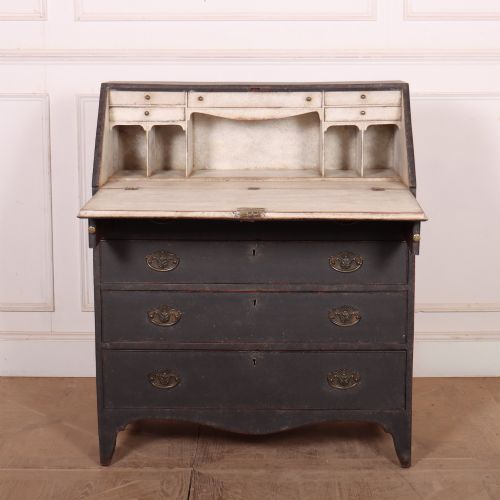
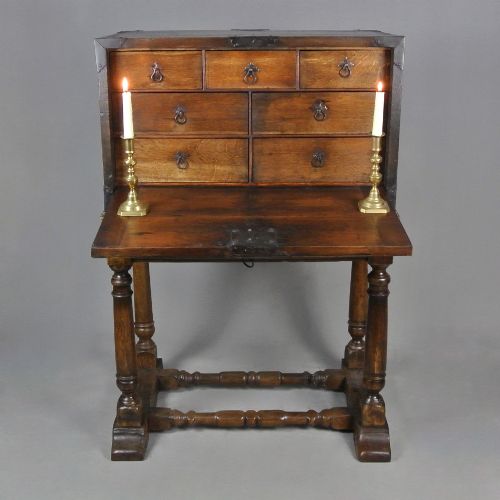
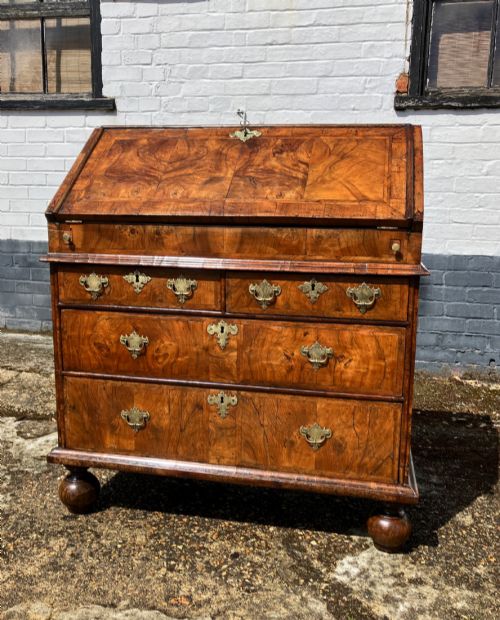
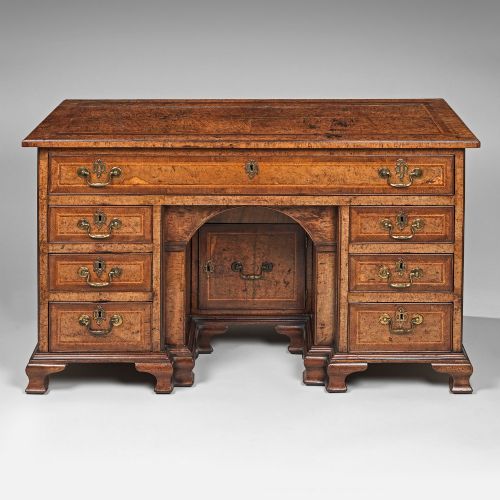
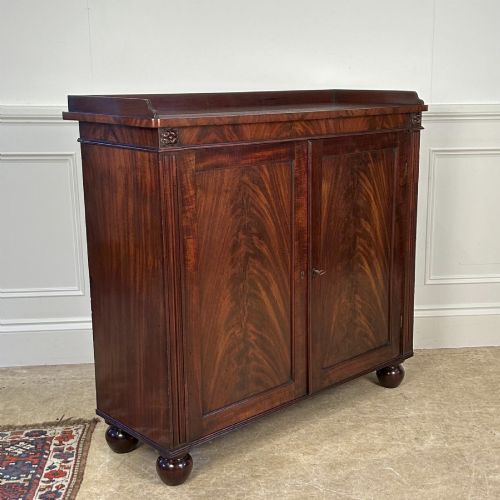
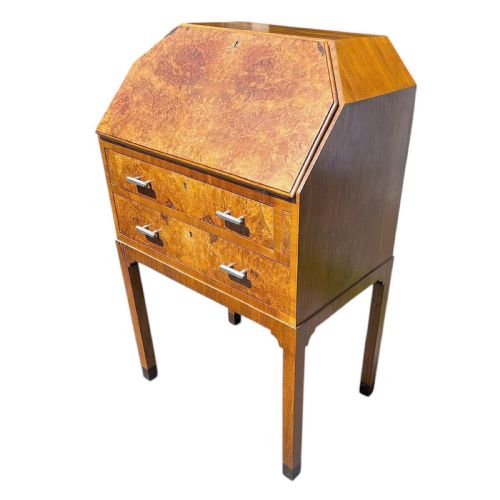
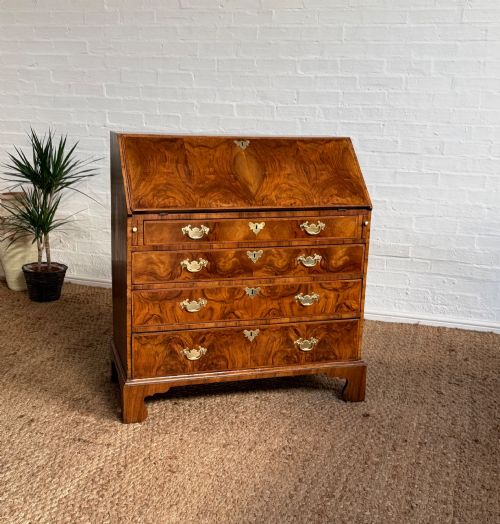
English Writing Bureau
An English writing bureau is a fitted drop-front cabinet designed for correspondence and storage, offering timeless architectural presence and practical compartmentalisation.
English Writing Bureau
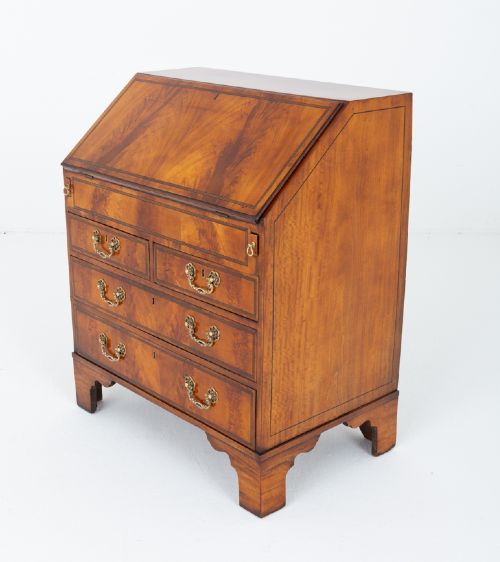
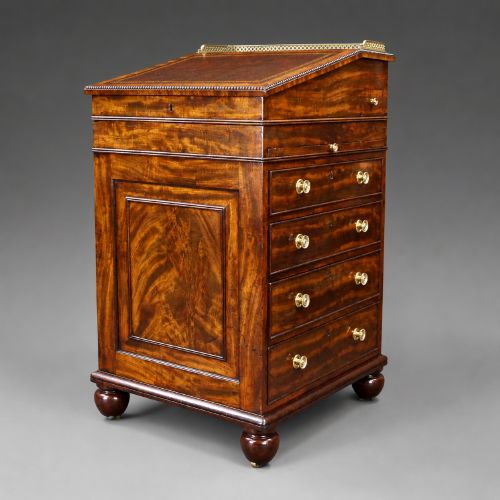
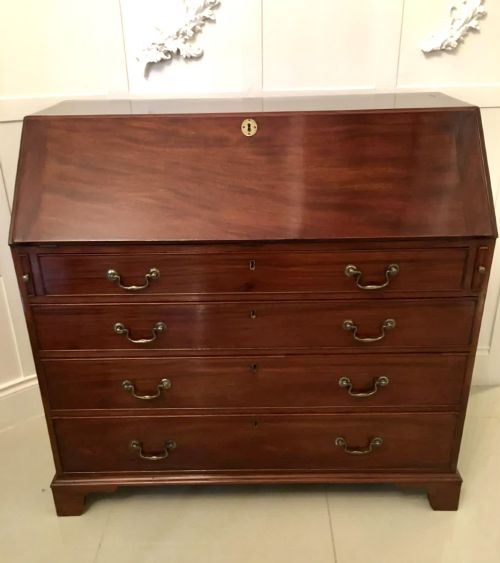
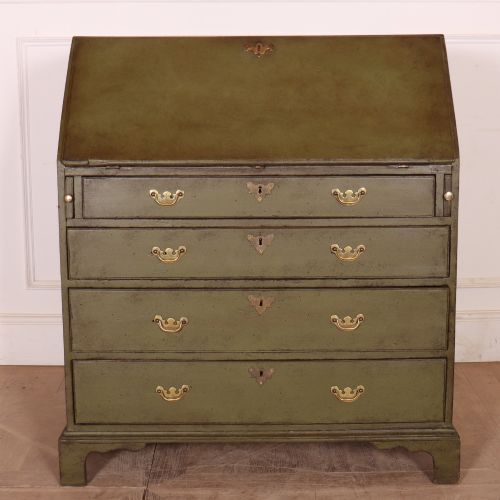
An English writing bureau combines a sloping or folding fall-front writing surface with an internal arrangement of small drawers and pigeonholes above standard lower drawer storage. This form evolved to house paper, ink and ledgers securely behind a locked flap when not in use.
Pieces span several centuries of cabinet-making, beginning with robust 17th-century oak examples and moving through the sophisticated figured walnut and mahogany periods of the 18th century. Buyers also encounter later Victorian iterations alongside distinctive 1930s walnut and burr elm modernist variations.
The layout typically places the writing flap at a convenient seated height, concealing a tiered interior often fitted with a central cupboard or secret compartments. Below this desk section, graduated drawers provide substantial utility for household or study organisation.
Variations in Quality
Quality rests in the selection and matching of timber veneers, where superior pieces showcase continuous grain patterns across the fall front and drawer fronts. The crispness of internal joinery, the neatness of dovetailing, and the presence of original brass work define the standard of execution.
The sophistication of the internal fitments distinguishes standard examples from masterworks, with better pieces featuring serpentine pigeonholes, secret compartments, and finely carved prospect doors. The balance of proportions and the weight of the timber used for secondary framing further indicate workshop status.
English Writing Bureau Retail Price Guide 2026
Typical asking prices for english writing bureau among the pieces listed under this phrase on Sellingantiques today, from the lower quarter to the upper quarter. They describe what is for sale here now, not the wider market.
Many bureau interiors contain hidden spring-loaded compartments designed centuries ago to conceal private letters and family treasures from curious houseguests.
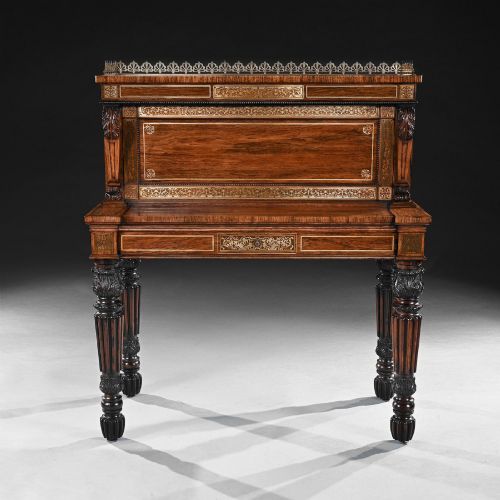
Gillows Oxford Street Workshop·Stanley Webb Davies
The English Writing Bureau Glossary
- Fall front
- The hinged writing flap that pulls down to form a horizontal desk surface. It conceals the internal pigeonholes and small drawers when closed.
- Bureau bookcase
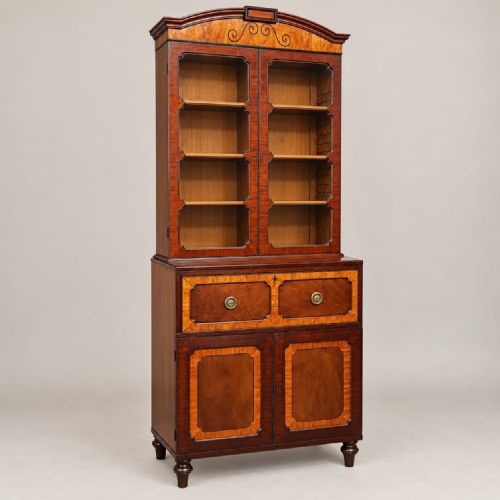
- A tall cabinet comprising a writing bureau base surmounted by a glazed or panelled shelving section with doors. This combined form provides both workspace and a library.
- Escritoire
- An alternative term for a writing cabinet or desk. It denotes a piece built primarily for handling correspondence and documents.
- Dovetail
- A traditional interlocking joint used at the corners of drawers. Hand-cut variations indicate period craftsmanship.
- Pigeonhole
- A small, open compartment within the bureau interior used for sorting letters and papers. These are frequently arched or stepped in finer pieces.
English Writing Bureau: Frequently Asked Questions
What is a bureau bookcase?
A bureau bookcase integrates a lower fall-front writing desk with an upper shelving unit enclosed by doors. This tall construction served as a dual-purpose piece for housing books and managing correspondence.
Such cabinets utilise matched timbers like walnut or mahogany to unify the upper and lower sections visually. They represent a substantial architectural presence within a study or principal room.
How do I use a bureau daily?
The fall front lowers to create a stable wooden writing surface supported by internal runners or bracket arms. You can store stationery, laptops, and paperwork within the internal compartments when the flap is closed.
Regular care involves maintaining the timber surface with appropriate wax rather than modern silicon polishes. The lower drawers accommodate larger household files and bulkier storage needs.
How do I date an oak bureau?
Early oak examples from the 17th century display heavy plank construction, pegged joints, and hand-carved geometric or panelled details. The interior layout tends to be simpler and sturdier than later veneered counterparts.
Examining the drawer linings, backboards, and secondary woods reveals construction traits characteristic of specific decades. The absence of mass-produced hardware further confirms age.