





English Windsor Chair
An english windsor chair brings tactile warmth and robust vernacular character to any interior through time-honoured timber construction.
English Windsor Chair
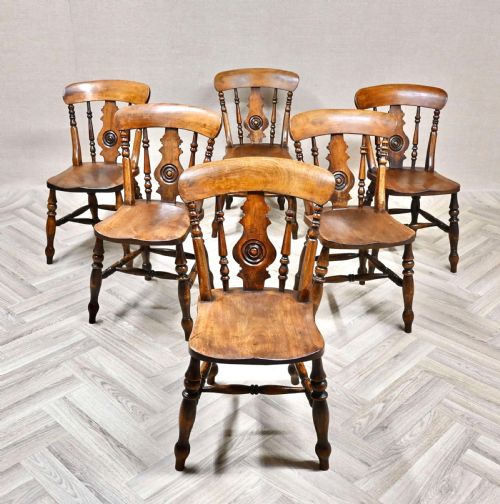
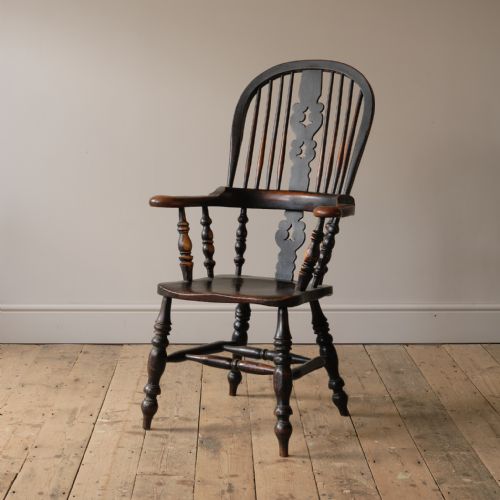
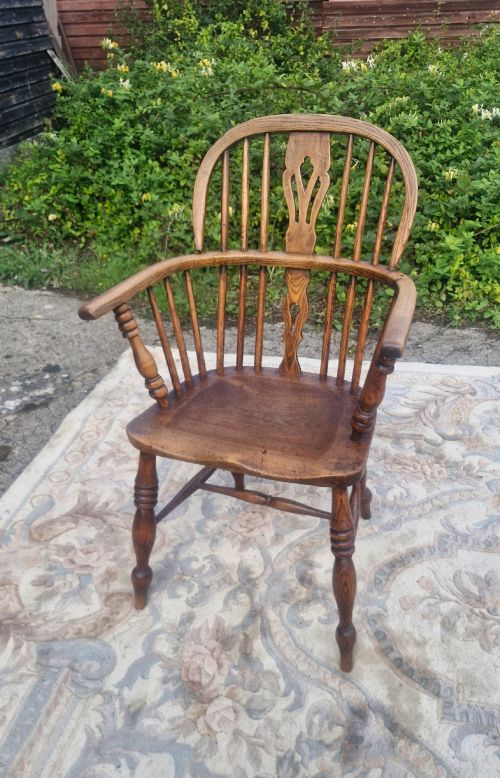
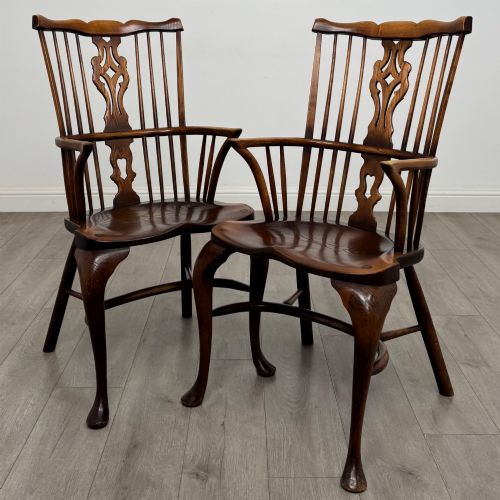
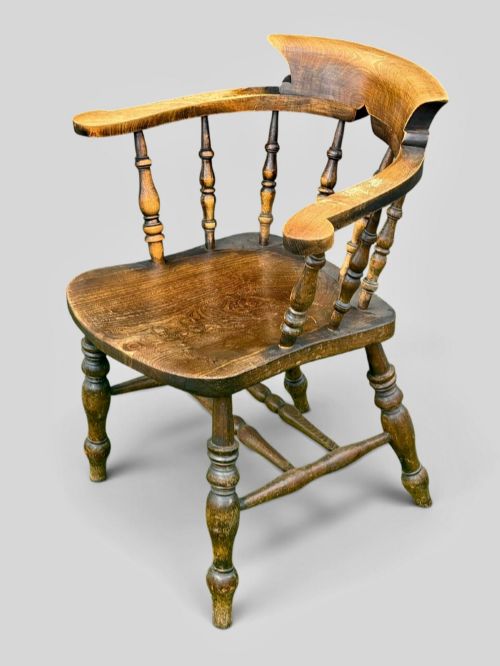
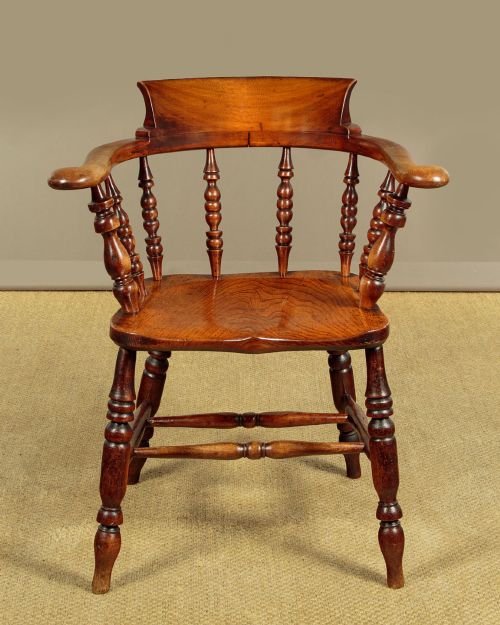
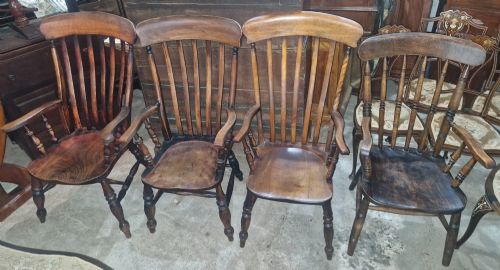
An english windsor chair is a traditional timber seat defined by a solid saddle-shaped wooden seat into which the legs, back spindles and bow are independently wedged and jointed. These functional forms range from low-back smokers bows and kitchen armchairs to high-comb backs and grand yew-wood library carvers originating across various English counties.
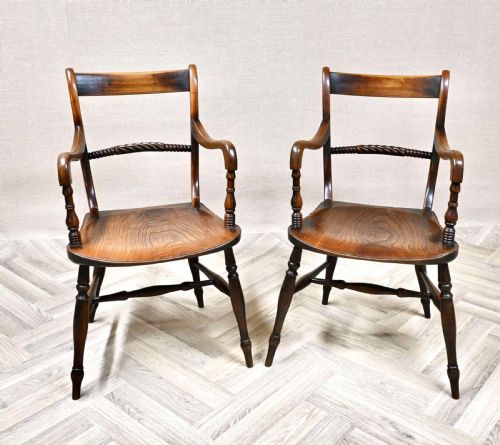
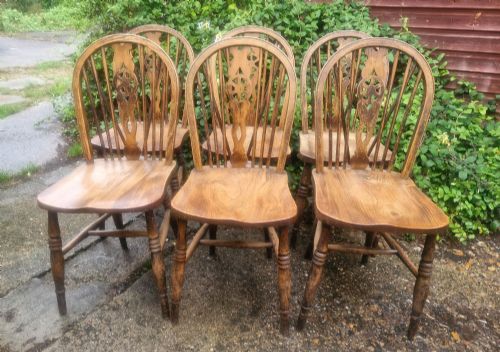
The versions most commonly met on this page date from the nineteenth century, spanning Victorian farmhouse examples in ash and elm through to refined eighteenth-century Georgian wheelbacks and comb backs. They appear primarily as single armchairs, matching pairs, or larger sets intended for dining and kitchen spaces.
Regional variations emerge clearly across the selection, with distinct regional patterns including Lincolnshire stickbacks, Thames Valley yew armchairs, and northern wheelback designs. Buyers encounter everything from child-sized vernacular pieces to generous broad-arm carvers intended for domestic comfort.
How They Were Made
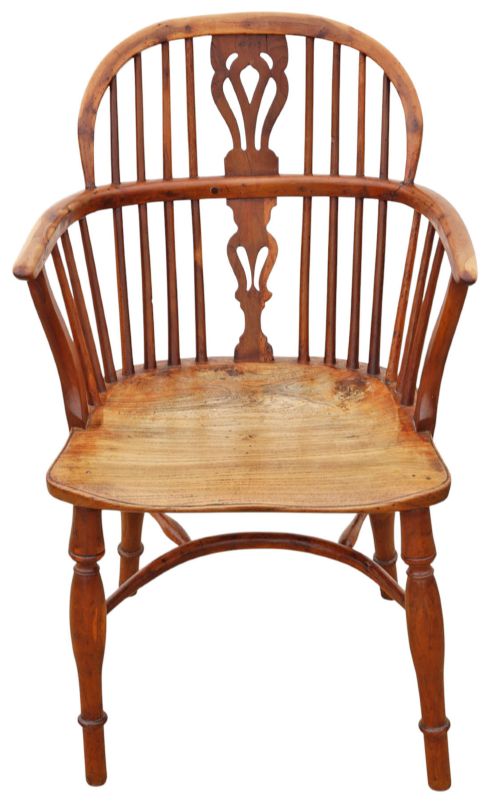
Traditional makers built these seats using a clever combination of contrasting timbers, pairing resilient elm for thick sculpted seats with bendable ash, beech or oak for steam-bent hoops, bows and spindles. Yew wood appears frequently in finer examples, prized for its rich grain patterns and natural flexibility.
Construction relied entirely on wedged tenon joints where vertical spindles and leg underframing pass straight through bored holes in the seat slab. Undercarriages were often reinforced with stiffening stretchers, including crinoline variants, to ensure long-term structural stability under heavy daily use.
Listings feature timbers including elm, ash, beech, yew, oak, and fruitwood across centuries of English country furniture.
What Varies in Quality
Quality rests significantly on timber selection and the depth of the sculpted saddle seat, where thicker, deeply dished elm slabs offer superior comfort and visual substance. Finer examples display richly figured yew wood with consistent grain patterns across both the armbow and back spindles.
The grace of the turning on legs and stretchers, alongside the proportion of steam-bent hoops and the tightness of wedged joints, dictates the aesthetic success of the piece. Master makers achieved balanced proportions where the splay of the legs provides both stability and visual lightness.
The English Windsor Chair Glossary
- Comb-back
- A Windsor chair variation featuring a high rectangular back topped by a horizontal headrest rail resembling the spine of a traditional hair comb.
- Wheelback
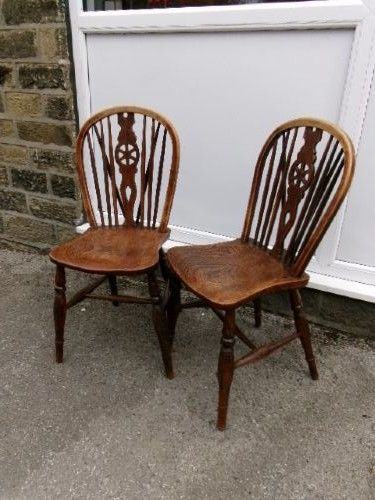
- A distinct Windsor style incorporating a pierced central wooden splat carved in the shape of a spoked carriage wheel.
- Smoker's bow
- A low-backed armchair variant with a continuous curved arm rail supported by short spindles, historically favoured in taverns and smoking rooms.
- Broad-arm
- A chair featuring one oversized, paddle-shaped armrest designed to provide an integrated writing or resting surface.
- Crinoline stretcher
- A curved undercarriage reinforcement rail linking the legs of a chair together, often bowed outwards in early models.
English Windsor Chair: Frequently Asked Questions
How were windsor chairs used originally?
These versatile seats served utilitarian roles across farms, country houses, cottages, and commercial taverns throughout Britain. Their robust construction made them ideal for demanding daily domestic environments, from kitchens and dining rooms to studies.
Generous proportions and supportive carved armrests allowed people to sit comfortably for long periods during meals, writing tasks, or fireside relaxation without needing upholstered cushions.
How do I tell different periods apart?
Early eighteenth-century and Georgian examples typically feature high comb backs or refined yew construction with slender, elegant spindles and deep saddle seats. Nineteenth-century Victorian versions often introduce steam-bent wheelback motifs, broader kitchen dimensions, and sturdier beech or ash underframes.
Examining the turning style of the legs, the thickness and contouring of the seat, and the timber species provides reliable clues to the era of manufacture.
How do I live with one today?
Integrating these chairs into modern spaces is straightforward because their organic timber tones complement both contemporary minimal interiors and traditional room schemes. They function brilliantly as individual desk chairs, accent pieces in hallways, or mixed around a dining table.
Maintenance requires only basic care: keeping them away from direct heat sources and applying occasional natural wax to nourish the historic wood surfaces.