




English Walnut Secretary
An English walnut secretary offers a sloping writing surface and internal compartments, combining practical storage with rich cabinet-making traditions.
English Walnut Secretary
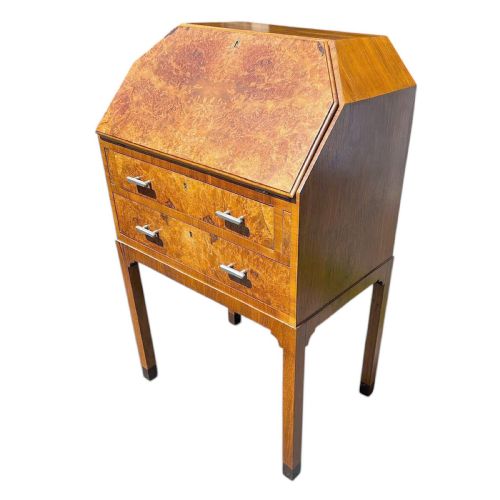
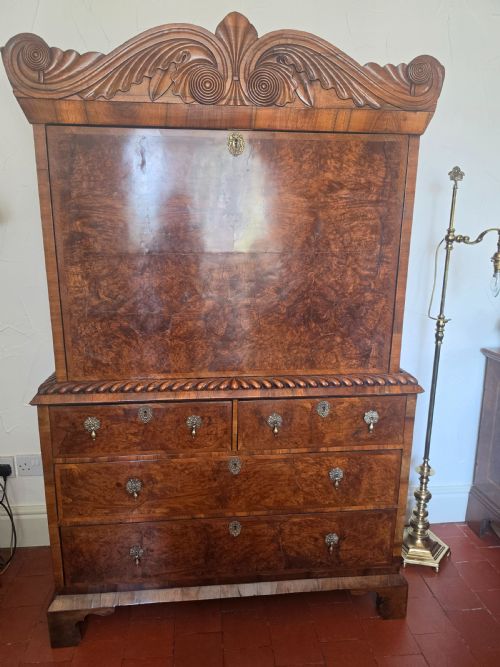
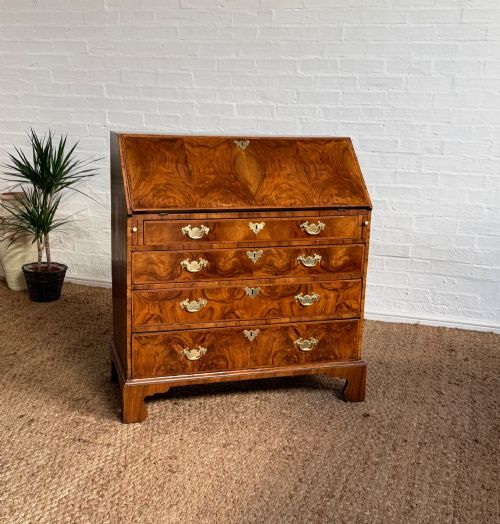
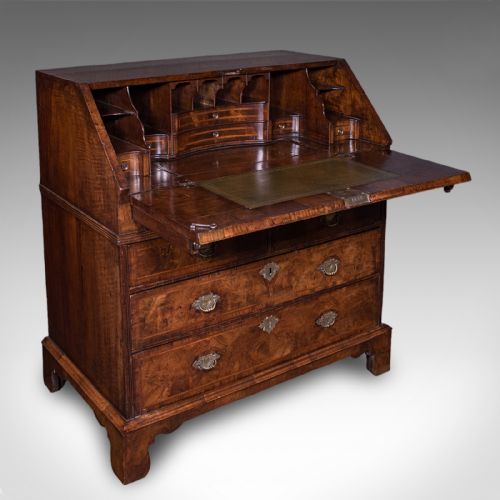
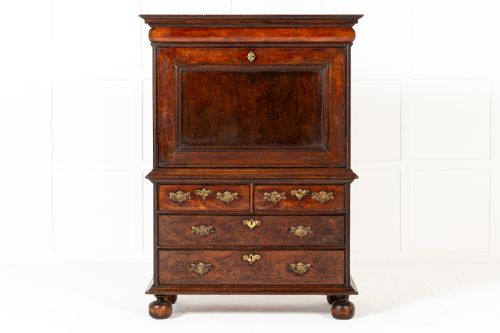
An English walnut secretary brings together several related forms on this page, including bureau bookcases, fall-front desks, and escritoires. These pieces range from early walnut furniture of the seventeenth and eighteenth centuries, through the Georgian and Queen Anne eras, to later interpretations in the Art Deco and Edwardian periods.
The primary forms vary from compact slant-front desks to towering bureau bookcases featuring glazed upper sections. Buyers encounter bureau cabinets and writing cabinets designed for domestic study, utilising fitted interiors with small drawers and pigeonholes behind the main writing flap.
Origins span distinct historical epochs, notably the William and Mary, George I, and George II eras, alongside twentieth-century revivals. Each piece reflects the prevailing domestic requirements of its time, balancing secure manuscript storage with display capabilities.
Materials and construction methods
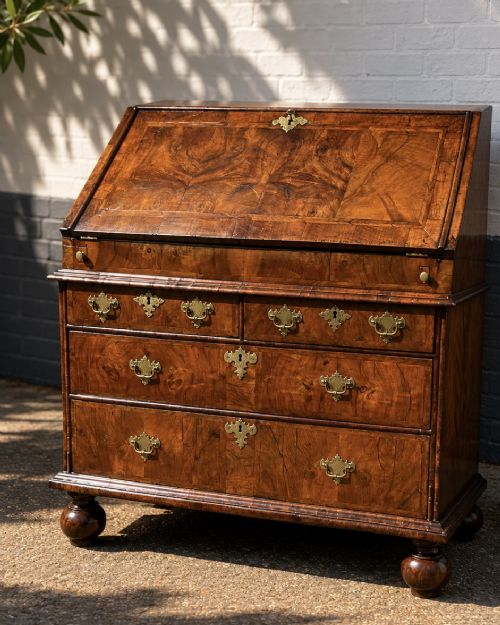
Makers utilised solid walnut, burr walnut, and figured veneers applied to secondary woods such as oak, creating complex grain patterns across primary surfaces. Brass handles, escutcheons, and hinges provide functional hardware, while glass panels feature in the upper doors of taller bookcases.
Advanced cabinet-making techniques included book-matching veneers to produce symmetrical patterns across fall fronts and drawer faces. Interiors incorporate specialised joinery for secret compartments, small drawers, and sliding wells beneath fitted writing surfaces.
Many pieces conceal tiny secret drawers behind pigeonholes, built to hide love letters or family debts from prying eyes.
Distinctions in quality and execution
The distinction between standard examples and exceptional pieces rests upon the choice of timber and the complexity of the veneer work. Highly figured burr walnut and carefully aligned grain patterns demonstrate superior craftsmanship by the original maker.
Survival of original interior fittings, hardware, and surface finishes heavily influences the character of a piece. The presence of period brassware and untouched patination distinguishes better-preserved examples from those with extensive later alterations.
The English Walnut Secretary Glossary
- Escritoire
- A writing cabinet or desk, often featuring a fall-front flap that conceals numerous small drawers and pigeonholes.
- Burr walnut
- Timber taken from a growth on a walnut tree, highly prized for its swirling, decorative grain patterns used in veneering.
- Fall front
- A hinged writing flap that pulls down to provide a horizontal surface for correspondence.
- Kneehole bureau
- A compact desk design featuring a central recessed space for the user's legs, flanked by columns of small drawers.
- Bureau bookcase
- A dual-purpose piece combining a sloping desk base with an enclosed shelving or cabinet section above.
English Walnut Secretary: Frequently Asked Questions
How do I identify a Georgian secretary?
Georgian secretaries span the reigns of the early Hanoverian monarchs and are characterised by figured walnut veneers, cross-banding, and classic proportions. They frequently exhibit herringbone stringing and solid brass hardware appropriate to the period.
Examining the secondary woods, dovetailing methods, and internal drawer construction helps confirm the eighteenth-century origin of the piece.
Where were these secretaries used in the home?
Historically, these cabinets were placed in private parlours, libraries, and principal bedchambers where correspondence and financial accounts were managed. Their lockable writing flaps provided essential security for private letters and valuables.
Today, they function effectively in studies and living rooms as both practical writing desks and display storage.
How should I care for walnut furniture?
Walnut furniture requires placement away from direct sunlight and strong heat sources to prevent the veneers from drying out or lifting. Maintaining stable indoor humidity preserves the structural integrity of the timber and the underlying glue.
Regular dusting with a dry, soft cloth and occasional light application of appropriate wax keeps the historic finish nourished without causing buildup.