


English Village Landscape Art
English village landscape art captures rural settlements through watercolours and oils, offering a window into traditional country life.
English Village Landscape Art
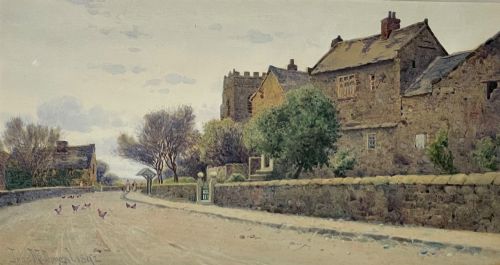
These works document specific topographical locations ranging from Yorkshire and Sussex to Devon and Suffolk. The pieces span from the Victorian era through the mid-twentieth century, preserving historical views of rural settlements before modern development altered their layouts.
Materials and methods
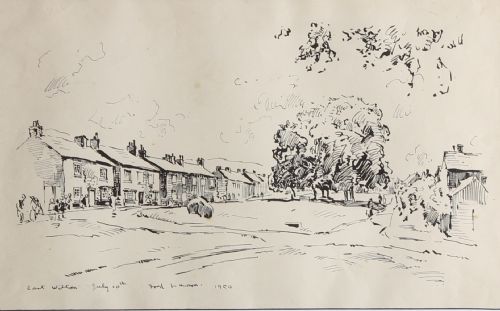
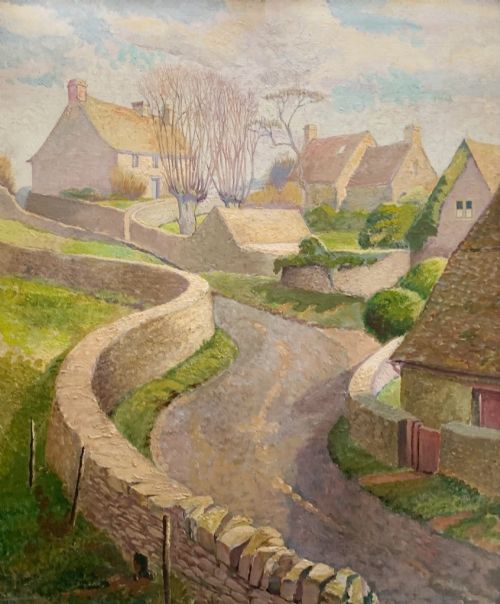
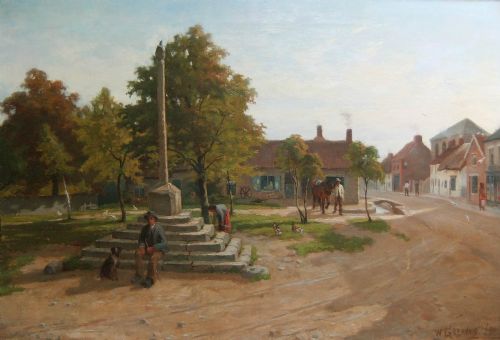
Artists relied primarily on watercolour pigment applied to paper or oil paint laid onto canvas or panel surfaces. Watercolour works often utilise fine ink detailing for architectural elements, whilst oil paintings employ layered brushwork to build texture in the foliage and sky.
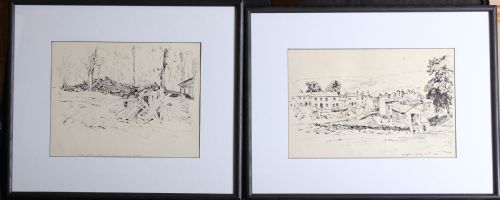
Framing forms an integral part of these pieces, with many surviving in period gilt wood frames that complement the painting style. The support materials range from heavy watercolour paper to stretched canvas secured on wooden stretchers.
Listings feature works executed in watercolour, oil on canvas, and ink, spanning the Victorian period through the mid-twentieth century.
Evaluating quality and execution
Quality in these rural scenes rests upon the artist's ability to handle perspective, light, and atmospheric conditions within the composition. Stronger works demonstrate confident brushwork and precise architectural rendering rather than generic formulas.
The degree of documentation also distinguishes individual works, as named locations and signed artist attributions add historical weight. Condition plays a role, with well-preserved pigments and stable paper or canvas surfaces indicating careful past custodianship.
John McDougal·Fred Lawson·Lucy Pratt·William Greaves·Arthur Tucker·M. C. Hider·Charles Vickers·Louie Stanley Maurice Prince·Frederick G. Coulridge·John Smith Atherton·John Edward Bale·Robert Hollands Walker·Frederick Mayor·Percy Brooke·David Woodlock·B W Leader·Kershaw Schofield·Walter Henry Sweet·Herbert Royle·Georgina Lara·John J. Hamer·Stanley Orchart·Alfred Rimmer·Joseph Thors·David Heward
The English Village Landscape Art Glossary
- Topographical painting
- A work that depicts a recognizable real-world location with geographical accuracy. These pieces serve as historical records of villages and streetscapes.
- Watercolour
- A paint consisting of colorants suspended in a water-soluble vehicle. It is typically applied to paper supports to achieve translucent washes of tone.
- Oil on canvas
- A painting technique utilising pigments bound with drying oils applied to a woven fabric surface. This medium allows for rich textures and deep colour blending.
- Genre painting
- Artwork that depicts aspects of everyday life by portraying ordinary people engaged in common activities. In village scenes, this often includes figures working or travelling along country roads.
English Village Landscape Art: Frequently Asked Questions
How do I date an English village watercolour?
Dating typically relies on a combination of artist biographical dates, paper watermarks, and stylistic cues within the clothing and architecture shown.
Fashion details on any figures present and the framing style can also provide a reliable decade for the creation of the artwork.
Where should I hang a rural landscape painting?
These works suit traditional living spaces, studies, or hallways where their domestic scale can be appreciated up close.
Protect them from direct sunlight to prevent fading of sensitive watercolours and oil pigments over time.
Are these paintings of real places?
Most pieces depict actual villages across Britain, often titled by the artist on the front or reverse of the work.
Researching the named location can reveal how much the local streetscape has changed since the painting was made.
What is the difference between watercolour and oil village scenes?
Watercolour paintings offer a lighter, translucent quality on paper, often presented under protective glass with a mount.
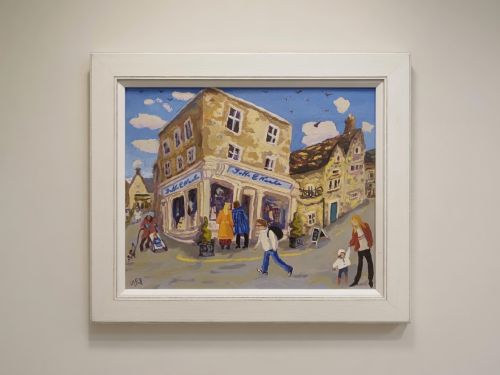
Oil paintings feature heavier textures on canvas, usually housed in deep wooden frames without the need for glass.