


English Victorian Cream Jug
An english victorian cream jug brings domestic history to the tea table through enduring ceramic and silver forms.
English Victorian Cream Jug
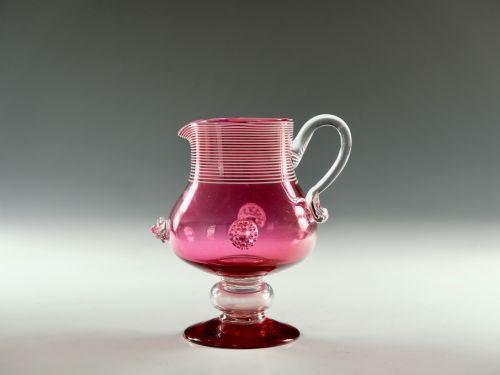
An english victorian cream jug serves as a small pouring vessel designed for milk or cream during tea service. These pieces emerge primarily from the nineteenth century, spanning periods from early Victorian to the late eighteen-hundreds.
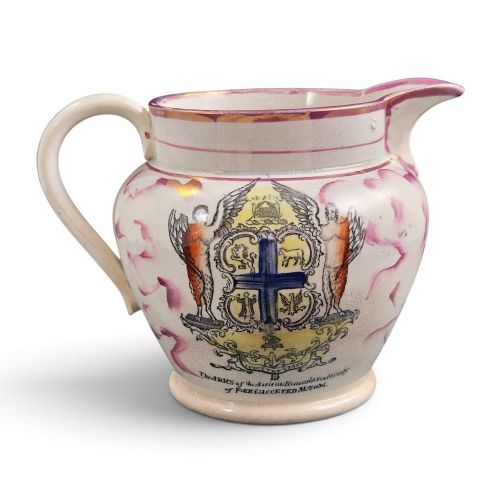
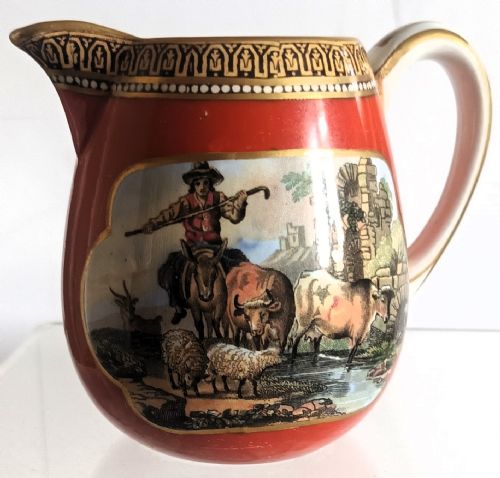
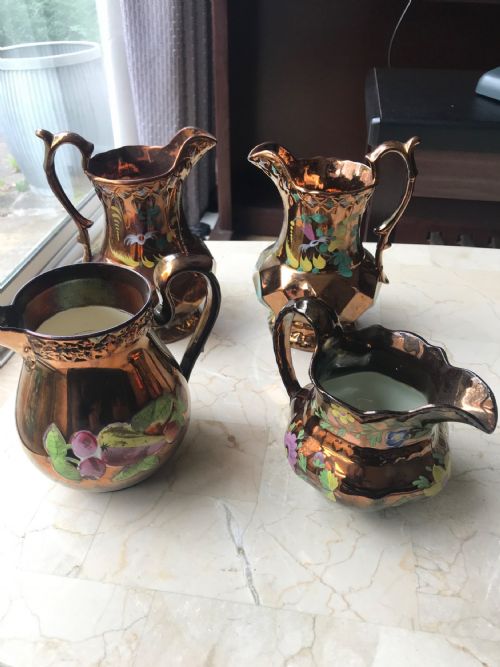
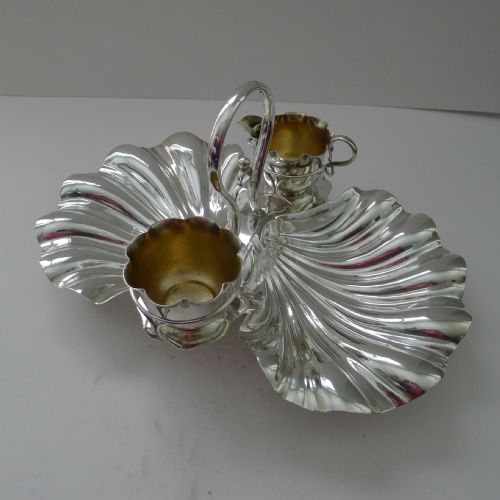
The selection on this page encompasses diverse ceramic and silver iterations, including earthenware, stoneware, porcelain, and sterling silver. Buyers regularly encounter moulded earthenware like cow creamers, copper lustre decorated wares, and solid silver pouring jugs bearing hallmarks from the final decades of the nineteenth century.
Forms range from simple domestic milk jugs to elaborate decorative pieces such as Sunderland lustre vessels and Doulton Lambeth stoneware. Each object reflects the utilitarian and ornamental tastes of nineteenth-century British households.
Materials and construction methods
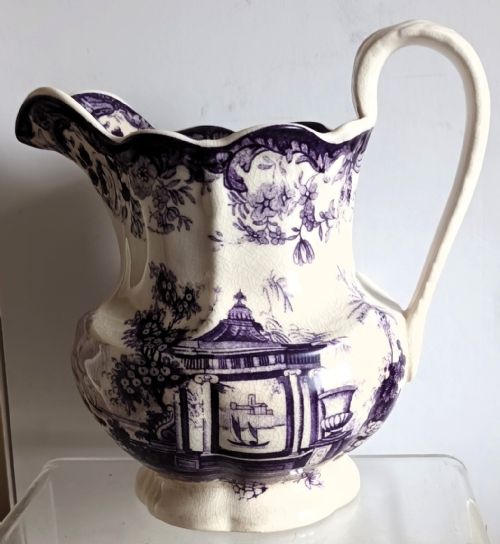
Potters shaped these jugs using earthenware, stoneware, and porcelain bodies, often applying specialised finishes such as copper lustre glaze, salt glaze, or transfer printing. Silver examples were fashioned from solid sterling silver or silver plate, shaped through smithing and detailed with chased or engraved decoration.
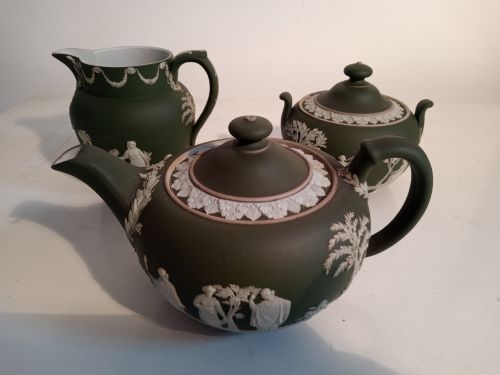
Ceramic pieces frequently utilised hand-decorated motifs, sprigged reliefs, or metallic lustre applications fired onto the clay body. Makers such as Wedgwood, Royal Worcester, and Doulton Lambeth employed distinct regional techniques to achieve their characteristic glazes and textures.
Pottery items on this site span regional British traditions, featuring Staffordshire animal forms, Worcester porcelain, and Lambeth art pottery.
Evaluating craftsmanship and detail
Quality in these vessels rests on the crispness of the moulding, the uniformity of the glaze, and the precision of hand-painted or transferred decoration. Superior ceramic jugs display clean transfer lines and even lustre distribution without distracting firing blemishes.
Wedgwood·Daniel Arter·Doulton Lambeth·Royal Worcester·George Fox
The English Victorian Cream Jug Glossary
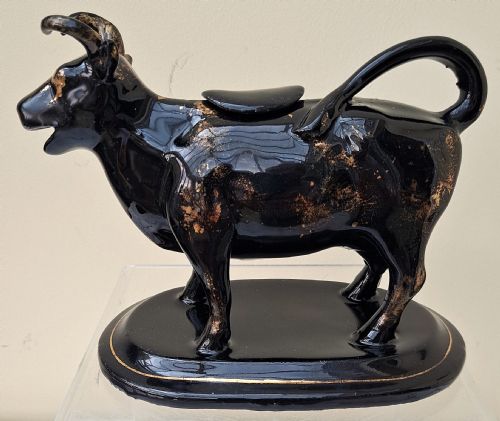
- Cow creamer
- A ceramic container shaped like a cow, designed to hold cream with an opening on the back and the tail functioning as a handle. These playful domestic items gained popularity in Staffordshire potteries during the nineteenth century.
- Copper lustre
- A metallic glaze technique that produces a reflective, coppery sheen on pottery surfaces. Artisans created this effect by applying a thin metallic film over a fired glaze before a final low-temperature firing.
- Salt glaze
- A ceramic finish created by throwing common salt into the kiln during high-temperature firing, producing a pitted, orange-peel texture on stoneware. This durable surface suited utilitarian vessels.
- Transfer printing
- A method of applying decorative patterns to ceramics by transferring an inked design from a copper plate onto paper and then onto the unglazed or bisque ceramic body. This innovation allowed for consistent, detailed pictorial scenes on domestic wares.
- Sterling silver
- An alloy consisting of silver and other metals, typically copper, standardised for quality in British silver production. Hallmarks stamped into the metal indicate the assay office, standard, and date of manufacture.
English Victorian Cream Jug: Frequently Asked Questions
What distinguishes a cream jug from a milk jug?
Cream jugs were traditionally smaller vessels intended for rich cream, while milk jugs possessed slightly larger capacities for everyday tea additions.
In nineteenth-century table settings, both forms shared similar ceramic and silver materials, making their specific historical use dependent on size and household custom.
How are nineteenth-century silver pieces dated?
British silver incorporates standardised hallmarks that include a date letter corresponding to the exact year of assay and manufacture.
Additional stamps identify the specific maker, the town of origin, and the silver standard, providing a reliable paper trail for antique pieces.
What is a cow creamer?
A cow creamer is a novelty ceramic vessel shaped in the form of a bovine, filled through a hole in the back and poured from the mouth.
Staffordshire potteries produced these whimsical items extensively during the Victorian era for functional use at the tea table.
How do you care for antique ceramic jugs?
Antique ceramics require gentle hand washing in lukewarm water with mild soap to preserve fragile glazes, lustre finishes, and transfer-printed decorations.
Submerging older earthenware for extended periods or placing pieces in modern dishwashers risks damaging the porous clay bodies and historic surfaces.