

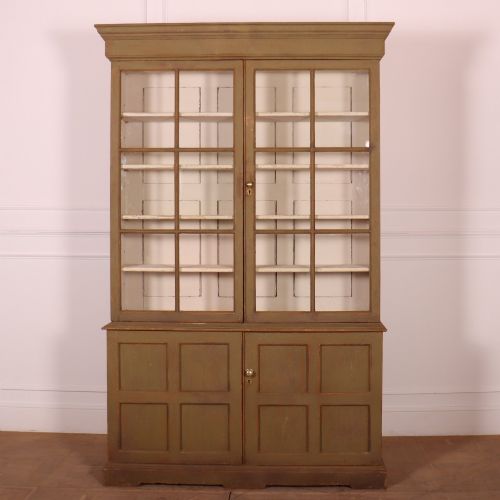
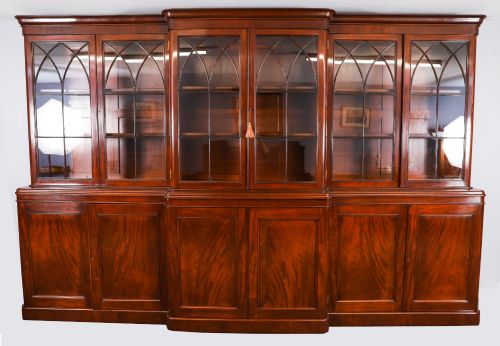
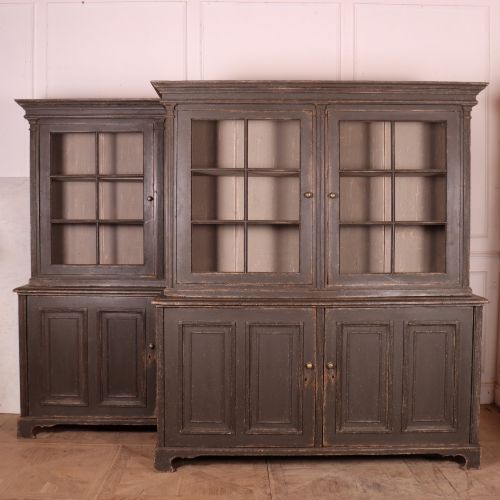
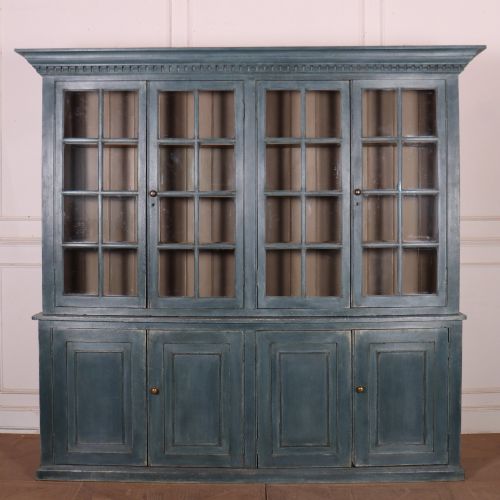


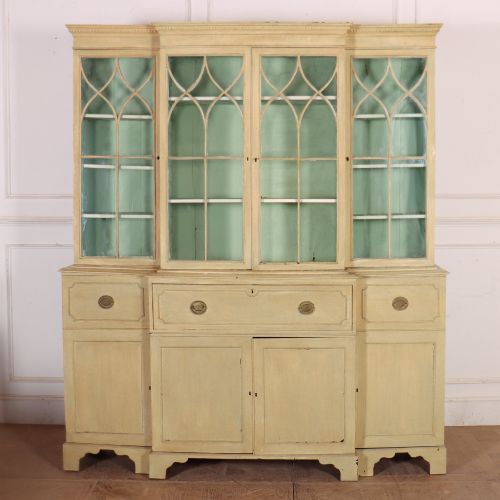
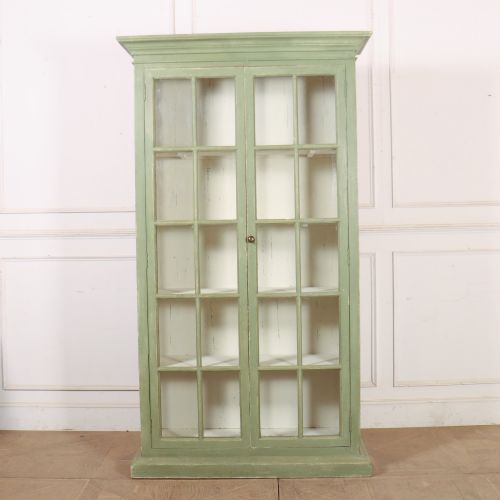
English Victorian Bookcase
An english victorian bookcase brings domestic architecture into a room, offering sturdy timber and glass to hold a lifetime of reading.
English Victorian Bookcase
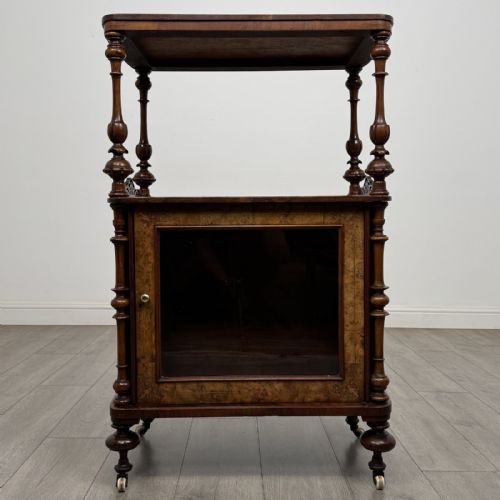
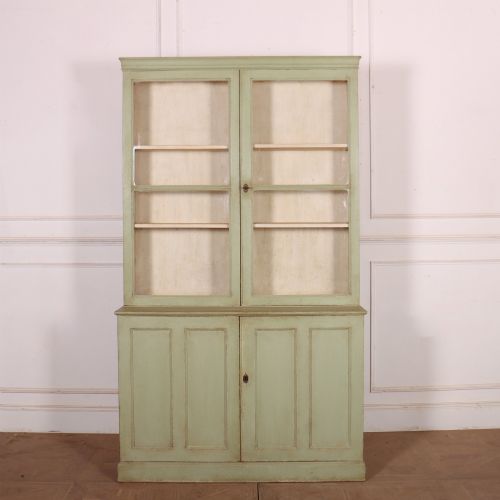
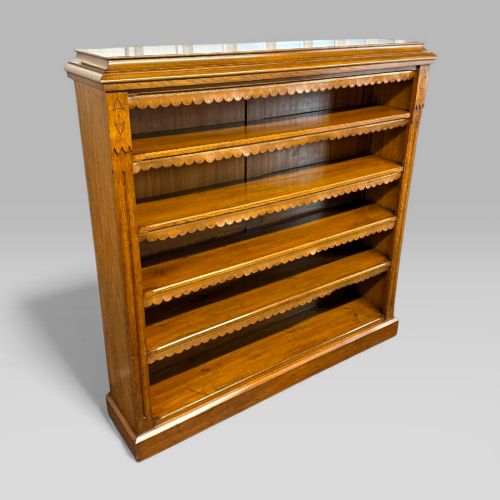
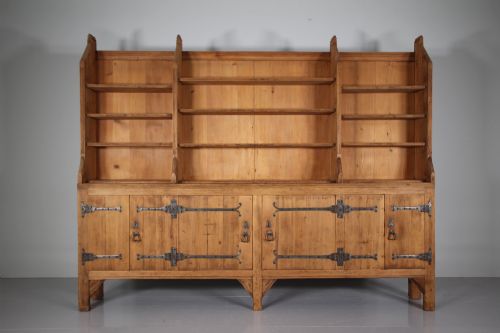
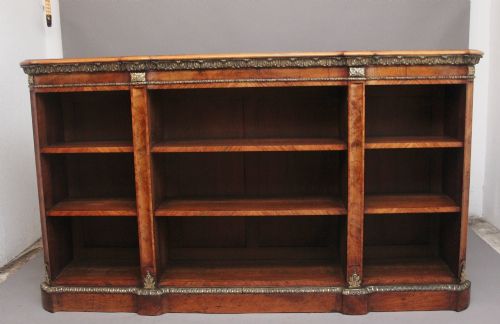
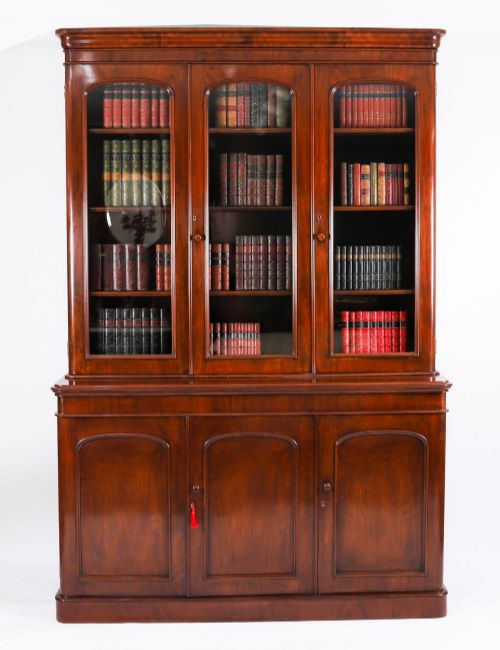
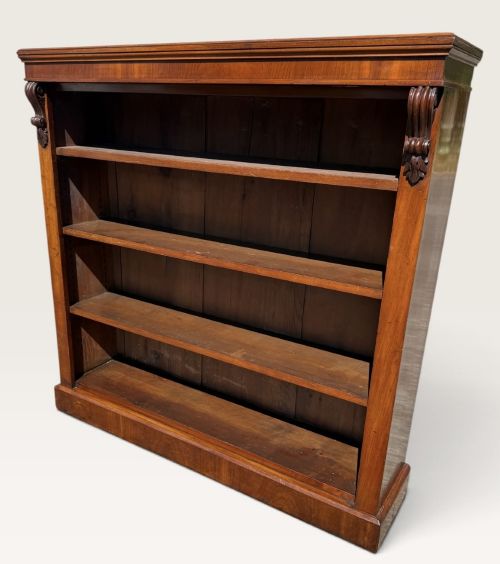
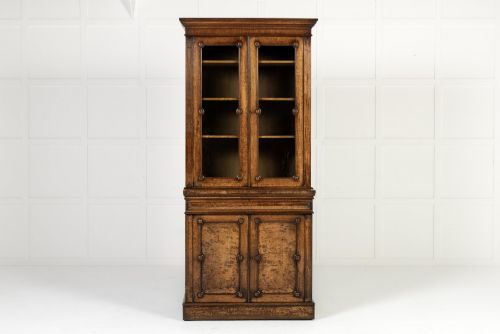
When you search for an english victorian bookcase, you encounter large architectural library pieces alongside smaller open shelves, glazed cabinets, and revolving desk units. The pieces on this page span the nineteenth century, taking forms from breakfront libraries to simpler pine and oak storage cupboards.
The most frequent versions you meet combine timber shelving with glazed doors or open fronts, occasionally incorporating secretaire drawers or lower cupboard bases. Makers of the period drew on styles ranging from plain English country house practicality to Gothic Revival and Aesthetic Movement ornamentation.
Beyond standard upright bookcases, the selections include pier cabinets, display cabinets, and kitchen dressers that share the heavy timber construction characteristic of the era. Buyers find formats suited to compact spaces as well as substantial breakfronts designed for substantial room layouts.
How they were made
Cabinet makers utilised dense hardwoods like mahogany, walnut, and oak, often selecting figured veneers such as flame mahogany, pollard oak, or birdseye maple for visible surfaces. Pine served frequently for carcases, interiors, and kitchen dressers, whilst softer woods took painted finishes.
Glass panels were fitted into wooden frames for glazed doors, and metal elements such as brass handles, hinges, and ormolu mounts added structural and decorative detail. Construction involved traditional joinery methods, supporting heavy book collections without modern adhesives.
English Victorian Bookcase Retail Price Guide 2026
Typical asking prices for english victorian bookcase among the pieces listed under this phrase on Sellingantiques today, from the lower quarter to the upper quarter. They describe what is for sale here now, not the wider market.
Sir Charles Barry designed a birdseye maple bookcase for Kiddington Hall.
What varies in quality
The distinction between standard utility items and finer pieces lies in timber selection and the ambition of the design, such as breakfront configurations or inlaid Tunbridgeware details. Master workshops employed carefully matched veneers and intricate carving, whereas simpler country pieces relied on solid local woods and straightforward joinery.
Proportion and architectural detailing set the upper tier apart, visible in cornices, column supports, and the crisp execution of Gothic or Aesthetic Movement motifs. The integration of specialised hardware, from brass mechanisms on revolving shelves to finely cast ormolu mounts, signals higher craftsmanship.
Johnstone and Jeanes·Maple and Co·Edwards and Roberts·James Winter and Sons
The English Victorian Bookcase Glossary
- Breakfront
- A cabinet design where the central section projects forward from the flanking wings. This configuration creates architectural depth in large library pieces.
- Secretaire
- A desk form featuring a drop-down writing flap that conceals small drawers and pigeonholes. It often integrates into the upper sections of bookcases.
- Ormolu
- Gilded bronze mounts applied to furniture for decorative effect. It appears on high-status nineteenth-century cabinets.
- Tunbridgeware
- Woodworking characterised by small mosaic tiles forming pictorial patterns. It decorates the surfaces of specific nineteenth-century boxes and cabinets.
- Waterfall
- A set of open shelves where each tier steps back progressively from the one below. This style creates a cascading vertical profile.
English Victorian Bookcase: Frequently Asked Questions
How do I identify a Victorian bookcase?
Look for dense timbers like mahogany and walnut, heavy proportions, and architectural elements drawn from Gothic or classical revivals. Maker stamps and specific construction methods also help confirm the nineteenth-century period.
Interior fittings and backboards of pine or oak provide further clues to dating. Examining the joint work reveals hand-cut techniques common before mass production.
Where should I place a large bookcase?
Position large breakfronts against substantial walls away from direct sunlight and heat sources that might dry out old timbers. Ensure the floor level can support the considerable weight of solid wood and glass.
Allow enough clearance for doors to open fully without striking adjacent furniture. Adequate anchoring prevents tipping, particularly with tall library units.
Are revolving bookcases stable?
Revolving table and floor models utilise internal ball-bearing or spindle mechanisms designed to distribute weight evenly as they turn. Their sturdy cruciform bases keep the centre of gravity low.
Loaded with books, they maintain balance during rotation, though heavy loads should be distributed evenly across the tiers. Regular gentle use keeps the turning mechanism functioning smoothly.
What is a glazed door bookcase used for?
Glazed doors protect delicate or leather-bound volumes from dust, humidity, and direct handling while keeping titles visible. They transformed library storage into a display feature in nineteenth-century homes.
Today, they serve equally well for displaying collections of ceramics alongside books. The glass panels help maintain a stable internal environment for paper goods.