



English Transferware Plates
English transferware plates carry printed scenes from the Georgian, Regency, and Victorian eras onto earthenware, pearlware, and ironstone surfaces.
English Transferware Plates
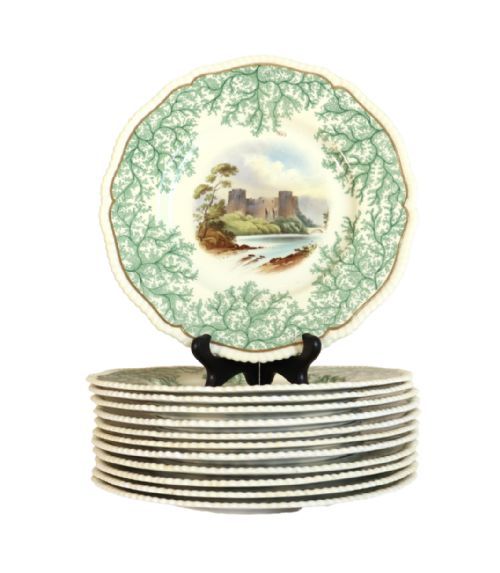
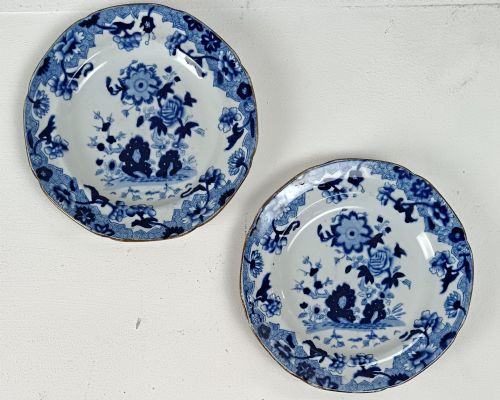
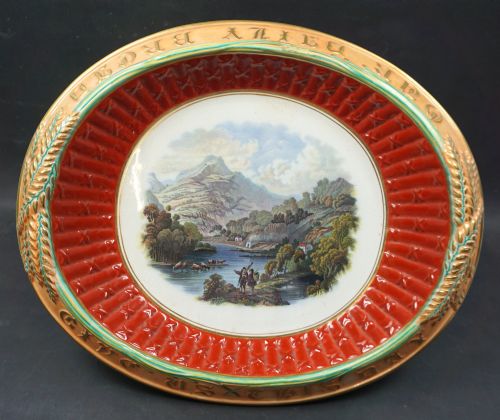
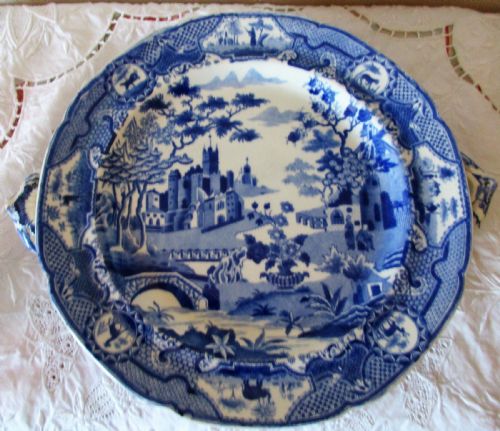
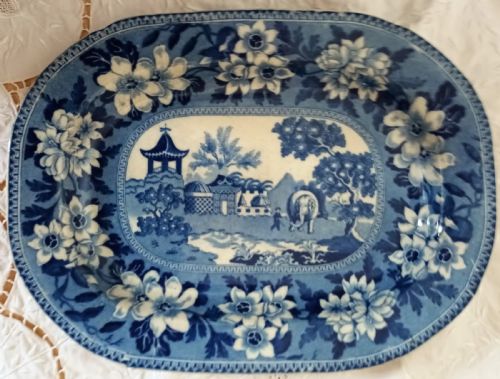
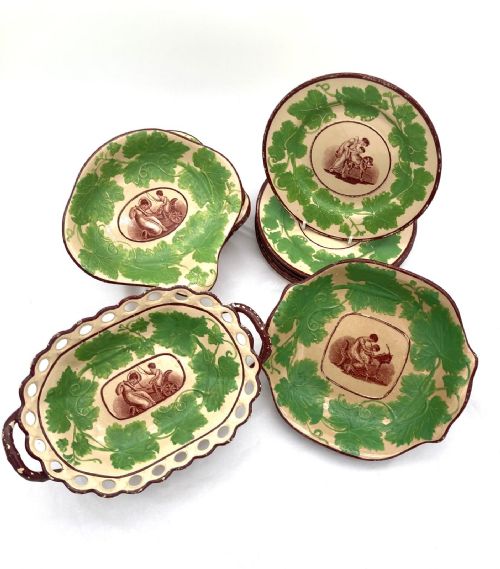
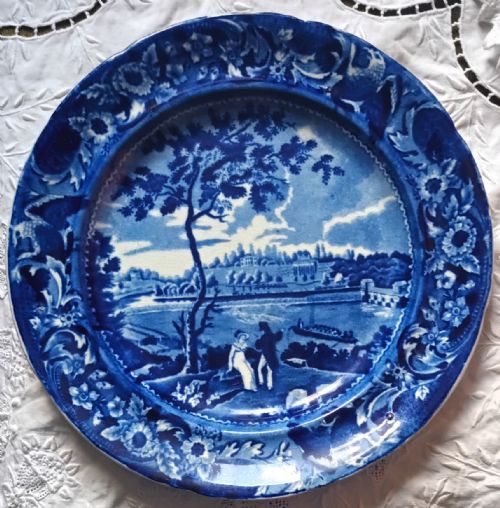
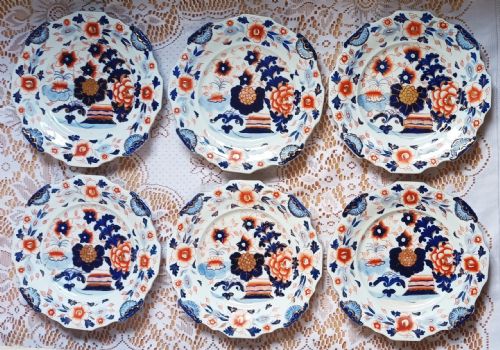
When you examine english transferware plates, you encounter printed earthenware, pearlware, ironstone, and creamware surfaces decorated with blue and white or polychrome designs. These pieces span the Georgian, Regency, and Victorian periods, taking the form of dinner plates, tea plates, serving platters, and drainers.
The versions you meet most frequently on this page originate from nineteenth-century Staffordshire potteries, capturing landscapes, architectural scenes, and Chinoiserie patterns. Makers applied these transferred images onto ceramic bodies before glazing and firing, producing durable items intended for daily dining or display.
How they were made
Potters produced english transferware plates by engraving a copper plate with a detailed design, applying oil-based pigment, and transferring the inked pattern onto thin tissue paper. Workers then pressed this paper onto a biscuited ceramic body, washing away the paper pulp before dipping the piece in glaze for firing.
The underlying ceramic bodies varied from porous early creamware and pearlware to dense nineteenth-century ironstone and stoneware. This mechanical printing technique allowed potteries to replicate intricate topographical views and scenic patterns across large sets of plates and serving dishes.
Listings feature 19th Century, Georgian, Regency, and Victorian periods across earthenware, pearlware, ironstone, and ceramic glaze materials.
What varies in quality
The quality of english transferware plates depends on the crispness of the printed line and the depth of the glaze. Finer examples display sharp, well-registered details without blurring or smudging where the paper joined the curved ceramic rim.
Pottery attribution and pattern complexity also influence value within the market. Pieces carrying clear maker marks from prominent Staffordshire factories command greater interest than unmarked utilitarian wares.
Spode·John Rogers & Son·Stubbs·Wedgwood·John Ridgway·John Davenport·Brameld & Co·Thomas Lakin
The English Transferware Plates Glossary
- Transferware
- Ceramic pottery decorated by transferring a printed design from an engraved copper plate onto the clay body. This method revolutionised industrial pottery production during the eighteenth and nineteenth centuries.
- Pearlware
- A refined earthenware developed by Josiah Wedgwood featuring a bluish-white glaze that pooled in recesses. It served as a popular substrate for blue and white printed tableware.
- Ironstone
- A dense, heavy type of durable ceramic patented in the nineteenth century. It resisted chipping better than standard earthenware and formed the base for many large platters and dinner services.
- Creamware
- A fine-grained, cream-coloured earthenware perfected in Yorkshire and Staffordshire. It provided a smooth pale ground for botanical painting and transfer printing.
- Chinoiserie
- A decorative style inspired by European interpretations of Chinese art and landscapes. It frequently appeared on early nineteenth-century plates featuring pagodas, bridges, and figures.
English Transferware Plates: Frequently Asked Questions
How do I date english transferware plates?
You can date english transferware plates by examining the ceramic body, maker marks, and style of the printed border. Pearlware bodies and specific topographical titles often point towards the early nineteenth century.
Later Victorian pieces typically utilise heavier ironstone bodies and bear registration diamonds or factory stamps on the reverse.
Can I use these plates for dining?
Most antique english transferware plates function safely for modern dining, provided the glaze remains intact and free from heavy cracking. However, historical pieces benefit from gentle hand washing rather than automated dishwashers.
Using them occasionally allows you to appreciate their weight and historical manufacture without risking thermal shock or surface wear.
What is the difference between pearlware and ironstone?
Pearlware is a lighter, earlier earthenware developed to imitate Chinese porcelain, characterised by a subtle blue tint in the glaze pool. It dates predominantly from the late eighteenth and early nineteenth centuries.
Ironstone is a much heavier, sturdier ceramic material introduced later in the nineteenth century to withstand heavy domestic and commercial use.
Why are some plates marked and others unmarked?
Many nineteenth-century potteries left their wares unmarked, relying instead on distinctive pattern names, border designs, or printed factory marks incorporated into the central transfer. Smaller regional kilns often omitted names entirely.
Marked pieces usually feature impressed stamps or printed cartouches naming the manufacturer or the specific pattern series.