






English Tin Glaze Pottery
English tin glaze pottery brings tactile, tin-glazed earthenware into the home, offering collectors classic blue and white bowls, chargers, and apothecary jars from past centuries.
English Tin Glaze Pottery
English tin glaze pottery encompasses domestic vessels and decorative forms produced across the seventeenth and eighteenth centuries. These pieces reflect distinct periods of British ceramic production, spanning early posset pots to later polychrome chargers and plates.
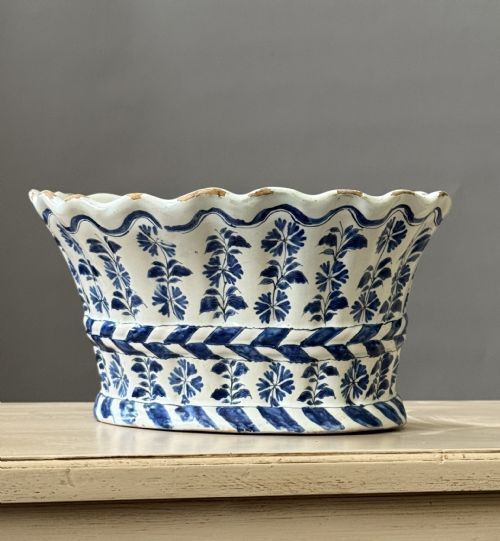
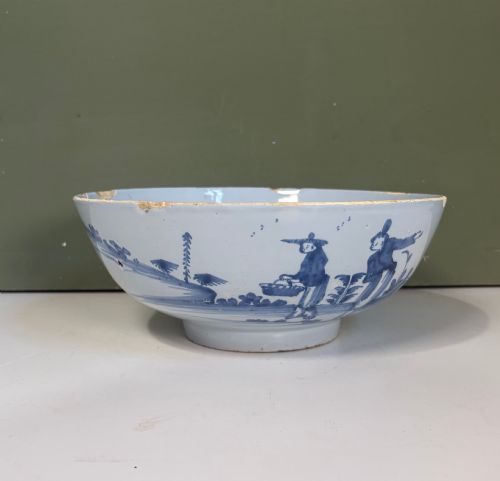
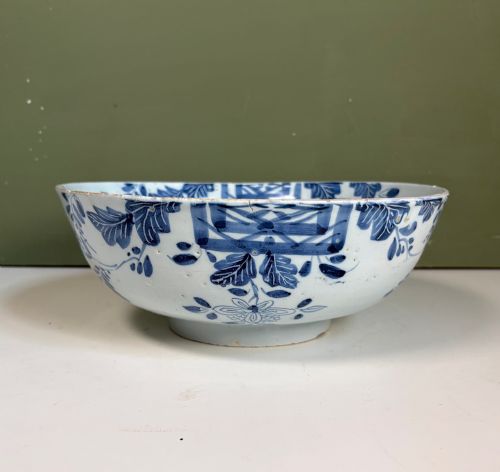
The objects commonly encountered on this page include shallow bowls, chargers, and plates decorated in blue and white or brighter polychrome palettes. Apothecary jars, bough pots, and salt cellars also appear among the selection.
Originating in domestic and regional workshops, these earthenwares carry the visual language of Dutch influence alongside native English interpretations. Collectors find both simple utility wares and more ornate display pieces within the group.
Materials and methods of production
Makers shaped local clay into bodies that were subsequently coated in a white, opaque tin glaze to provide a smooth ground for painting. Cobalt pigment and cobalt oxide supplied the characteristic blue tones, while additional metal oxides created polychrome details.
Painters applied designs directly onto the unfired or biscuit-fired glaze before the final kiln firing fixed the pigments. This technique demanded steady brushwork, as the porous glaze absorbed the colour instantly.
English Tin Glaze Pottery Retail Price Guide 2026
Typical asking prices for english tin glaze pottery among the pieces listed under this phrase on Sellingantiques today, from the lower quarter to the upper quarter. They describe what is for sale here now, not the wider market.
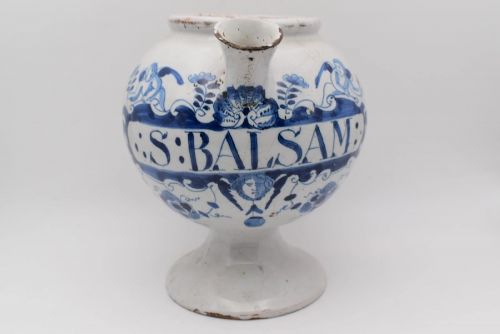
Old drug jars once stored medicinal balsams on apothecary shelves, now trading their sticky contents for a quiet retirement on display.
Assessing quality in tin-glazed earthenware
The refinement of the painted design distinguishes finer examples from simpler provincial output, with crisp brushwork and balanced compositions showing superior skill. Hand-painted Chinoiserie motifs and detailed floral arrangements indicate greater ambition in the workshop.
The stability of the tin glaze and the richness of the cobalt or polychrome palette contribute to the visual presence of a piece. Well-potted forms with minimal distortion from the kiln reveal the potter's competence.
The English Tin Glaze Pottery Glossary
- Tin-Glazed Earthenware
- Pottery covered with a ceramic glaze containing tin oxide, which fires to an opaque white surface. This technique formed the foundation for European delftware and faience production.
- Charger
- A large decorative plate intended for display on a wall or dresser rather than for dining. These sizable pieces often carry the most ambitious painted scenes.
- Posset Pot
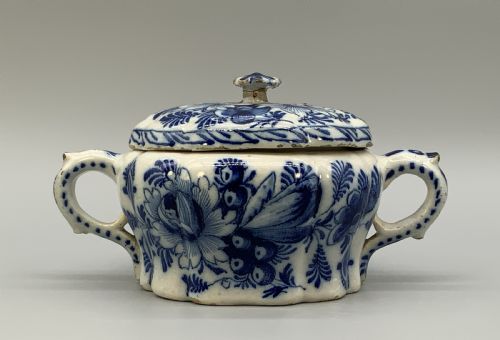
- A two-handled vessel with a spout, used historically for serving a warm drink made of curdled milk mixed with wine or ale. Surviving examples frequently include fitted lids.
- Polychrome
- Decoration employing multiple colours rather than a single pigment. In these wares, it typically involves combinations of blues, greens, yellows, and reds.
- Chinoiserie
- European interpretations of Chinese artistic motifs and styles, popular in the decoration of eighteenth-century ceramics. These designs often feature imaginary landscapes and figures.
English Tin Glaze Pottery: Frequently Asked Questions
What is English tin glaze pottery?
English tin glaze pottery consists of earthenware vessels covered in an opaque white tin glaze and decorated with painted pigments. The group includes plates, chargers, bowls, and apothecary jars from the seventeenth and eighteenth centuries.
These pieces reflect the stylistic shifts of their periods, moving from early blue and white designs to varied polychrome and Chinoiserie ornamentation.
How were posset pots used?
Posset pots held a traditional hot drink made from curdled milk, wine, spices, and bread, consumed during celebrations or as a remedy. Guests drank from the spouts or shared the contents during communal gatherings.
The two handles allowed the heavy earthenware vessel to be passed safely among company.
How do I identify eighteenth-century pieces?
Eighteenth-century pieces typically exhibit specific forms, such as shallow bowls, chargers, and drug jars, decorated with hand-painted cobalt blue or polychrome palettes. The underlying earthenware body and tin glaze show the manufacturing techniques characteristic of the period.
Comparing the potting style and painted motifs helps differentiate these works from later reproductions.
Can I use these antiques daily?
These historical earthenwares are fragile and porous, making them unsuited for modern culinary use or frequent washing. Displaying them on walls, dressers, or in cabinets preserves the glaze and painted surfaces.
Gentle dusting with a dry cloth is sufficient for ongoing care.