

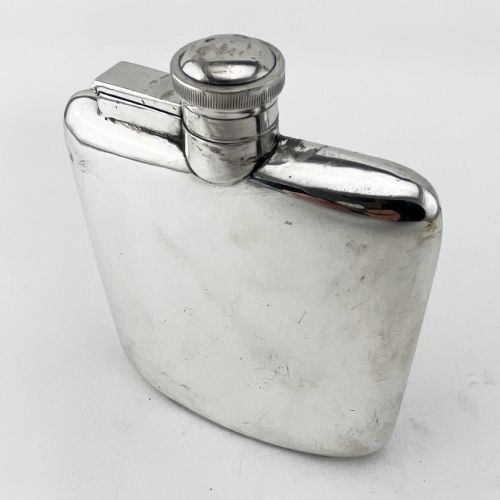


English Sterling Flask
An english sterling flask brings together precious metal and glass or leather to carry spirits or scent with proper proportion.
English Sterling Flask
When a buyer searches for an english sterling flask, they encounter portable vessels designed for spirits, liquor, or perfume that date from the Victorian, Edwardian, and Art Deco periods.
The most common formats on this page are curved hip flasks intended for pocket use alongside upright scent and perfume bottles finished with silver screw caps or hinged mounts.
Makers shaped these items for practical carriage during field sports, travel, and daily toilette, utilising durable combinations of glass and precious metal.
Materials and Technique
Silversmiths formed the bodies of these vessels from sterling silver, frequently pairing the metal with clear, cut, overlay, or Mary Gregory glass, and occasionally wrapping the lower portions in crocodile or alligator skin.
Manufacturing techniques combined precision glass blowing and cutting with silversmithing methods such as hammering, engraving, and constructing secure flip tops or screw caps lined with cork.
Listings feature sterling silver, cut glass, and crocodile skin across Victorian, Edwardian, and Art Deco periods.
Distinctions in Standard
Quality separates ordinary utilitarian containers from superior examples through the thickness of the silver sheet, the weight of the glass, and the precision with which hinged lids close against their collars.
The reputation of the maker and the crispness of hallmarks, decorative chasing, or specialised finishes such as hammered textures or leather and skin bindings elevate the standing of individual pieces.
Asprey London·William Neale·JB Chatterley and Sons·Barnsley and Co·Mappin and Webb·Sampson Mordan
The English Sterling Flask Glossary
- Sterling silver
- An alloy consisting of ninety-two point five percent silver and seven point five percent other metals, typically copper, chosen for strength and lustre. It forms the primary metal component for mounts, caps, and body casings.
- Hip flask
- A curved container shaped to fit comfortably against the body in a pocket while holding spirits such as whisky. These items frequently feature captive caps to prevent loss during outdoor pursuits.
- Overlay glass
- A technique where a layer of coloured glass is fused over a clear or contrasting glass body before being cut away to reveal patterns. This method appears on decorative perfume and scent bottles.
- Flip top
- A hinged lid mechanism operated by a thumbpiece that snaps open to provide immediate access to the contents. It relies on internal springs and precise alignment to maintain a secure seal.
- Hallmark
- An official stamp applied by an assay office to indicate the purity of the metal, the maker, and the year of production. These marks provide definitive historical context for antique silver pieces.
English Sterling Flask: Frequently Asked Questions
How do I clean an old flask?
Rinse the interior thoroughly with warm water and mild soap, avoiding harsh abrasives that might damage interior cork or glass linings.
Polish the exterior sterling silver gently with a dedicated cloth to preserve hallmarks and delicate surface finishes without stripping historical patina.
Are these flasks still usable today?
Many examples remain entirely functional for carrying spirits or scent once the internal seals and corks are checked for integrity.
Collectors often test the flip tops and screw caps carefully to ensure that old mechanisms still hold liquids without leaking.
What periods do these pieces span?
The selection encompasses items produced from the late Victorian era through the Edwardian period and into the Art Deco years of the twentieth century.
Each era introduced distinct stylistic shifts, moving from ornate chased decoration to clean geometric lines and plain polished surfaces.
Why are some flasks wrapped in skin?
Crocodile and alligator skin coverings provided a secure, non-slip grip for hunters and travellers carrying flasks during field sports and outdoor excursions.
This tactile outer layer also protected the underlying silver body from scratches and dents incurred during active use.