



English Sporting Art Canvas
English sporting art canvas works capture the motion of hounds, horses and coaching scenes across the nineteenth century.
English Sporting Art Canvas
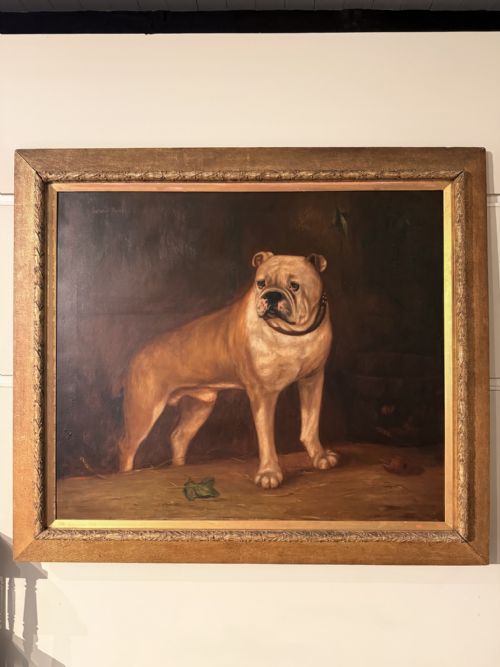
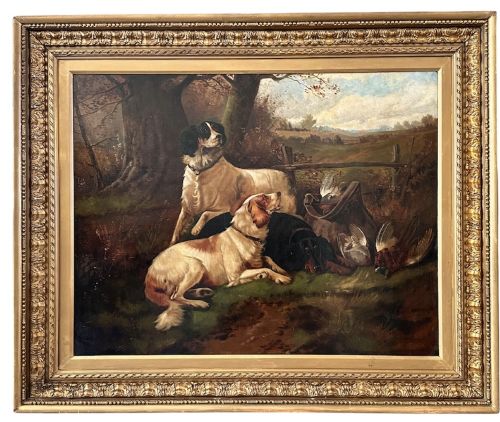
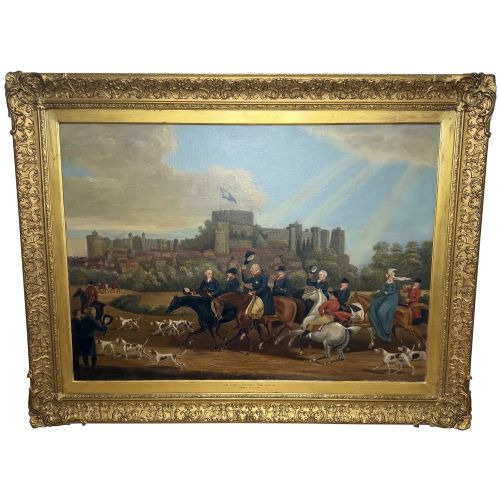
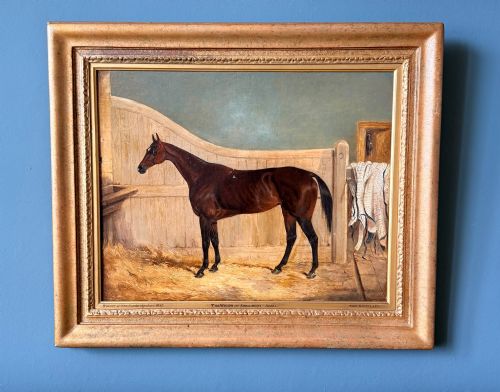
These works depict horses, gun dogs, hunting meets, and coaching scenes set in countryside landscapes or stables. Buyers seek them to record the equestrian and field traditions of past centuries.
The version most commonly met on this page is the nineteenth century oil painting on canvas, often framed in gilt wood. These portrayals range from individual portraits of prizewinning greyhounds to dramatic depictions of the hunt.
Makers and painters of the period documented the rural landscape alongside prize animals and field sports. The subjects reflect the country pursuits favoured during the Victorian and Edwardian eras.
How they were made
Painters applied oil paint directly onto stretched canvas surfaces, frequently supported by wooden stretcher frames. Many works retain their original giltwood or gold leaf frames.
The technique relies on layered oil pigments to build depth in animal coats, landscapes, and skies. Brushwork captures the texture of horse hair, canine fur, and hunting attire with precision.
Listings span the nineteenth century, Victorian, and Edwardian periods, utilising oil on canvas, wood, and gold leaf.
What varies in quality
The anatomical accuracy of the horses and hounds distinguishes superior examples from simpler works. Master painters rendered muscle structure and movement with convincing anatomical realism.
Background detail and landscape composition set apart finer canvases. Skilled artists integrated figures and animals into coherent countryside vistas rather than relying on formulaic backdrops.
Thomas Walker Bretland·John Arthur Lomax·Edward Lloyd of Ellesmere·Colin Graeme Roe·Samuel Spode·Charles Faulkner·Clifton Tomson·Robert Cleminson·John Frederick Herring Jnr·Samuel Henry Alken·John Charles Tunnard·Henri Schouten·John Charles Maggs·John Emms·George Goodwin Kilburne·Charles Bilger Spalding·John Vine·George Stubbs·Henry Frederick Lucas-Lucas·Edward B Herberte
The English Sporting Art Canvas Glossary
- Oil on Canvas
- A painting medium where pigments suspended in drying oils are applied to a woven canvas support. This technique allowed artists to achieve rich tones and subtle blending.
- Giltwood
- Wood carved and covered with a thin layer of gold leaf or gilt. It frames many period paintings to enhance their visual weight.
- Sporting Art
- Genre of art depicting animals, field sports, hunting, and equestrian subjects. It flourished in Britain throughout the eighteenth and nineteenth centuries.
- Naive Art
- Art produced by painters without formal academic training, often characterised by flat perspectives and direct charm. Examples in this field show distinct local character.
English Sporting Art Canvas: Frequently Asked Questions
What subjects appear in english sporting art canvas pieces?
These works display horses, gun dogs, foxhounds, and terriers alongside coaching scenes and hunt meets.
Scenes often place animals within expansive rural landscapes or stable interiors, reflecting rural life.
How do you date an english sporting art canvas?
Dating relies on costume details, framing styles, and recorded signatures or dates from the nineteenth century.
Canvas construction and stretcher types also offer clues to the period of creation.
Where should an english sporting art canvas be hung?
These paintings suit traditional studies, dining rooms, or hallways alongside period furnishings.
Placement should avoid direct sunlight to protect the oil paint and canvas from degradation.
How do you care for an antique oil painting?
Maintenance involves keeping the canvas away from extreme temperature shifts and damp environments.
Dusting the giltwood frame requires a soft, dry brush without applying chemical cleaners.