
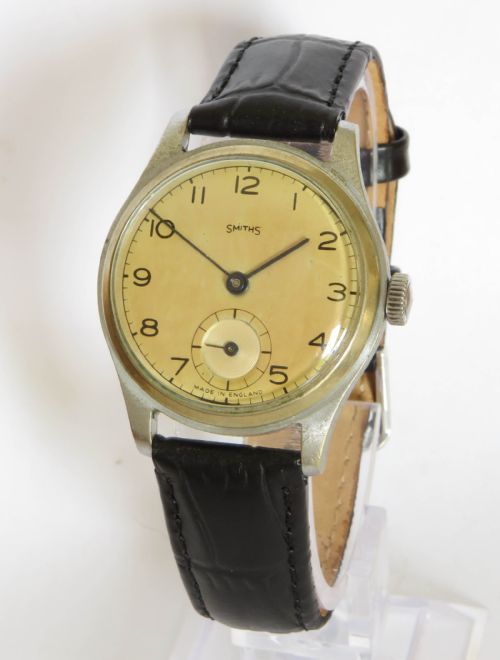


English Silver Watch
An English silver watch carries the weight of precision timekeeping from the Victorian, Edwardian, and later periods.
English Silver Watch
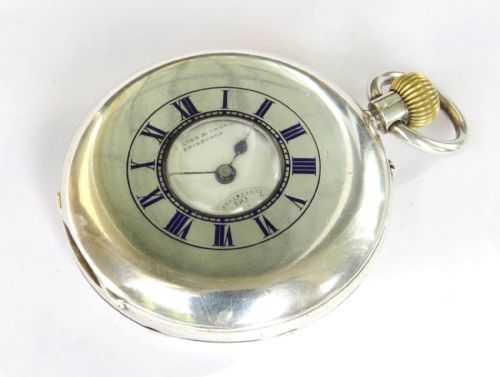
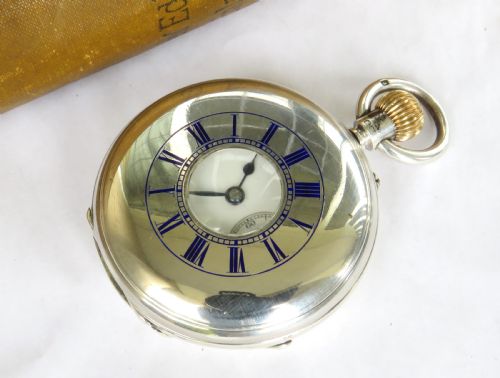
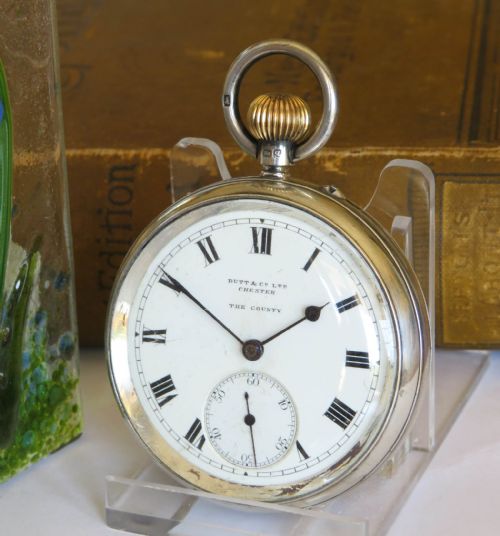
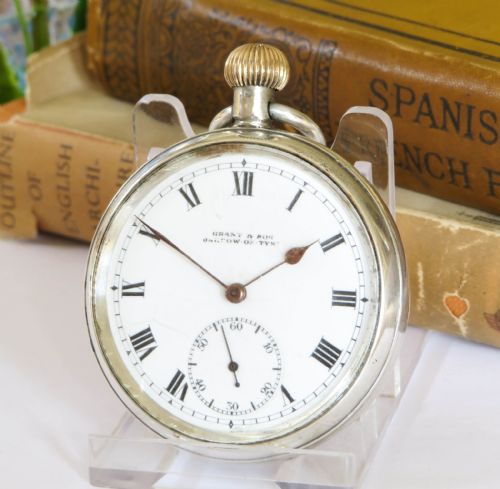
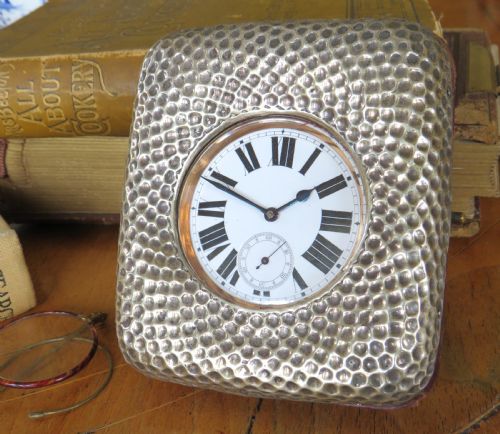
An English silver watch encompasses pocket watches, half hunters, and fitted accessories such as watch chains and travel clocks produced across the nineteenth and twentieth centuries.
Buyers seeking an English silver watch encounter Victorian fusee movements, Edwardian lever escapements, and later twentieth-century wristwatches from makers across the country.
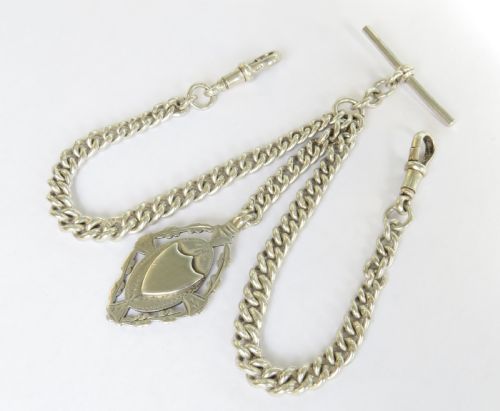
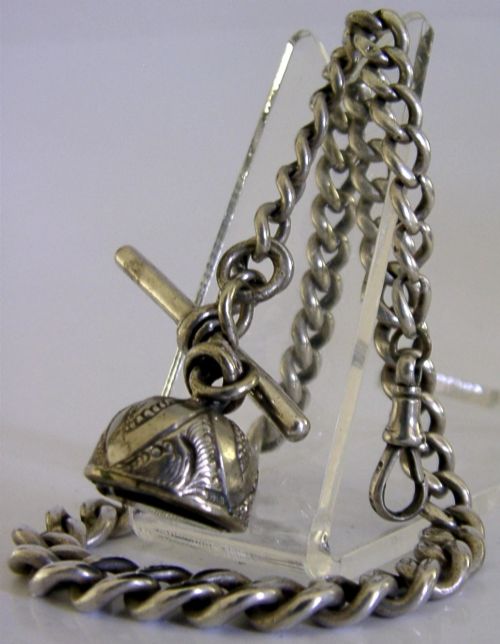
Pocket watch designs dominate the selection, often accompanied by sterling silver double watch chains and fob seals intended for daily gentlemanly use.
Materials and construction
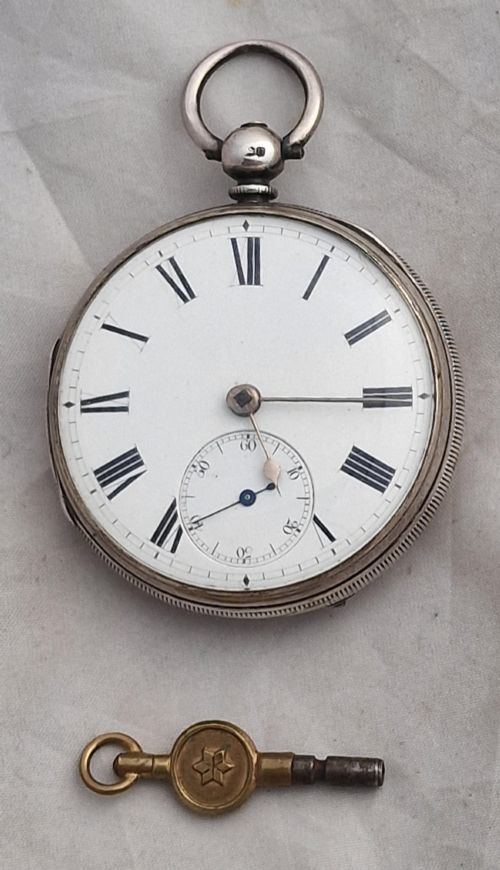
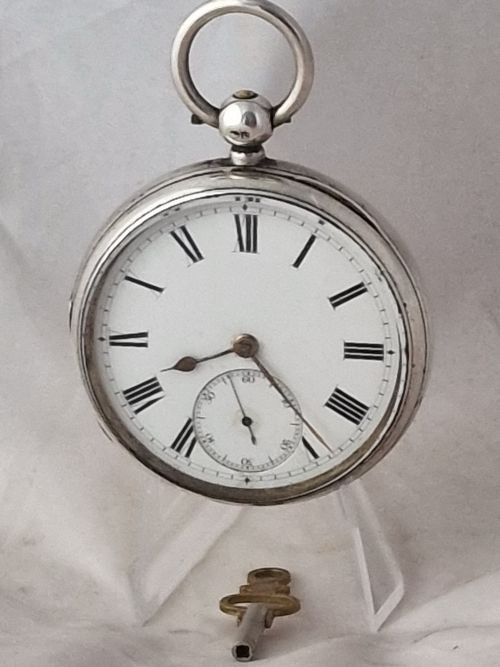
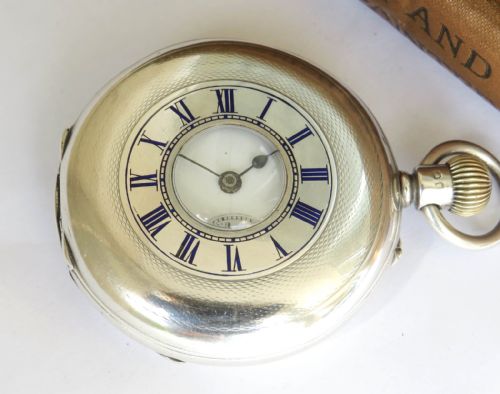
Casework relies upon solid sterling silver alongside brass, nickel, and glass components, paired frequently with enamel dials bearing Roman or Arabic numerals.
Internal mechanics utilise traditional fusee movements or later English lever escapements, engineered with steel components housed within hallmarked silver cases.
Some pocket watches survived by retreating indoors, repurposed as miniature desk clocks fitted inside heavy sterling silver capstan inkwells.
Assessing quality and execution
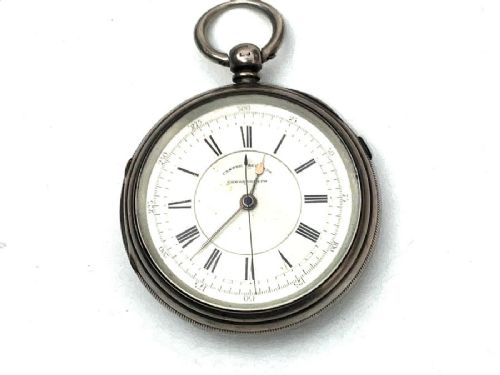
Quality rests in the crispness of the silver hallmarks, the complexity of the movement such as fusee or chronograph mechanisms, and the legibility of the enamel dial.
Signatures from established makers or regional retailers elevate a piece, while crisp exterior engine-turning on hunter cases distinguishes superior examples from plain utilitarian versions.
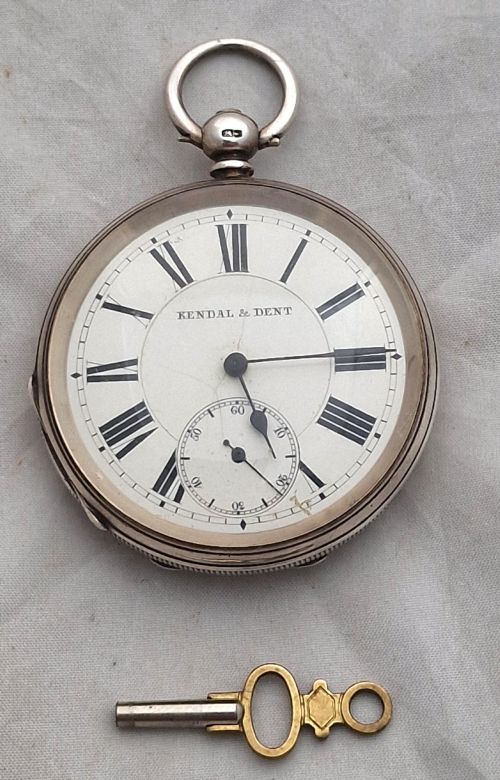
Hamilton and Inches·Kendal and Dent·JW Benson·Richardson·Litherland Davies·Ross of London·J G Graves Sheffield
The English Silver Watch Glossary
- Fusee movement
- A conical pulley device used in older pocket watches to equalise the driving force of the mainspring as it winds down.
- Half hunter
- A pocket watch case featuring a small glass-inset aperture on the outer lid to check the hands without opening the cover.
- Full hunter
- A pocket watch design with a solid protective metal outer lid that springs open via a push-piece.
- English lever
- An escapement mechanism developed to improve accuracy through a pivoted lever transmitting impulse to the balance wheel.
- Watch chain
- A heavy metal chain secured across a waistcoat to anchor a pocket watch, frequently hung with matching silver fobs.
English Silver Watch: Frequently Asked Questions
How do I wind an antique pocket watch?
Many older pieces utilise a separate key inserted into a small square aperture on the rear dust cover or movement plate to tension the spring. Later lever examples incorporate a traditional crown winding mechanism situated at the top of the case.
Care must be taken not to over-wind the mechanism, stopping immediately when resistance is met to prevent damage to the internal mainspring.
How can I date my silver watch?
English silver cases feature hallmarks stamped inside the back covers, including assay office marks, date letters, and lion passant symbols denoting sterling standard. Matching these stamped letters against standard assay office date tables reveals the exact year of manufacture.
Makers' marks stamped alongside the assay stamps further pinpoint the workshop responsible for casing the movement.
Were these watches waterproof?
Victorian and Edwardian pocket watches lack modern rubber gaskets and threaded seals, meaning moisture and dust enter easily through the pendant and case hinges. Keeping the piece away from water and damp environments is essential for preserving the steel internal components.
Carrying the watch inside a lined waistcoat pocket provides adequate protection for everyday use.