




English Silver Cup
An English silver cup spans centuries of functional design, ranging from seventeenth-century porringers to mid-century chalices that collectors prize for their heft and silver purity.
English Silver Cup
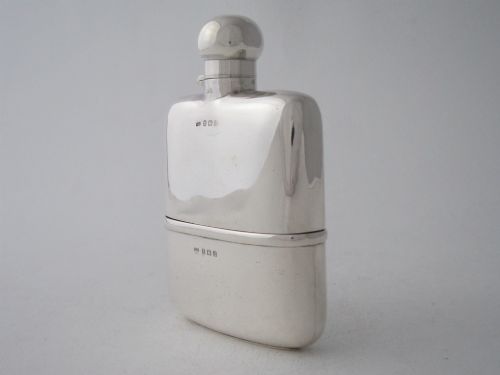
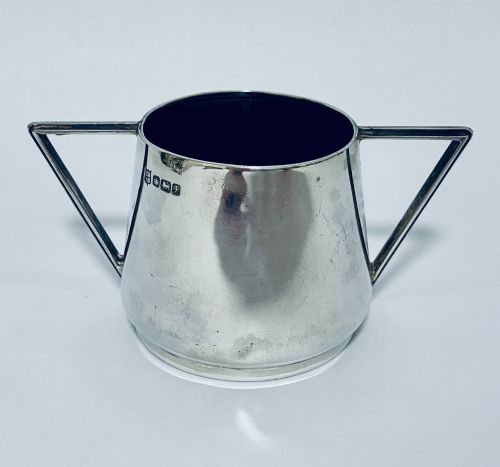
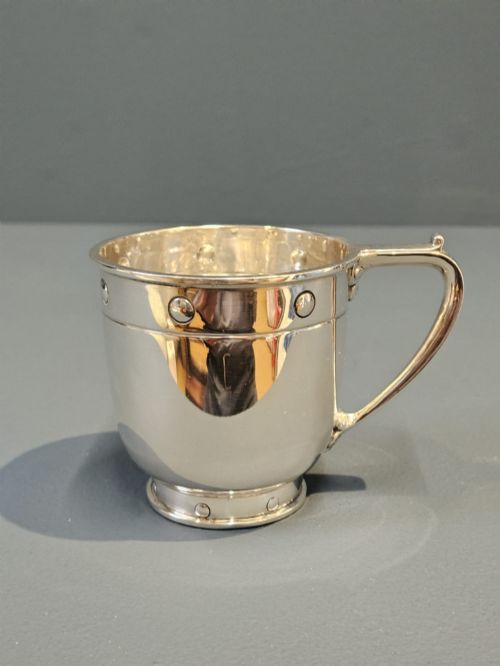
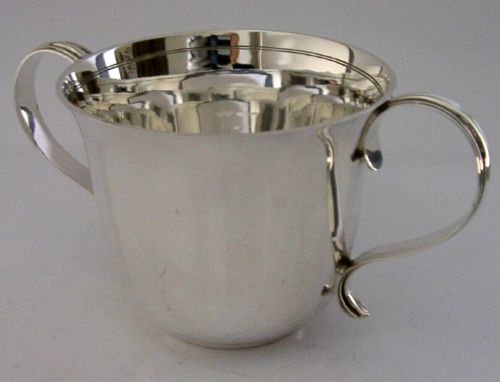
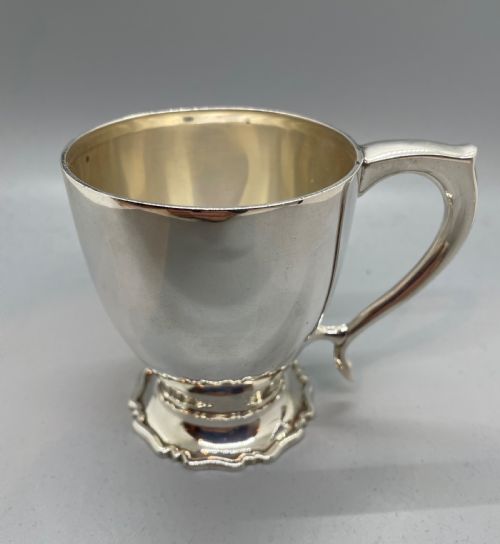
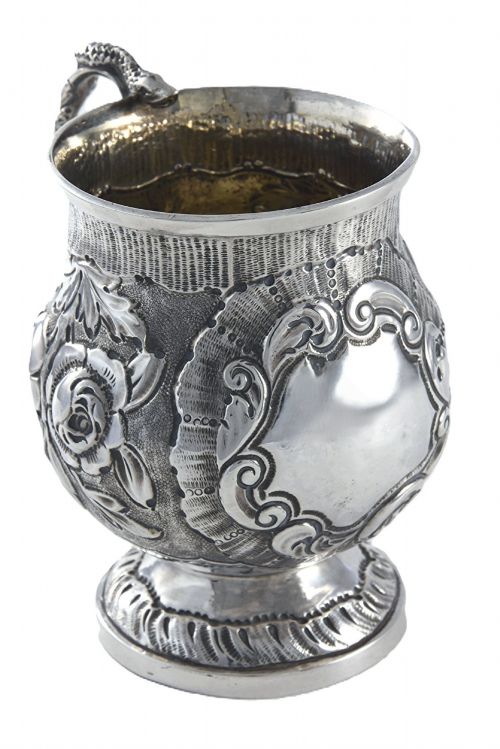
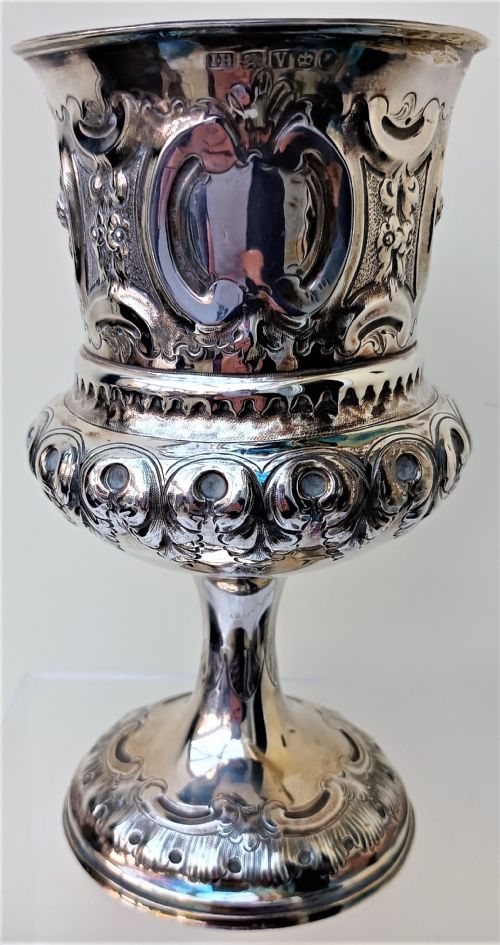
An English silver cup encompasses diverse drinking vessels and receptacles, including mugs and tankards, hip flasks, chalices, beakers, porringers, and sugar bowls. The items appearing in this category trace periods from the seventeenth century through the Georgian era, Victorian and Edwardian decades, up to mid-century twentieth-century designs.
Mugs and christening tankards represent standard domestic forms alongside ecclesiastical chalices and secular trophy cups. Buyers encounter pieces spanning Britannia standard silver, sterling silver, silver gilt, Old Sheffield plate, and stoneware mounted in silver from various English assay offices.
Materials and Techniques
Silversmiths utilised sterling silver and earlier Britannia standard silver, hammering, casting, and raising metal into substantial vessels. Many items feature engraved decoration, chased surfaces, or plain bodies polished to a mirror finish.
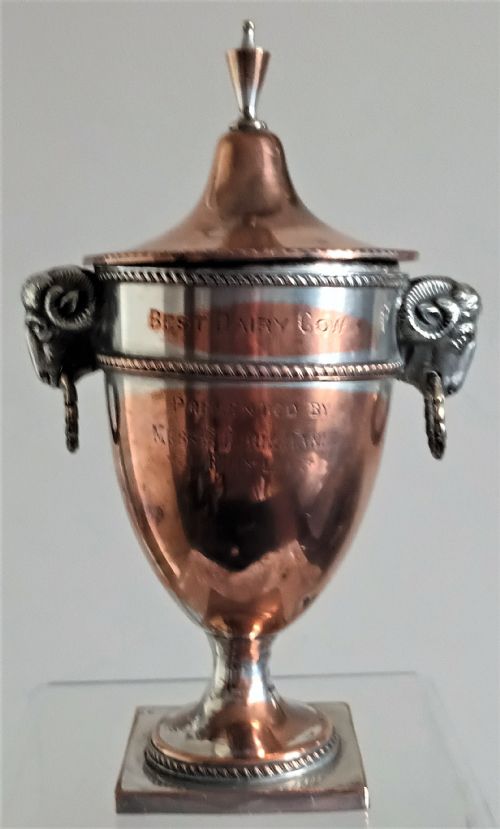
Alternative materials appear in the evidence alongside metalwork, including Doulton Lambeth stoneware combined with silver mounts, glass bodies encased in leather or silver hardware, and Old Sheffield plate fused over copper bases.
English Silver Cup Retail Price Guide 2026
Typical asking prices for english silver cup among the pieces listed under this phrase on Sellingantiques today, from the lower quarter to the upper quarter. They describe what is for sale here now, not the wider market.
Early silver drinking vessels include wager cups designed for wedding toasts, where guests drank simultaneously from two swinging cups without spilling a drop.
Evaluation of Quality
Quality rests upon the weight of the metal, the crispness of the hallmarks, and the skill evident in hand-engraved or chased ornamentation. Substantial weight and clear makers' marks separate superior domestic mugs and trophy cups from lighter utilitarian pieces.
Design complexity also dictates distinction, distinguishing plain functional vessels from elaborate silver gilt chalices or figural dishes. The integrity of combined materials, such as undamaged stoneware or uncompromised glass inserts, preserves the standard of mixed-media objects.
Barker Bros·Asprey London·William Bateman·Florence E. Barlow·D&J Wellby·William Padley
The English Silver Cup Glossary
- Porringer
- A small two-handled bowl or cup used in earlier centuries for porage or liquids. These vessels often exhibit deep bowls and cast scroll handles.
- Quaich
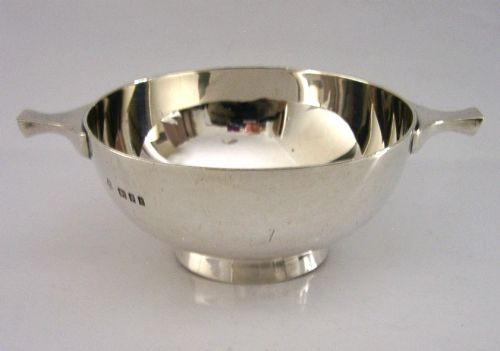
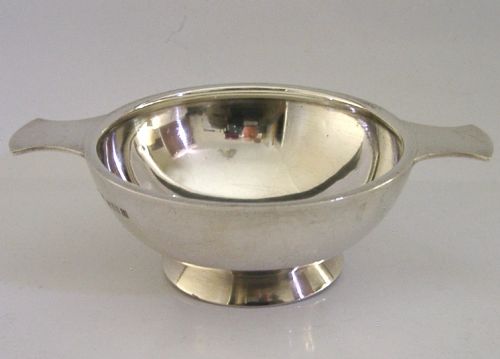
- A traditional drinking vessel featuring two flat lug handles, frequently fashioned from solid sterling silver. Scottish in origin, these shallow cups appear in modern barware contexts.
- Tyg
- A large drinking vessel featuring multiple handles designed for communal passing. Examples in this category pair stoneware bodies with decorative silver mounts.
- Britannia Standard
- A higher grade of silver legally required in England between 1697 and 1719, containing more pure silver than sterling. Pieces bearing this standard possess a distinct chemical purity.
- Silver Gilt
- Silver that has been coated with a thin layer of gold on its interior or exterior surface. This technique protects the metal and provides a rich two-tone appearance on chalices.
English Silver Cup: Frequently Asked Questions
How do I identify a Georgian silver cup?
Georgian silver cups bear hallmarks that indicate London, Chester, Sheffield, or provincial assay offices operating during the reigns of the Georges. King's heads and date letters stamped into the metal provide precise chronological markers.
These pieces typically showcase classical proportions, plain polished bodies, or restrained hand-engraving characteristic of eighteenth and early nineteenth-century silversmithing.
What distinguishes a chalice from a mug?
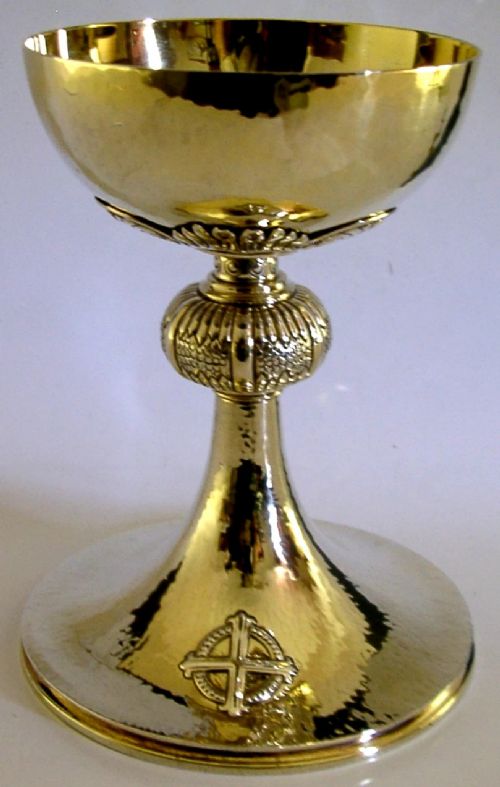
A chalice stands on a distinct stem and flared foot, featuring a deep cup bowl designed for ceremonial or religious use. Mugs and tankards sit flat on a base with one or two side handles for secular drinking.
Religious chalices frequently employ silver gilt interiors and heavier gauge metal to withstand ritual handling, whereas mugs focus on everyday domestic utility.
How should I display a silver cup?
Silver cups require stable humidity away from direct sunlight and sulfur-bearing materials to slow natural tarnishing. Glass cabinets protect delicate chased surfaces and fragile handles from accidental bumps.
Periodic gentle dusting with a soft cloth preserves the polish without abrading the historic hallmarks or hand-tooled details stamped into the body.