






English Silver Christening Cup
An english silver christening cup is a traditional child's gift forged in sterling silver, prized for marking early milestones with enduring metal.
English Silver Christening Cup
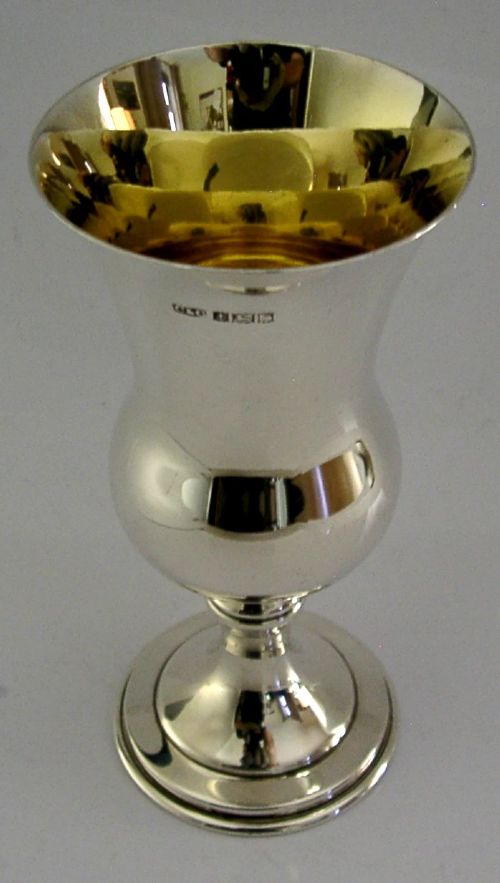
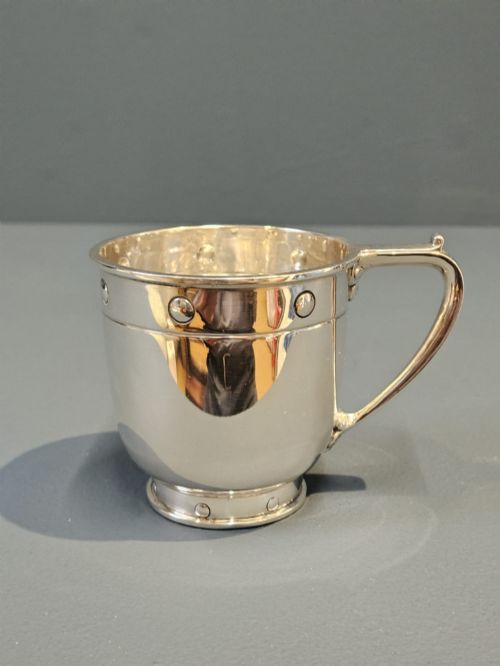
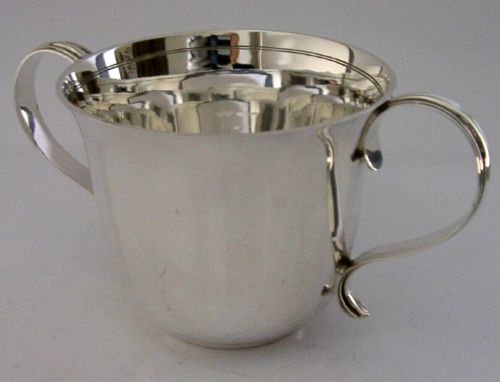
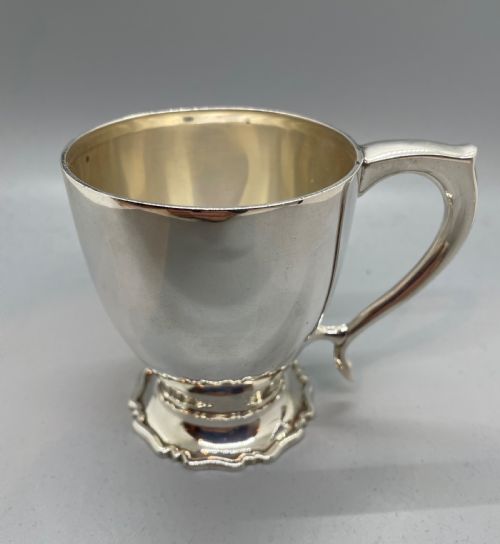
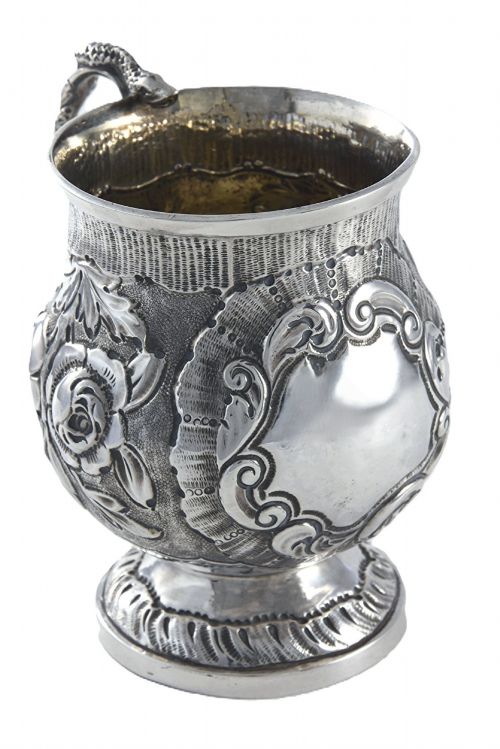
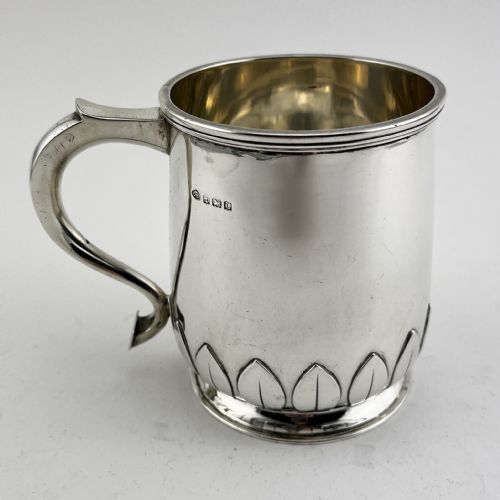
When you search for an english silver christening cup, you encounter small drinking vessels and mugs fashioned for infants, spanning periods from the Georgian era through the Victorian years and into the twentieth century. These objects take the form of handled mugs, tankards, two-handled porringer bowls, and cylindrical beakers.
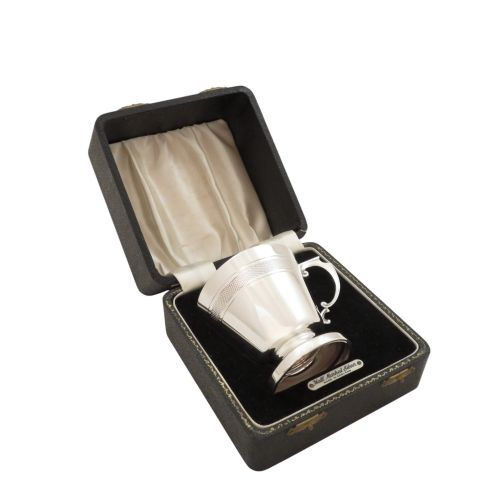
The pieces on this page lean heavily toward twentieth-century production, notably George V and Art Deco examples, alongside earlier Regency and Victorian designs. They serve as commemorative gifts, often featuring plain bodies, engraving, or gilt interiors.
How they were made
Makers shaped these cups from solid sterling silver, frequently applying a gilt or silver-gilt interior finish to the drinking vessel. Workshops relied on traditional silversmithing techniques, hammering and shaping the metal into mugs and tankards, then adding hallmarks for city and year.
Decoration varied from entirely plain bodies to detailed hand engraving and Art Nouveau or Art Deco styling. Handles were securely soldered to the main body, ensuring the small vessels remained durable for daily use or display.
English Silver Christening Cup Retail Price Guide 2026
Typical asking prices for english silver christening cup among the pieces listed under this phrase on Sellingantiques today, from the lower quarter to the upper quarter. They describe what is for sale here now, not the wider market.
Listings for this phrase include sterling silver, gilt finishes, and materials spanning Georgian, Victorian, and twentieth-century periods.
What varies in quality
The weight of the sterling silver separates lighter pieces from heavier, substantial examples that carry significant metal mass in the hand. Substantial gauges of silver prevent denting and maintain structural integrity across decades.
The clarity of the hallmarks and the precision of any hand-engraving define the craftsmanship of an individual maker. Clean lines on Art Deco beakers or crisp floral and scroll work on Regency tankards indicate superior workshop execution.
Barker Bros·William Bateman
The English Silver Christening Cup Glossary
- Sterling silver
- An alloy of silver containing 92.5% silver by mass and 7.5% other metals, usually copper. This standard composition provides the necessary durability for functional vessels.
- Hallmark
- An official stamp applied by an assay office indicating the purity of the silver, the origin city, and the year of manufacture. These marks allow precise dating of the object.
- Gilt
- A thin layer of gold applied to the interior surface of the silver cup. This technique protected the silver from acidic liquids and added a decorative interior contrast.
- Porringer
- A small bowl with one or two horizontal flat handles, used historically for porridge or broth. In silver form, it serves as an alternative christening vessel.
- Tankard
- A tall, cylindrical drinking vessel with a single handle, often featuring a flared base. Examples range from plain Georgian bodies to decorative Victorian designs.
English Silver Christening Cup: Frequently Asked Questions
What is an english silver christening cup?
An english silver christening cup is a small solid sterling silver mug, beaker, or bowl given traditionally to celebrate a child's birth or baptism.
These pieces function as lasting keepsakes, combining precious metal with practical drinking vessel forms that span multiple design periods.
How do I identify the date of a mug?
You determine the date by examining the stamped hallmarks on the silver body, which record the assay office and year letter.
Additional clues come from the overall style, such as clean geometric Art Deco lines or ornate Victorian engraving.
What styles are common in these silver cups?
The styles range from plain Georgian and Regency forms to Victorian, Art Nouveau, and 1930s Art Deco designs.
Plain bodies with simple handles appear alongside heavily engraved or two-handled porringer variations.