




English Reticulated Porcelain
English reticulated porcelain brings together intricate pierced ceramic work and hand-painted detail from factories spanning the eighteenth century to the mid-twentieth century.
English Reticulated Porcelain
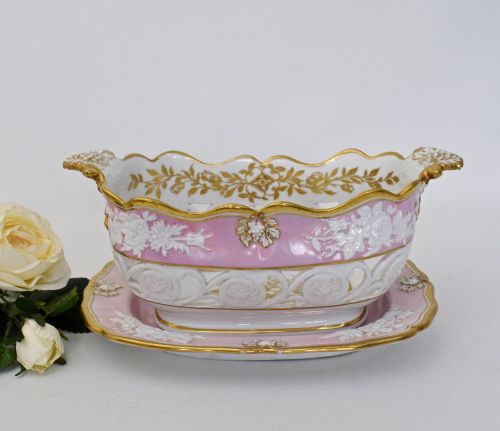
English reticulated porcelain comprises decorative vessels, chestnut baskets, and cabinet plates featuring openwork pierced designs. These forms emerge primarily from nineteenth-century Victorian and Edwardian periods, alongside earlier eighteenth-century examples.
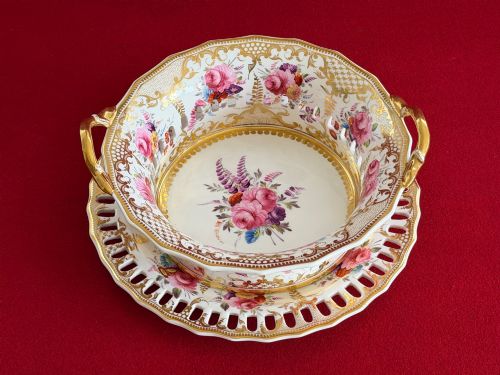
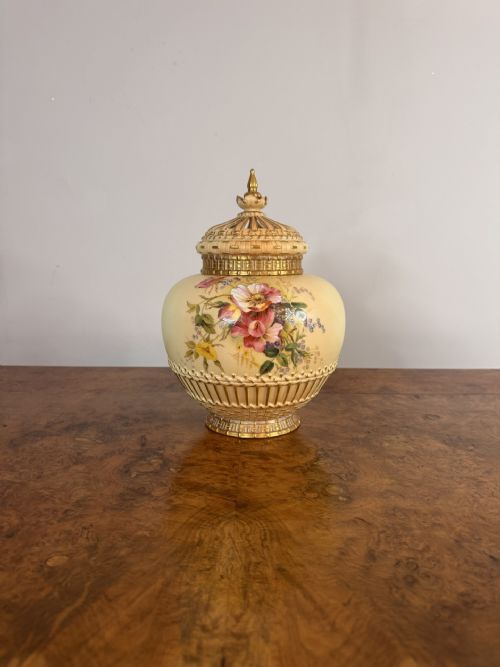
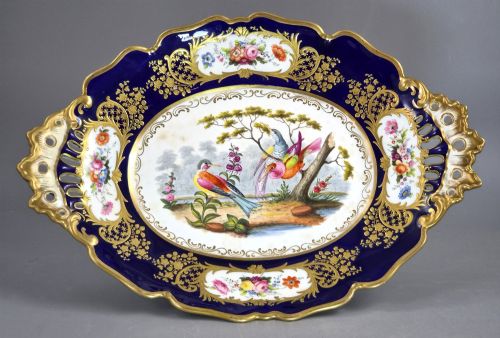
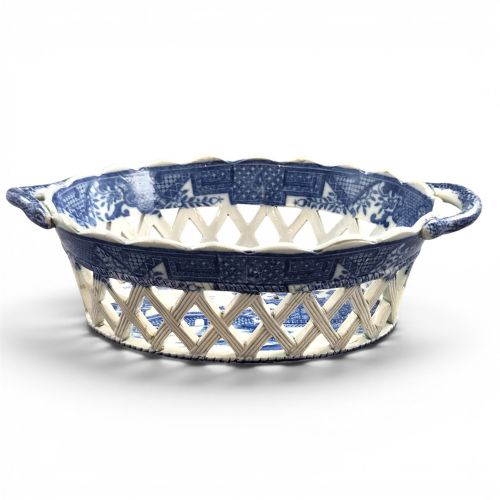
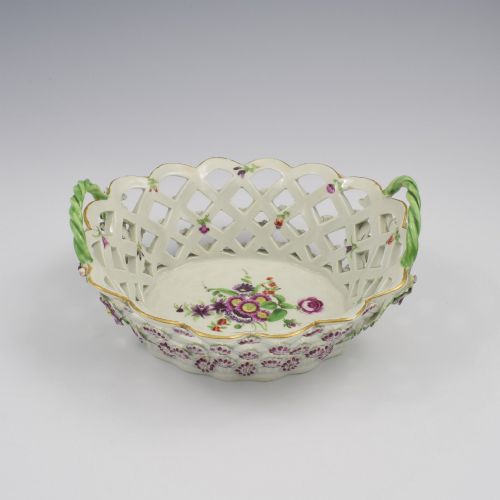
The objects on this page include chestnut baskets with woven lattice walls, decorative plates, and vases finished with elaborate gilding and cobalt glaze. Buyers frequently encounter ornate pot pourri vases and reticulated baskets bearing traditional floral and avian motifs.
Makers such as Royal Worcester and Spode dominate the forms found here, ranging from Regency period tableware to twentieth-century exhibition pieces. The selection showcases diverse techniques including hand-painted fruit scenes and basketweave moulding.
Evaluating quality and execution
Quality in these pierced porcelains rests upon the crispness and precision of the reticulation work, where clean, sharp apertures distinguish superior craftsmanship from heavy or blurred piercing. The delicacy of the basketweave moulding and the balance of the overall vessel form determine the tier of the piece.
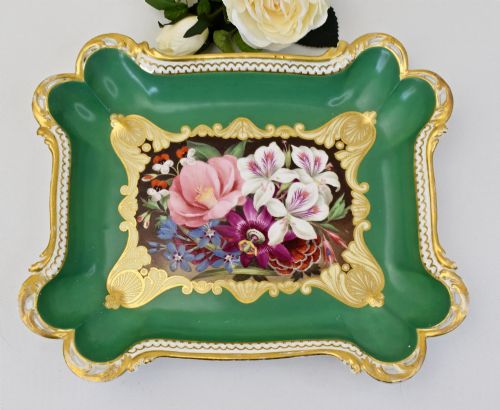
Hand-painted artistry elevates certain examples, particularly where named artists execute detailed botanical or ornithological subjects within gilded cartouches. The richness of the enamel palette and the retention of pristine gold leaf across intricate pierced rims further separate standard production wares from masterworks.
English Reticulated Porcelain Retail Price Guide 2026
Typical asking prices for english reticulated porcelain among the pieces listed under this phrase on Sellingantiques today, from the lower quarter to the upper quarter. They describe what is for sale here now, not the wider market.
Listings span multiple centuries, uniting eighteenth-century soft-paste chestnut baskets with mid-twentieth-century Royal Worcester painted fruit jars and vases.
Royal Worcester·Spode·Coalport·Mintons·Mason's Ironstone China
The English Reticulated Porcelain Glossary
- Reticulation
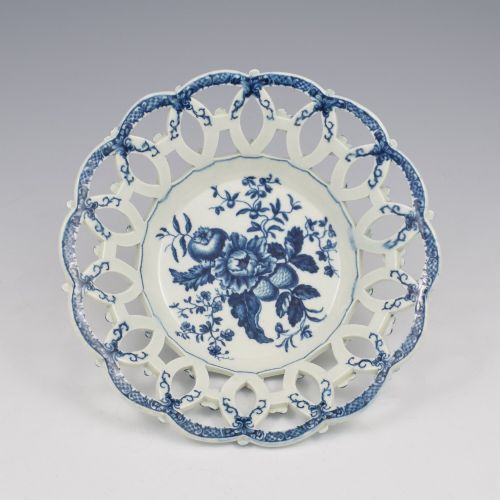
- Net-like piercing or openwork cut into porcelain before firing to create decorative lattice borders. This technique requires considerable skill to prevent the clay body from warping in the kiln.
- Soft-paste porcelain
- An artificial ceramic paste composed of white clay and glass frit, fired at lower temperatures than hard paste. It produces a warm glaze surface frequently seen on eighteenth-century pieces.
- Chestnut basket
- A pierced serving vessel with matching undertyray designed for holding roasted chestnuts at grand dining tables. These pieces often feature twisted branch handles and intricate woven walls.
- Gilding
- The application of gold leaf or powdered gold to ceramic surfaces for decorative emphasis. Artisans burnish the metal after firing to achieve a bright metallic sheen.
- Pate-sur-pate
- A ceramic decoration method where layers of liquid white porcelain slip are built up on a coloured clay ground to create a low relief cameo effect.
English Reticulated Porcelain: Frequently Asked Questions
What are reticulated porcelain baskets used for?
These pierced vessels originally served functional roles at formal dining tables for presenting dry foods such as chestnuts or fruit. Their open lattice design allowed air circulation around the contents.
Today, collectors primarily display them as decorative cabinet pieces or centrepieces. Their intricate pierced walls make them unsuited for holding liquids or heavy everyday use.
How do I date an English porcelain vase?
Dating relies upon factory backstamps, stylistic markers such as Regency neo-classical lines or Victorian rococo revival scrolls, and the specific painting palette employed. Examining the paste type and glaze characteristics also helps narrow the period of manufacture.
Comparative study of recorded maker marks provides the most precise chronological framework. Certain pieces also bear handwritten descriptors or specific artist signatures that point to a distinct decade.
Is soft-paste porcelain different from standard porcelain?
Soft-paste porcelain utilises an artificial mixture of glass and clay rather than true china clay and petuntse. It absorbs light differently and yields a softer, warmer texture beneath the glaze.
Collectors often identify soft-paste pieces by subtle surface undulations and minor kiln faults typical of early firing methods. Eighteenth-century factories frequently relied on this formulation before hard-paste techniques became widespread in England.