


English Regional Armchair
An english regional armchair brings honest local timber and centuries of vernacular design straight into a room.
English Regional Armchair
An english regional armchair spans centuries of domestic seating built across distinct counties, from seventeenth-century joined oak to nineteenth-century Windsor forms. Buyers hunting for these pieces encounter diverse local variations shaped by regional timber availability and rural traditions.
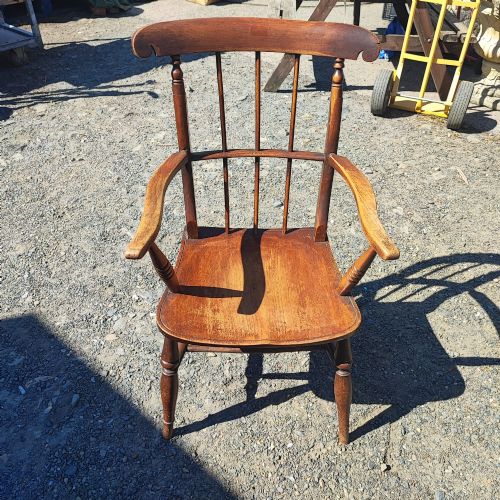
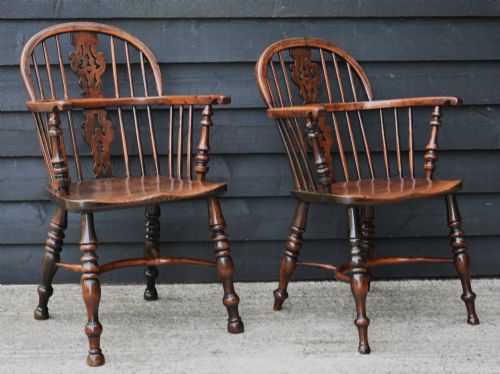
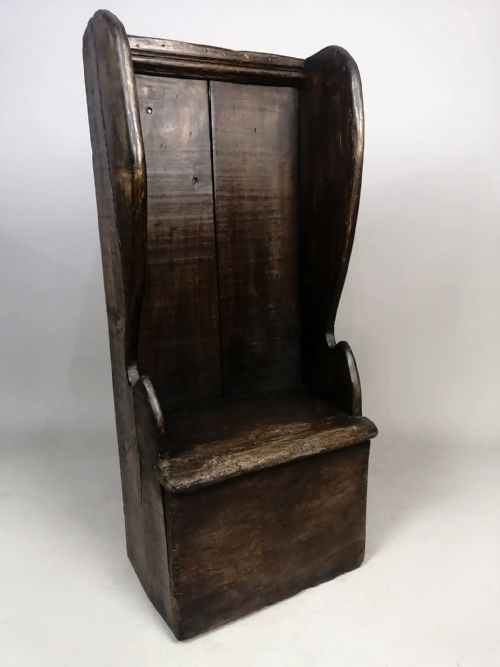
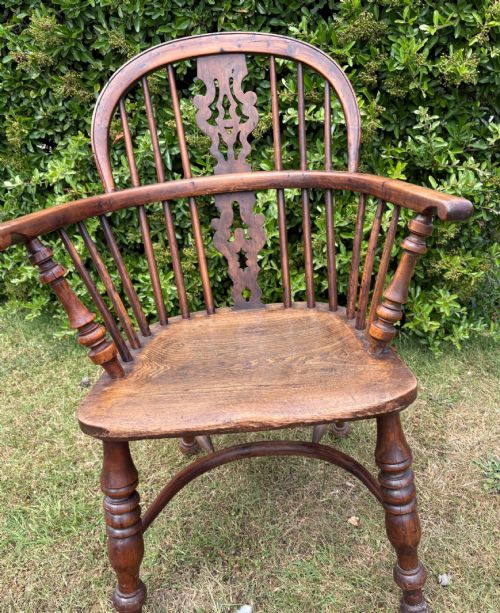
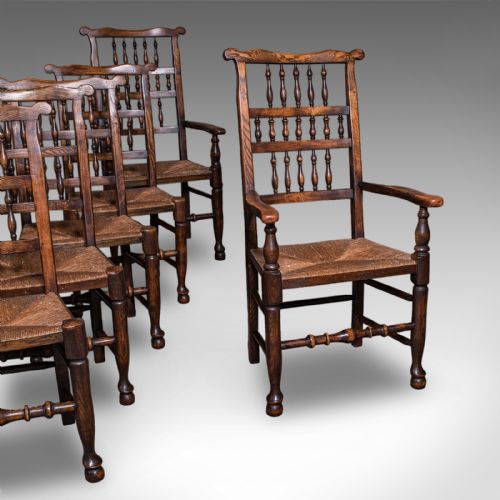
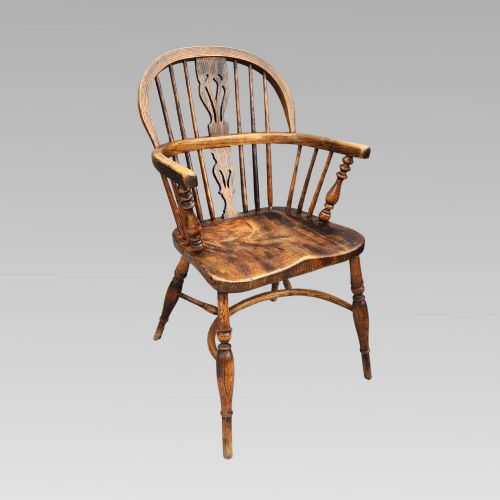
The selection ranges from low-back and broad-arm Windsor chairs to substantial lambing chairs and spindlebacks. Elm, yew, ash, and oak dominate these provincial forms, reflecting the woods accessible to country makers.
Makers in Nottinghamshire, Yorkshire, the Thames Valley, and the West Country produced recognisable regional styles. This page brings together those provincial seating traditions across the Georgian, Victorian, and earlier periods.
Materials and Making
Local timbers dictate the construction of these chairs, pairing robust elm or ash seats with bent yew, fruitwood, or beech for spindles and arms. Green woodworking techniques allowed makers to shape unseasoned timber into resilient steam-bent backs and rigid legs.
Traditional joinery methods such as wedged through-tenons and mortise-and-tenon joints hold the heavy plank seats to the frame. Many regional examples incorporate rush seating or simple solid wood slabs shaped by hand.
Several chairs feature exceptionally wide arms built for writing, proving that rural makers anticipated the home office centuries early.
Judging Quality
The integrity of the timber and the honesty of the construction separate finer examples from heavily restored pieces. Original surfaces, rich patination from centuries of use, and minimal replacement parts define the better end of the range.
Proportion and the fluidity of the turned spindles or comb backs reveal the maker's skill. Chairs that retain their original scale without extensive timber grafting command greater respect among collectors.
Gabbitass Worksop·John Brand of Sleaford·John Moss Worksop·Allsop Worksop·Rockley Maker
The English Regional Armchair Glossary
- Windsor Chair
- A wooden chair featuring a solid carved saddle seat into which the legs and back spindles are directly joined. These chairs rely on stick-construction methods developed extensively in rural English counties.
- Broad Arm
- A chair design featuring one unusually wide wooden arm, often shaped to serve as a writing surface or resting place. This feature appears frequently on regional Windsor chairs from northern counties.
- Spindle Back
- A chair back constructed from a series of turned vertical wooden rods secured between a crest rail and the seat. This lighter framing method provides sturdy support without excessive weight.
- Lambing Chair
- An enclosed high-backed wooden or upholstered chair designed with solid sides to block draughts near hearths. Early examples often incorporate storage boxes beneath the seat.
- Joined Oak
- Furniture construction utilising mortise and tenon joints secured with wooden pegs rather than metal fasteners. This rigid technique underpins heavy seventeenth-century armchairs.
English Regional Armchair: Frequently Asked Questions
What defines an english regional armchair?
An english regional armchair is a provincial seating piece constructed outside major urban centres using locally sourced timbers like elm, yew, and ash. These chairs follow distinct local traditions found in counties such as Yorkshire, Nottinghamshire, and the Thames Valley.
Unlike formal London-made seating, these pieces prioritise utility, local material availability, and vernacular design variations developed by regional joiners and chairmakers over centuries.
How do I identify a Windsor chair?
A Windsor chair is characterised by a heavy solid wooden seat that acts as the central anchor for the entire frame. The legs and back spindles are tenoned directly into this thick saddle seat.
Regional variations include low backs, high backs, wheelbacks, and broad arms, but the distinctive central plank seat remains the defining structural feature.
Where were these regional chairs made?
Makers worked across various English shires, developing distinct local characteristics tied to specific counties. Nottinghamshire workshops, Thames Valley makers, and West Country joiners each utilised local woods like yew and fruitwood to build regional variants.
Towns such as Worksop and Sleaford emerged as notable hubs where skilled makers produced characteristic stick-back and Windsor seating.
How do I care for antique wood furniture?
Maintain antique timber by keeping chairs away from direct heat sources and sudden temperature fluctuations that cause wood to dry and split. Apply occasional appropriate wax feeds to nourish the surface without building up heavy chemical residues.
Handle joints with care and avoid placing excessive weight on delicate spindle backs or historic arms to preserve the original structural integrity.