





Nineteenth Century Windsor
These nineteenth century windsor chairs bring solid vernacular utility to a room, offering robust timber construction developed through regional English traditions.
Nineteenth Century Windsor
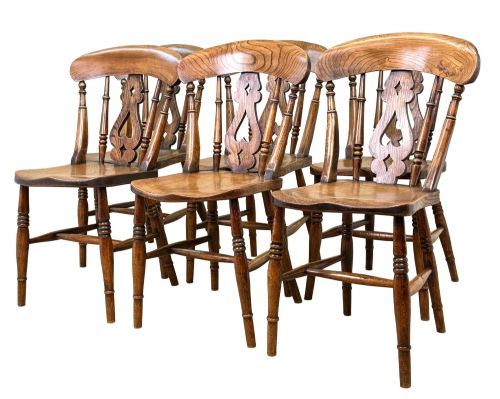
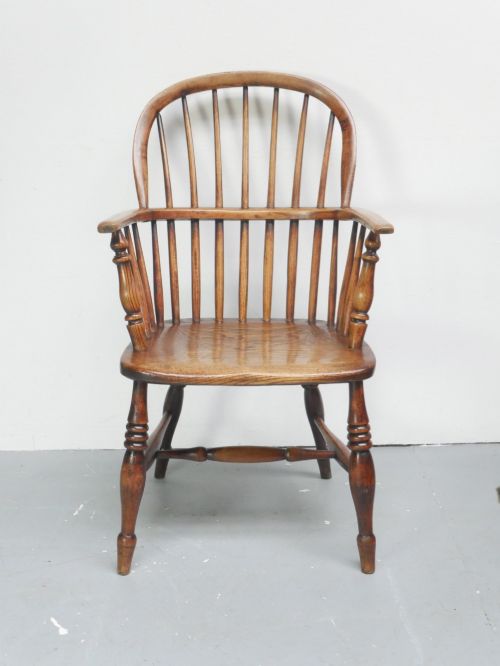
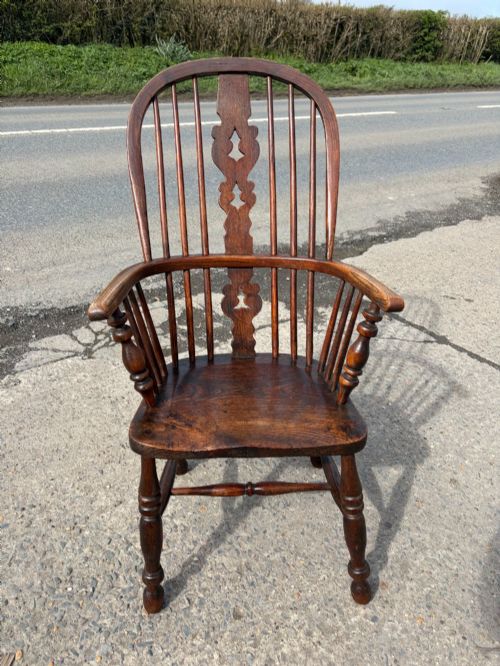
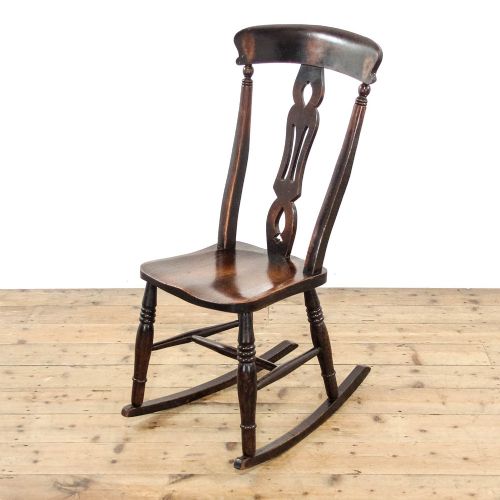
Nineteenth century windsor seating encompasses a diverse array of utilitarian forms, from low-back armchairs and smokers bows to high-comb backs and matching sets of dining chairs. Buyers seeking a nineteenth century windsor will frequently encounter sturdy armchairs alongside smaller children's chairs, high chairs, and rocking variants rooted in English country vernacular styles.
The regional variety spans distinctive regional builds such as Yorkshire, Scottish, and Welsh models, as well as specific local types like the Darvel or Irvine Valley armchair. These pieces reflect a rich tradition of domestic and tavern use across the 19th century, incorporating Georgian survivals alongside Victorian production.
How they were made
Maker-joiners built these chairs using a combination of turned spindles and solid plank seats, frequently pairing resilient timbers like elm for the saddle seat with ash, beech, fruitwood, or yew for the framework and bow. This traditional multi-wood construction allowed craftsmen to utilise the specific bending and load-bearing properties of each timber.
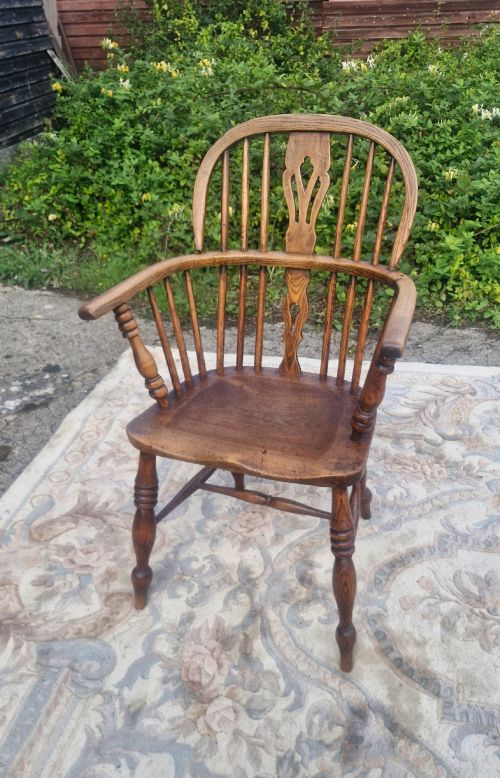
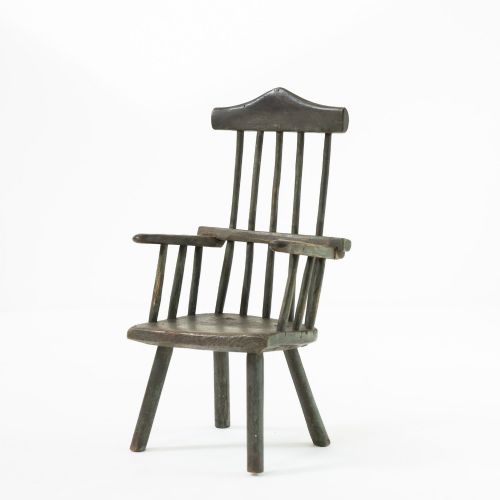
Many examples feature steam-bent hoop backs or comb backs secured into the thick wooden seat, often reinforced with understretchers such as the crinoline design. Surface treatments range from unadorned polished grain to painted finishes on primitive or vernacular pieces.
Several miniature chairs wait patiently for very small Victorians who missed tea.
What varies in quality
The distinction between ordinary utility items and superior examples lies in the selection of timber and the ambition of the turner's work. Yew wood examples with well-figured grain and slender, balanced spindles sit at the upper end of the scale compared to simpler elm and beech combinations.
Structural harmony also dictates the standing of a piece, where generous proportions, sophisticated arm scrolls, and retaining an attributed maker mark elevate a chair beyond standard vernacular production.
Duncan McKellar of Fenwick·Gabbitass of Worksop·John Shadford Windsor·Amos
The Nineteenth Century Windsor Glossary
- Windsor
- A wooden chair characterised by a solid shaped seat into which the legs and back spindles are separately jointed. This form developed deep regional variations across the British countryside.
- Smokers Bow
- A low-backed Windsor armchair featuring a continuous curved arm rail terminating in short spindles. These comfortable seating units were common in domestic parlours and public houses.
- Crinoline Stretcher
- A curved metal or wooden brace linking the legs beneath a chair to provide additional rigidity. It forms a horseshoe loop that strengthens the entire undercarriage.
- Comb Back
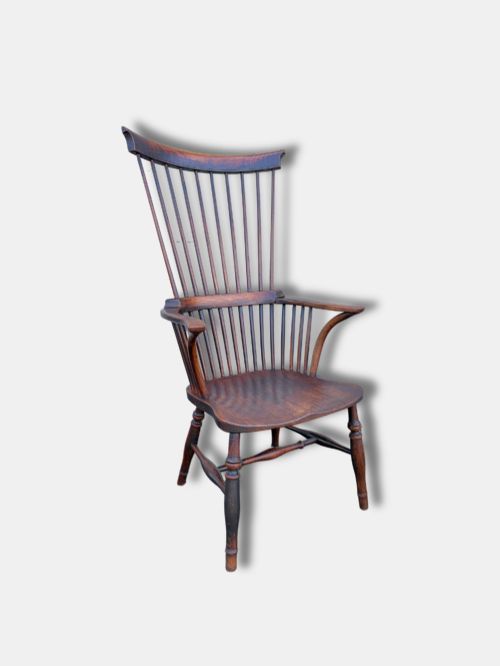
- A chair back style where vertical spindles rise from the arm rail to support a high horizontal top rail resembling a traditional hair comb. This design offers enhanced upper back support.
Nineteenth Century Windsor: Frequently Asked Questions
How do I identify a regional windsor?
Regional attribution depends upon specific combinations of timber, turning patterns, and back construction characteristic of areas like Yorkshire, the Thames Valley, or Scotland.
Local makers utilised available local woods, leading to distinctive local idioms in the bend of the arm and the shape of the saddle seat.
Were all nineteenth century windsors painted?
Many early vernacular and primitive examples received painted finishes to protect softer woods or unify mismatched repairs.
At the same time, numerous pieces in yew, ash, and elm were finished to display the natural grain and varied tones of the timber.
How were children's windsors used?
Children's armchairs and high chairs served domestic family life in farmhouses and cottages, providing sturdy seating scaled down for younger household members.
They replicated the robust construction methods of full-sized adult chairs to withstand daily use.
What is a captains chair?
A captains chair typically refers to a low-back Windsor variant featuring a rounded top rail supported by numerous spindles above the arms.
These compact chairs were popular in studies, offices, and vernacular dining settings throughout the Victorian era.