





English Regency Tea Caddy
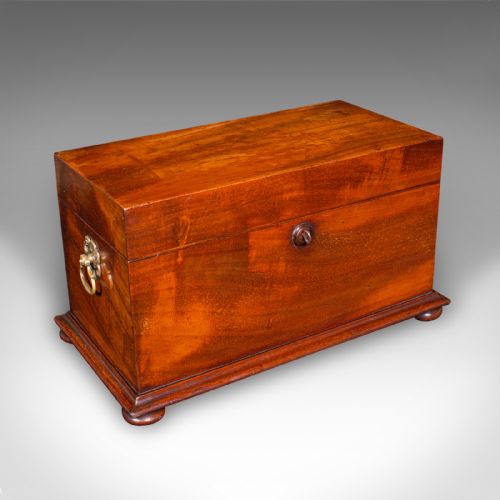
An English regency tea caddy is a finely figured wooden box designed to store loose leaf tea safely in the drawing room.

English Regency Tea Caddy
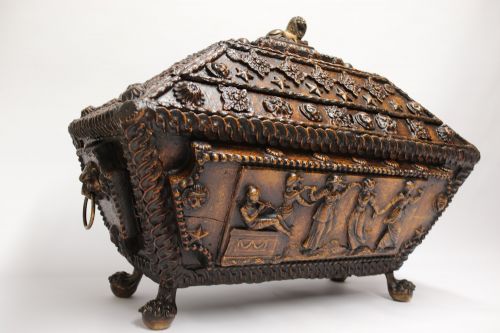
An english regency tea caddy brings together the compact table boxes and sarcophagus shapes characteristic of the early nineteenth century. Most examples date from the Regency and William IV periods, spanning the shift from strict classical geometry to heavier, architectural proportions.
The form appears as domestic table boxes with dual interior compartments, freestanding teapoys mounted on pillars, and larger sarcophagus containers housing mixing glasses or canisters. These pieces served a central role in the social rituals of nineteenth century drawing rooms.
Buyers encounter rosewood and mahogany carcases most frequently, alongside decorative finishes like brass inlay, penwork, and tortoiseshell. The survival of interior mixing glasses and original compartments distinguishes pieces intended for functional service from simpler keepsake boxes.
Distinctions in construction and finish
The standard of a piece rests primarily upon the choice of timber figure and the precision of its decorative inlays. Elaborate brass scrollwork, crisp penwork, or scarce materials like tortoiseshell and burr yew mark out finer examples.
Internal completeness dictates the character of the object, particularly the retention of original mixing glasses, lidded canisters, and working locks with matching keys. Superior execution shows in tight mitre joints, well-fitted internal lids, and intact original feet or stands.
English Regency Tea Caddy Retail Price Guide 2026
Typical asking prices for english regency tea caddy among the pieces listed under this phrase on Sellingantiques today, from the lower quarter to the upper quarter. They describe what is for sale here now, not the wider market.
William Rudkins·Gillows·Thomas of London
The English Regency Tea Caddy Glossary
- Sarcophagus caddy
- A tea container shaped like a miniature stone tomb with a domed or sloping lid, typical of the later Regency period. This architectural form often incorporates lion paw feet and ring handles.
- Teapoy
- A freestanding tea caddy mounted on a central pillar with a platform base or tripod legs. These elevated pieces often contained internal mixing bowls and multiple storage compartments.
- Mixing glass
- A small glass vessel fitted inside a tea caddy used to blend different varieties of loose leaf tea before brewing. They sit in dedicated circular recesses within the interior.
- Penwork
- A decorative technique using fine ink lines drawn onto a light wood surface to create intricate geometric or floral motifs. It resembles engraving and appears on specialised boxes from the period.
- Toleware
- Painted and japanned sheet metal used for tea canisters and boxes. William IV examples show vibrant hand-painted decoration on dark metal surfaces.
English Regency Tea Caddy: Frequently Asked Questions
What was inside an english regency tea caddy?
These boxes housed compartments lined with foil or fitted with secondary wooden lids to protect expensive loose leaf tea from moisture and air. Many also included a central glass bowl used for blending leaves.
Tea was an expensive commodity in the nineteenth century, requiring secure storage under lock and key by the mistress of the house. The interior layout reflects this need for portion control and preservation.
How do I tell a teapoy from a standard tea caddy?
A standard tea caddy sits on a table or sideboard as a portable box with feet or a flat base. A teapoy is a much larger freestanding piece of furniture mounted on a pedestal column.
Teapoys function as independent stands positioned beside chairs in the drawing room. They frequently incorporate work box fittings or sewing compartments alongside the tea storage.
Why do some tea caddies have glass bowls?
The glass vessel acted as a mixing bowl where the host combined different grades of loose leaf tea before service. Guests could also rinse spoons or tip unwanted leaves into the glass.
Finding a caddy with its original matching mixing glass adds significantly to the historical integrity of the piece. Many replacement bowls appear in later circulation.
How do I care for rosewood and mahogany surfaces?
Maintain antique wood by keeping the piece away from direct sunlight and sudden temperature shifts that cause veneer to crack or lift. Regular dusting with a soft, dry cloth preserves the polished finish.
Avoid using modern silicone sprays or heavy liquid polishes on nineteenth century cabinetwork. Natural wax applied sparingly helps protect the grain without building up a sticky residue.