



Carved Rosewood Tea Caddy
A carved rosewood tea caddy brings tactile warmth and period elegance to a room, offering a clever spot for keepsakes or a handsome tabletop display.

Carved Rosewood Tea Caddy
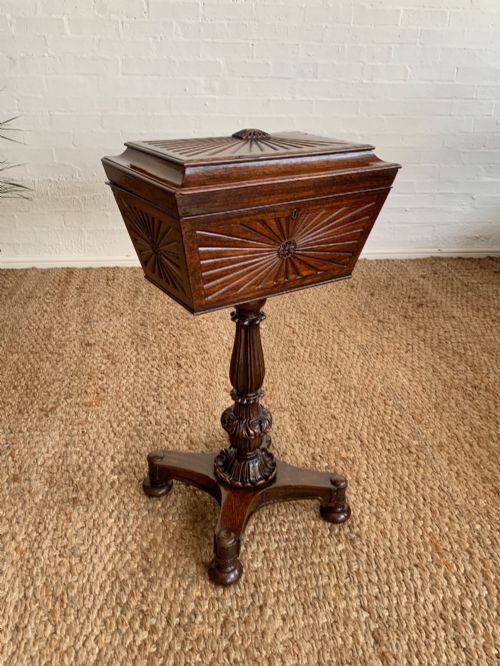
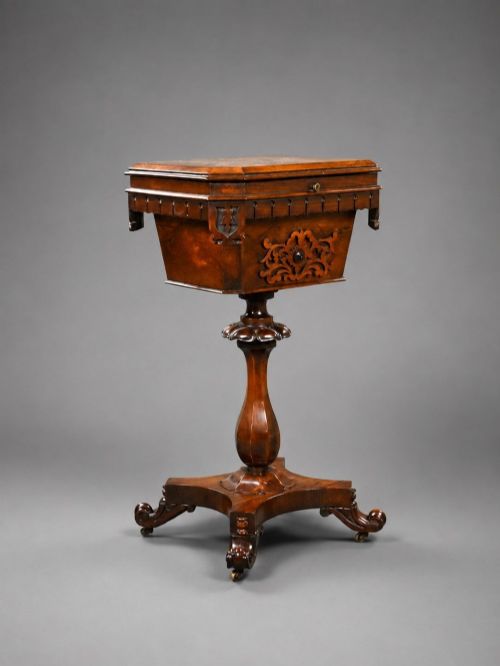
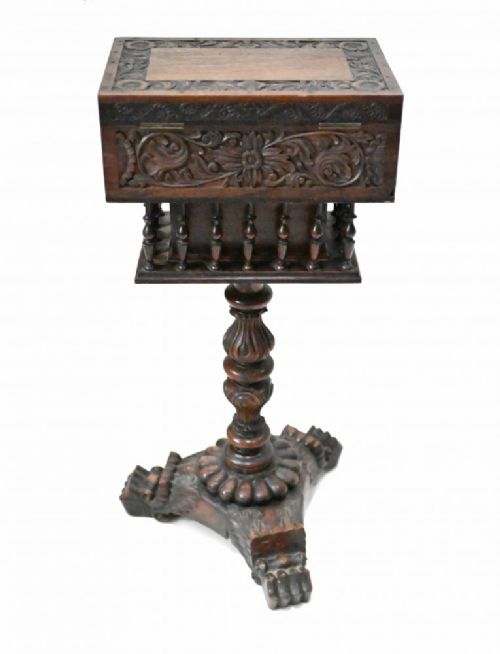
When you search for a carved rosewood tea caddy, you are looking at functional boxes and small tables designed to store precious tea leaves during the nineteenth century. The examples on this page span the Regency, William IV, and Victorian periods, alongside Anglo-Indian colonial pieces in padouk and rosewood.
You are most likely to encounter sarcophagus-shaped boxes resting on bun feet or larger pedestal tea poys with sunburst carving. The selection also includes related forms such as work tables, occasional tables, and jewellery boxes sharing the same timber and decorative vocabulary.
How they were made
Cabinetmakers built these pieces using dense rosewood and exotic padouk, often selecting stock with rich natural graining. Workshops shaped the timber into sarcophagus profiles or turned pedestals, relying on traditional joinery to stabilise the heavy tropical hardwoods.
Decoration relied on skilled carving, brass inlay, and contrasting details in bone or mother-of-pearl. Linings of velvet or fitted interior compartments completed the construction, protecting the dry tea leaves and valuables inside.
Carved Rosewood Tea Caddy Retail Price Guide 2026
Typical asking prices for carved rosewood tea caddy among the pieces listed under this phrase on Sellingantiques today, from the lower quarter to the upper quarter. They describe what is for sale here now, not the wider market.
Listings span the nineteenth century, including specific dates from the Regency, William IV, and Victorian eras.
What varies in quality
Quality rests primarily on the crispness of the carving and the fidelity of the period proportions. A superior piece displays deep, deliberate chisel work on the rosewood, whereas lesser examples show softer, shallower detailing that lacks architectural authority.
The choice of secondary materials also separates the grades. Finer items incorporate precise brass stringing, intact mother-of-pearl escutcheons, and well-figured timber veneers that wrap cleanly around complex curves without lifting.
The Carved Rosewood Tea Caddy Glossary
- Tea caddy
- A small box designed to store tea leaves securely under lock and key when tea was an expensive commodity. They often featured interior mixing bowls and lidded compartments known as canisters.
- Tea poy
- A pedestal table designed for the tea service, frequently incorporating an internal compartment for storing caddies or loose leaves. These pieces stand on central pillars supported by platform bases or carved feet.
- Sarcophagus
- A monumental chest form with a domed or peaked lid tapering downward, popular for tea caddies and work boxes during the Regency and William IV eras. The shape echoes classical stone coffins adapted for domestic use.
- Padouk
- A heavy tropical hardwood with a reddish-brown hue used in Anglo-Indian colonial furniture. It offers similar density and carving properties to rosewood.
- Escutcheon
- A flat plate surrounding a keyhole, frequently fashioned from brass, bone, or mother-of-pearl to protect the surrounding wood from wear.
Carved Rosewood Tea Caddy: Frequently Asked Questions
What is a tea poy?
A tea poy is a pedestal table or stand featuring a lidded compartment for storing tea leaves. They often served as mobile stations during the nineteenth century tea service.
Unlike smaller desktop tea caddies, tea poys stand on independent legs or a central column, placing the storage box at a convenient height beside a chair or sofa.
How do I date a rosewood tea caddy?
Dating relies on observing the overall silhouette, decorative motifs, and construction methods. Regency and William IV pieces often display sarcophagus shapes, heavy brass inlay, and robust classical carving.
Victorian examples tend toward simpler geometry or more elaborate floral ornamentation. Examining the interior fittings and secondary timbers also helps narrow the decade of manufacture.
What was inside an original tea caddy?
Original interiors typically contained two or three fitted canisters for different varieties of tea, such as green and black. Many also featured a central glass or metal mixing bowl.
The compartments kept the expensive leaves dry and secure, as servants or hosts mixed the blends directly at the table.
How do I care for antique rosewood?
Rosewood benefits from stable environmental conditions away from direct sunlight and strong heat sources. Keep the timber nourished with occasional applications of appropriate wax to maintain the natural sheen.
Avoid excessive moisture on the timber and velvet linings, dusting gently with a soft, dry cloth to preserve the polished surface.