
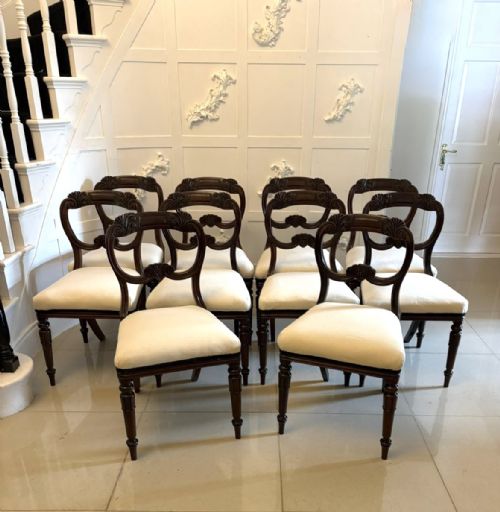
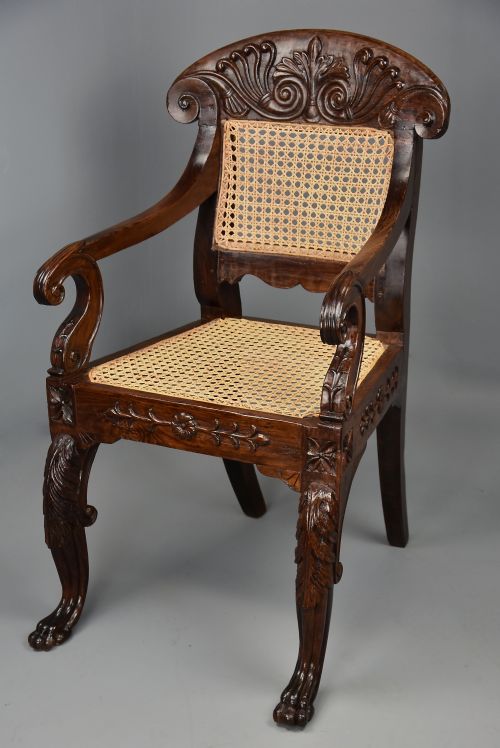
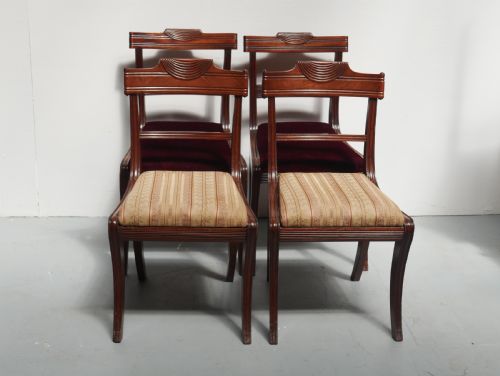

English Regency Side Chairs
English regency side chairs bring architectural line and classical proportion to a room, offering enduring seating built to last.
English Regency Side Chairs
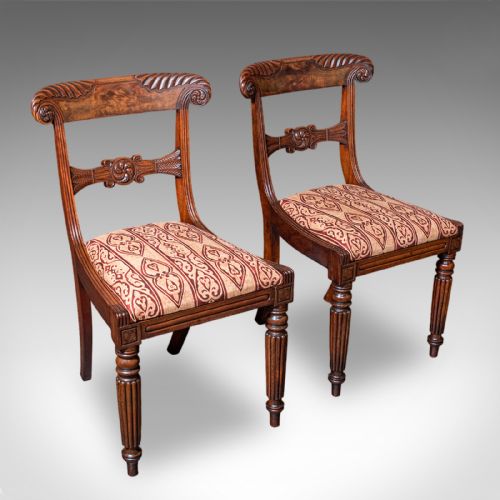
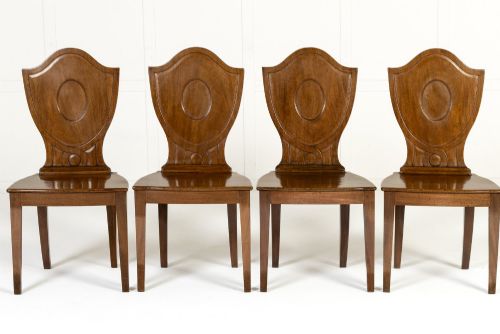
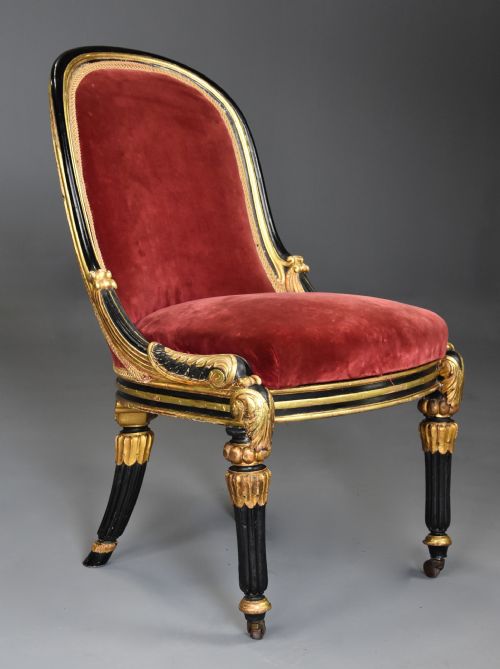
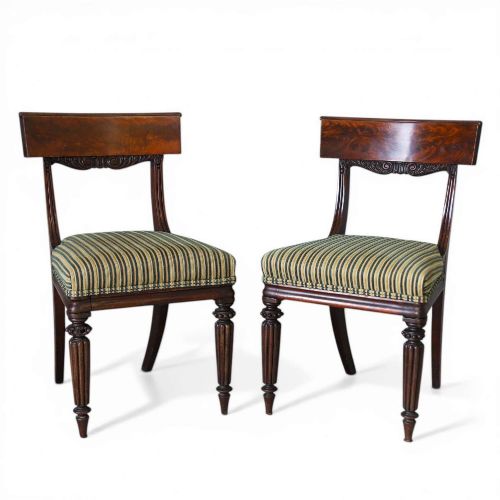
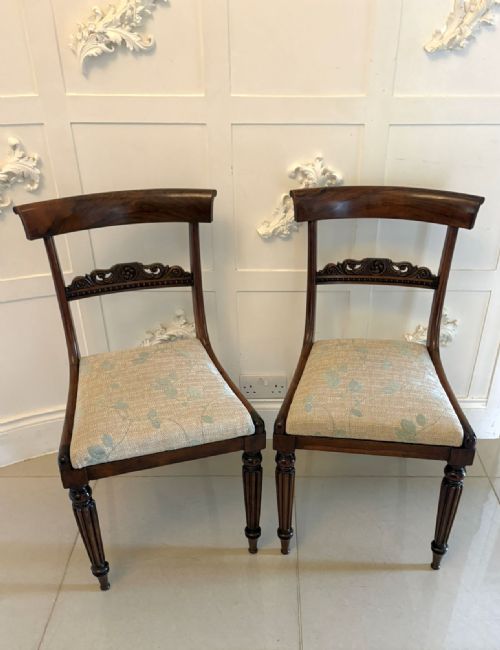
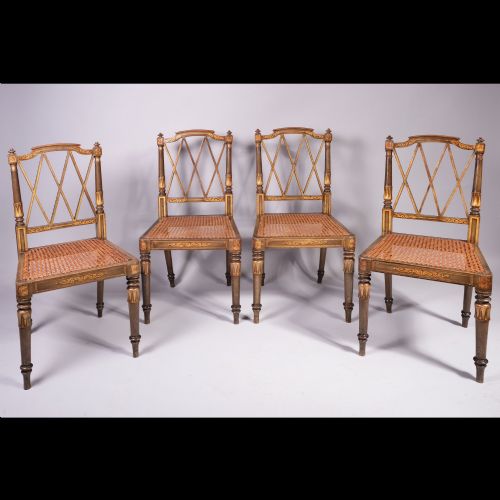
English regency side chairs encompass seating produced during the early nineteenth century, drawing heavily on classical Greek and Roman motifs. These forms range from simpler hall chairs to grand dining sets executed in rich timbers.
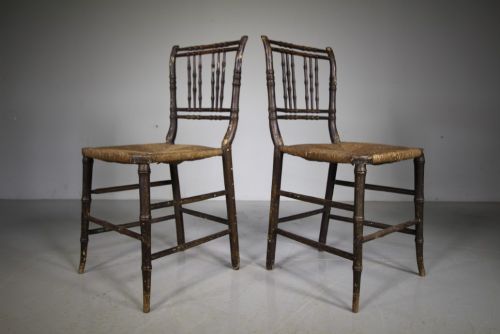
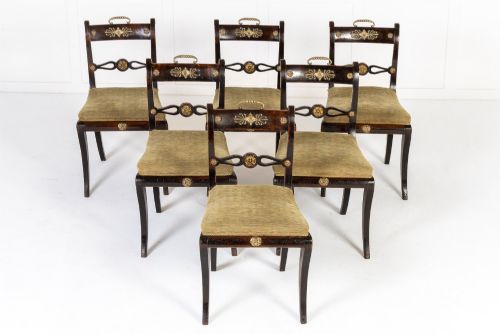
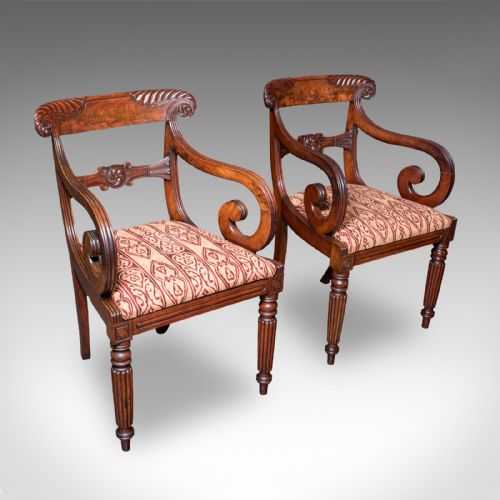
Makers often drew inspiration from Sheraton designs or worked in the manner of Gillows, producing disciplined lines, sabre legs, and brass inlay. Variations include painted finishes, simulated bamboo, and occasional armchairs meant for libraries or reception rooms.
Materials and Construction
Cabinetmakers relied on dense native and exotic hardwoods such as mahogany and rosewood, alongside secondary timbers like pine and elm for internal framing. Selected pieces utilise paint and ebonising to simulate more costly materials.
Decorative surface techniques include precise brass inlay, hand-painting, and gilding, applied to accent the classical geometry of the frames. Upholstery materials range from leather and horsehair to patterned fabric and needlepoint.
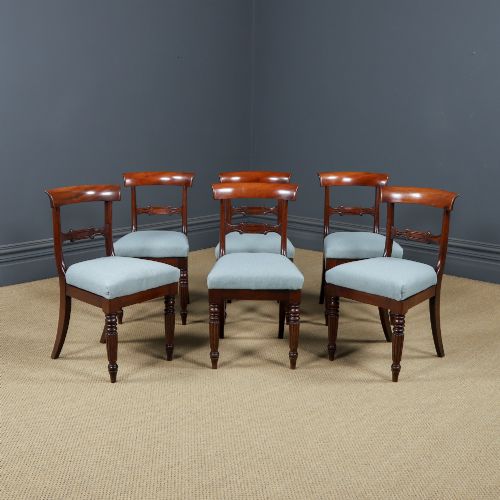
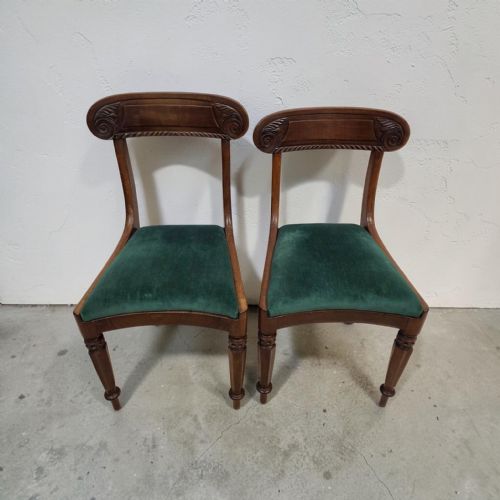
Joinery techniques focus on rigid mortise and tenon construction to support the characteristic slender legs and curved top rails. Turned and reeded components demonstrate the high standard of lathe work common to the period.
English Regency Side Chairs Retail Price Guide 2026
Typical asking prices for english regency side chairs among the pieces listed under this phrase on Sellingantiques today, from the lower quarter to the upper quarter. They describe what is for sale here now, not the wider market.
Listings feature mahogany, rosewood, and painted pine timbers alongside brass inlay and traditional upholstery.
Craftsmanship and Proportion
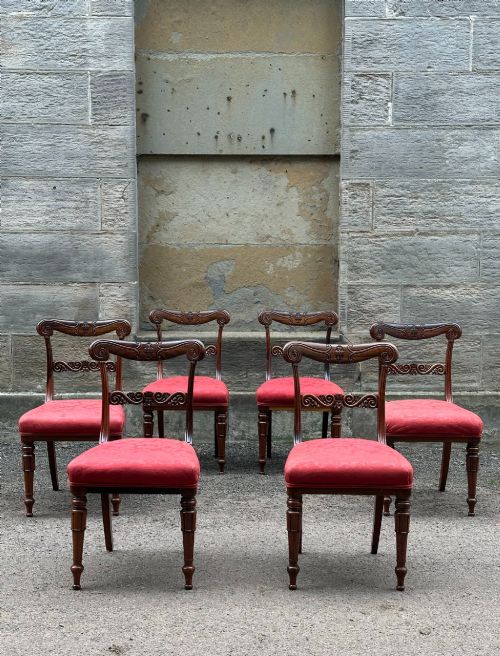
The refinement of carved details and the crispness of reeding distinguish finer examples from standard production pieces. Superior chairs maintain strict symmetry and balanced proportions in their curved top rails and sabre legs.
Timber selection plays a major role, with heavily figured rosewood or dense, rich mahogany commanding greater regard than plain wood or heavily painted pine. The integration of brass inlay requires meticulous precision to sit flush with the surrounding grain.
Completeness of a set and the survival of original surfaces preserve historical integrity. Matched sets of significant size remain harder to assemble than pairs, reflecting the losses sustained over two centuries.
Gillows
The English Regency Side Chairs Glossary
- Bar back
- A chair back featuring a horizontal splat or rail shaped like a bar, often curved to fit the sitter's spine.
- Klismos
- An ancient Greek chair form characterised by concave curved legs spreading outward and a sweeping curved backrest, frequently copied in Regency design.
- Sabre leg
- A chair leg that curves outward in a concave sweep resembling a cavalry sabre, typical of classical revival furniture.
- Reeding
- Parallel convex mouldings carved into wood to resemble a bundle of reeds, providing texture to legs and rails.
- Faux rosewood
- Wood painted or stained to imitate the dark grain and rich colour of genuine rosewood timber.
English Regency Side Chairs: Frequently Asked Questions
What defines a Regency side chair?
These chairs draw on ancient Greek, Roman, and Egyptian forms, featuring restrained classical lines, curved top rails, and sabre legs. They avoid heavy baroque carving in favour of architectural proportion and clean silhouettes.
Craftsmen often utilised mahogany or rosewood, sometimes embellishing the frames with brass inlay, painted details, or reeded turnings.
How do I spot a Gillows chair?
Attribution to Gillows usually rests on exceptional cabinet-making standards, precise joinery, and occasionally makers' stamps or distinct shell back carvings. Their pieces display a rigorous attention to structural integrity alongside refined classical ornamentation.
Even without a stamp, certain architectural proportions and crisp carving styles point directly to the firm's Lancaster and London workshops.
Can I use these chairs daily?
These chairs were built for daily use in dining rooms, halls, and libraries, employing robust mortise and tenon joinery in dense hardwoods. Regular sitting is entirely appropriate provided the frames remain structurally sound and joints are stable.
Modern owners often reinforce historic glue lines professionally if necessary to ensure the furniture withstands contemporary weight and use.
How do I tell Regency from William IV?
Regency pieces generally display lighter, more delicate proportions with sharper neoclassical restraint, flourishing roughly between eighteen hundred and eighteen twenty. William IV furniture, spanning the subsequent decades, tends toward heavier construction, broader proportions, and bolder scrollwork.
Both periods share a love for mahogany and rosewood, but William IV designs often incorporate more robust turning and substantial framing.