



English Regency Shelf
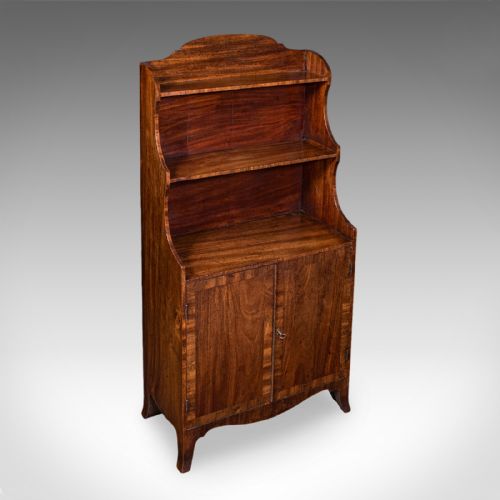
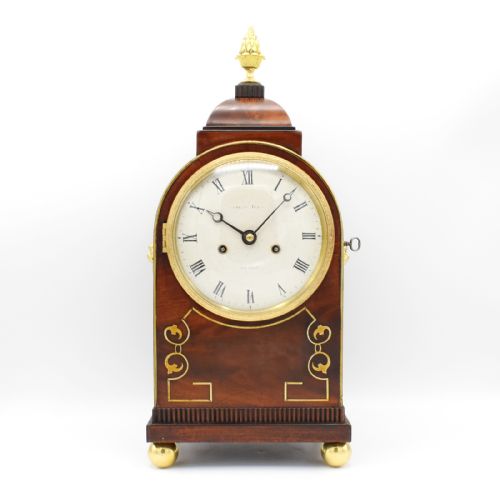
An English regency shelf brings architectural line and figured timbers into a room, offering functional display for books and horology.
English Regency Shelf
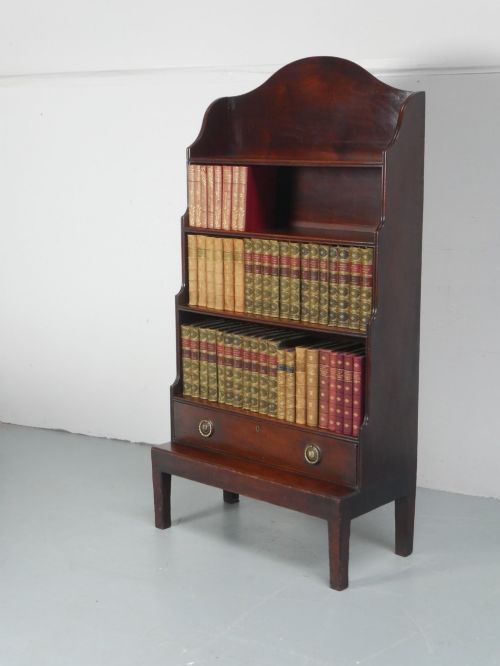
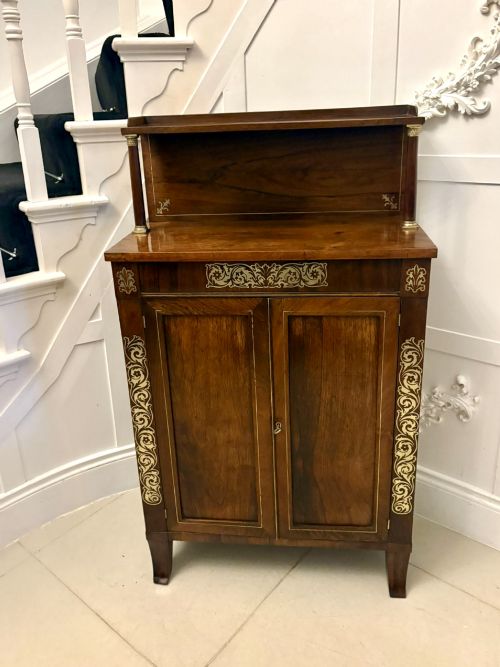
An english regency shelf encompasses bookcases, chiffoniers, whatnots, and bracket clocks spanning the Georgian, Regency, and Victorian eras. These pieces originate from workshops producing domestic furniture and timepieces in mahogany, rosewood, and ebonised wood.
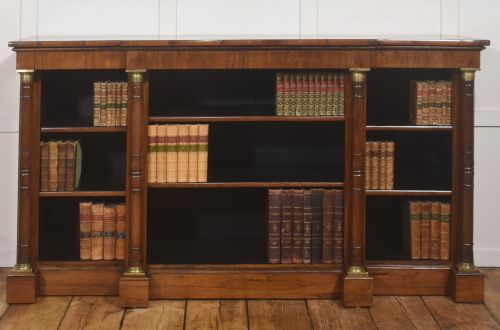
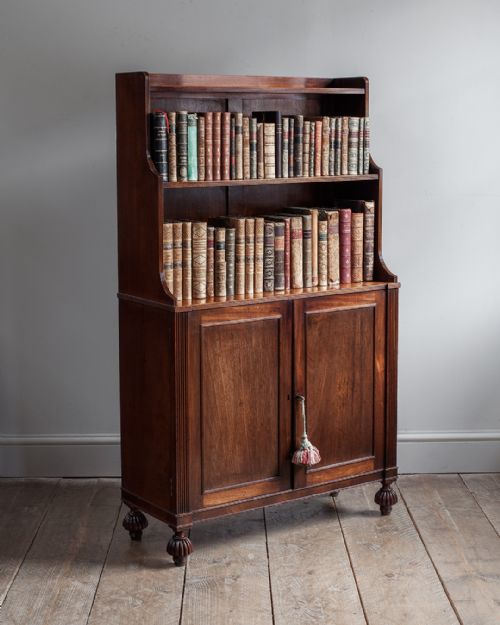
The most common forms on this page include open dwarf bookcases, tiered whatnots, and mantel clocks with fusee movements. Makers combined storage and display through graduated shelves, glazed doors, and cabinet bases suited to period interiors.
Materials and Technique
Timbers such as mahogany and rosewood provide the primary carcase structure, often enriched with brass mounts, boxwood inlay, and ebonised details. Craftsmen selected figured grain patterns to catch the light on upright panels and shelf fronts.
Timepiece movements rely on fusee mechanisms housed in wooden or gilt bronze cases, while cabinetry employs traditional joinery for tiered etageres and breakfront bookcases. Surface finishes include original grained paint and polished wax.
English Regency Shelf Retail Price Guide 2026
Typical asking prices for english regency shelf among the pieces listed under this phrase on Sellingantiques today, from the lower quarter to the upper quarter. They describe what is for sale here now, not the wider market.
Pagoda tops and tiny library clocks prove that past horologists took miniature architecture very seriously indeed.
Distinctions of Execution
The division between standard workshop output and top-tier pieces rests on the precision of timber selection and metalwork. Finer examples display meticulous boxwood inlay, well-figured rosewood veneer, and crisp brass mounts.
Horological pieces derive their standing from the reputation of the maker inscribed on the dial or movement, alongside the integrity of the fusee mechanism. Cabinetry quality shows in the graduation of open shelves and the retention of original finishes.
Charles Pratt London·Seller of Reading·John Bull of Bedford·Barrett London·J Kingerley Manchester·McCabe London·DeLa Salle And Christie·Bently & Beck London·John McLean·Town and Emanuel
The English Regency Shelf Glossary
- Fusee
- A conical pulley used in clockmaking to maintain even power as the mainspring unwinds. This mechanism ensures accurate timekeeping throughout the duration of the wind.
- Whatnot
- A piece of open shelving with multiple tiers supported by upright posts. These stands served for the display of ornaments, books, and small household items.
- Chiffonier
- A low cabinet featuring shelving above or enclosed storage space below. Originating in the Regency period, it functioned as a side piece in dining and living rooms.
- Breakfront
- A piece of furniture where the central section projects forward from the flanking wings. This architectural arrangement creates depth and visual balance on large bookcases and side cabinets.
- Etagere
- A set of open shelves for displaying objects, similar in function to a whatnot. The term applies to multi-tiered freestanding wooden display units.
English Regency Shelf: Frequently Asked Questions
What is a fusee clock?
A fusee clock uses a conical gear to equalise the pull of the mainspring as it runs down. This mechanical refinement keeps the timepiece accurate.
Such movements appear frequently in the bracket and mantel clocks housed within these architectural wooden cases.
How do I identify a Regency bookcase?
Regency bookcases generally feature open graduated shelving, dwarf proportions, or breakfront rosewood construction. Brass inlay and classical proportions help separate them from later Victorian copies.
Many examples incorporate lower cupboards or take the form of waterfall bookcases with descending shelf depths.
What was a whatnot used for?
Whatnots served as movable display stands for porcelain, books, and small decorative objects in period drawing rooms. Their tiered open structure kept items accessible.
Cabinetmakers built them in mahogany, rosewood, and walnut with three or more distinct platforms.
Where does a chiffonier go?
A chiffonier works well against a dining room or drawing room wall, providing a surface for serving and lower cupboard storage. Its compact footprint suits modest wall spaces.
These pieces often feature enclosed doors flanked by columns or pilasters beneath upper shelves.