
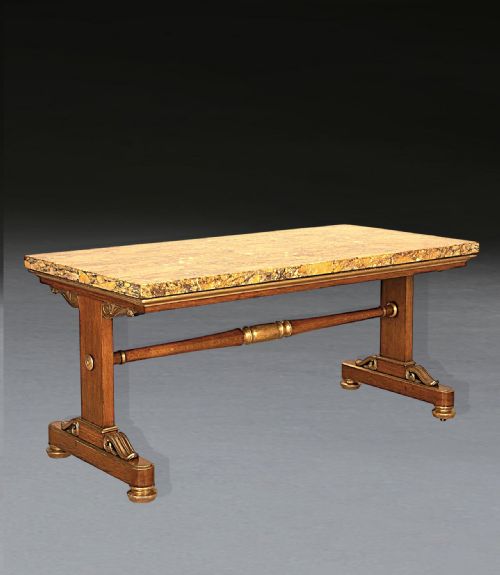
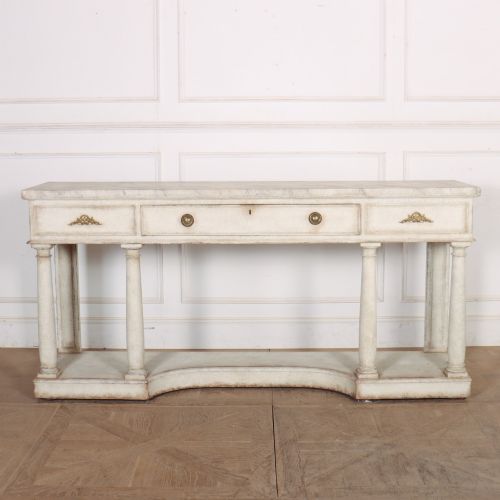

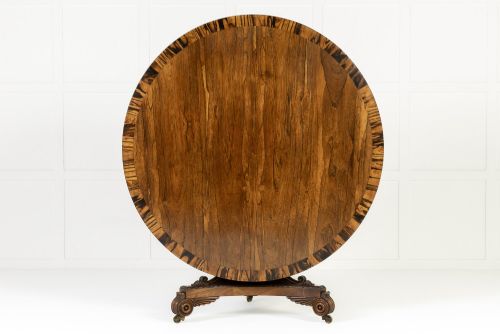


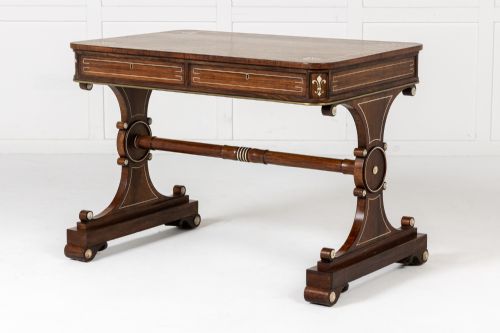


English Regency Hall Table
An English regency hall table brings formal neoclassical presence to an entrance, combining rich timber with architectural restraint.
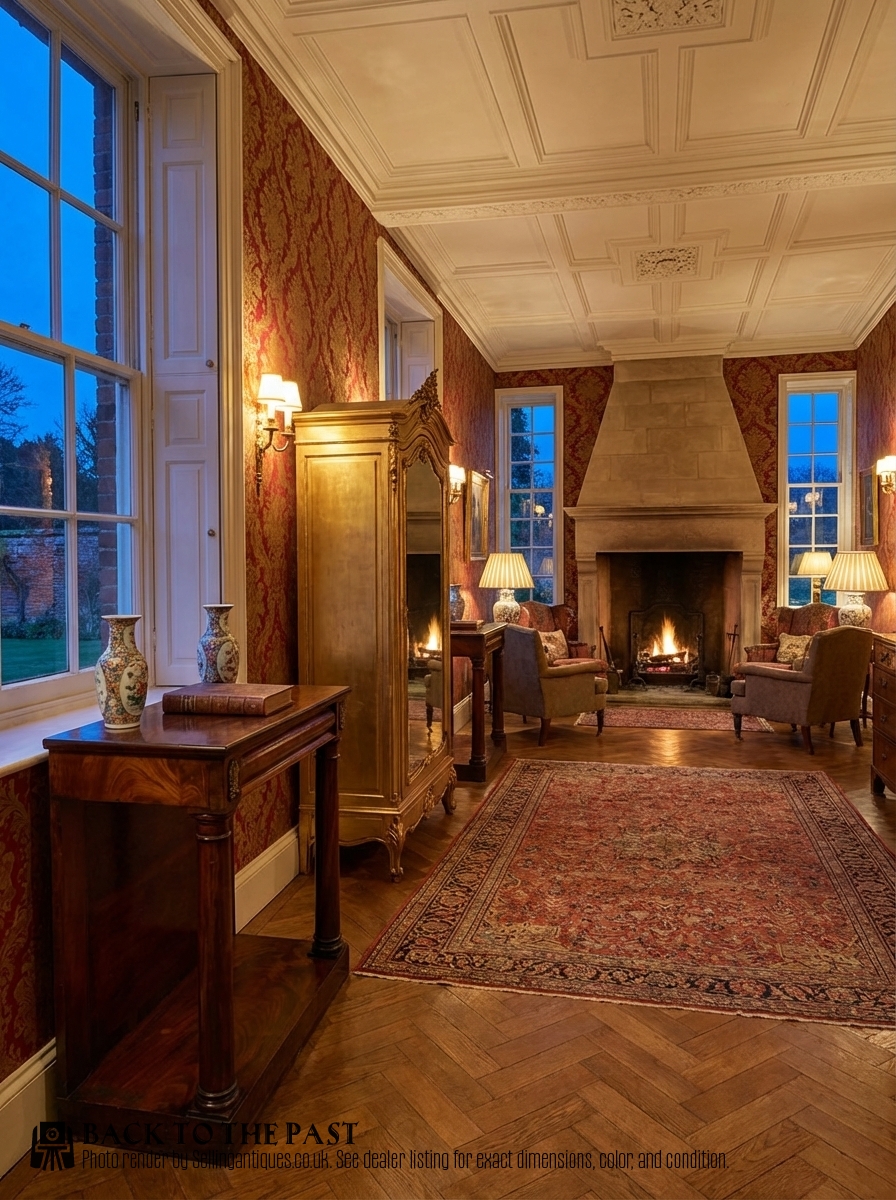
English Regency Hall Table
When you search for an English regency hall table, you encounter architectural console, side, and serving forms designed for formal entrance spaces. These pieces emerge primarily from the nineteenth century, including the Regency and William IV periods, alongside later Victorian interpretations.
The selection ranges from narrow demi-lune consoles and mahogany serving tables to freestanding centre tables and library pieces adapted for hallway use. Timbers such as mahogany, rosewood, and pollard oak dominate the selection, often paired with marble tops or intricate brass detailing.
Makers and designers of the era drew on neoclassical and Empire design vocabularies, producing balanced proportions suited to grand reception areas. The forms reflect both utilitarian hallway requirements and the decorative ambition of early nineteenth-century interior design.
Construction and materials
Cabinetmakers utilised dense timbers like solid mahogany, rosewood, and oak as structural foundations, frequently applying flame mahogany veneer to visible surfaces for striking visual grain patterns. Giltwood and painted wood surfaces also appear, sometimes retaining original ochre paint or decorative faux bamboo finishes.
Stone tops, particularly Siena marble, provide durable surfaces on console and serving forms, requiring precise masonry work to fit wooden frames. Joinery techniques of the period ensure stability in large library and centre tables without relying on modern adhesives.
Materials documented across these listings include mahogany, brass, painted wood, rosewood, giltwood, marble, inlay, and flame mahogany veneer.
Evaluating craftsmanship
Quality rests upon the selection of timber figures and the precision of the cabinetwork, distinguishing robust structural builds from purely decorative adaptations. Superior examples display thoughtful integration of brass mounts, carved giltwood details, and matched veneer panels.
The sophistication of the neoclassical design execution separates standard utility tables from exceptional pieces produced by prominent workshops. Original surfaces and untouched patination further elevate the standing of a table within this tradition.
Gillows·Maple and Co·George Smith
The English Regency Hall Table Glossary
- Demi-lune
- A half-moon shape used for console and side tables designed to stand flat against a hallway wall.
- Flame mahogany veneer
- A thin slice of timber cut from the fork of the mahogany tree, displaying a flickering, flame-like grain pattern.
- Console table
- A table supported by wall brackets or console legs, traditionally positioned in entrance halls and formal reception rooms.
- Giltwood
- Wood that has been coated with gold leaf or gold paint to simulate solid gold enrichment.
- Neoclassical
- A style spanning the late eighteenth and early nineteenth centuries that revived classical Greek and Roman architectural motifs.
English Regency Hall Table: Frequently Asked Questions
Where do you put an English regency hall table?
These pieces fit naturally against entrance walls, narrow corridors, and grand reception landings where surface space is needed without blocking movement.
Their shallow depths, particularly in demi-lune and console formats, allow them to occupy circulation areas while holding lamps, bowls, or correspondence.
How do you distinguish a console from a hall table?
Console tables traditionally rely on wall support or specific bracket legs, whereas hall tables often stand independently as four-legged side or serving furniture.
Both forms served similar reception functions in nineteenth-century interiors, resulting in considerable crossover in how makers designed them.
What woods were used for these tables?
Makers relied heavily on mahogany, rosewood, and oak, often enhancing the visual appeal through figured veneers and contrasting crossbanding.
Painted wood, giltwood, and pollard oak also appear across the surviving pieces, reflecting diverse commission requirements of the period.
How do you date a nineteenth-century hall table?
Dating relies on stylistic shifts from strict Regency neoclassical severity toward heavier William IV proportions and later Victorian revivals.
Construction methods, timber choices, and secondary woods inside drawers provide further physical clues for establishing the decade of manufacture.