



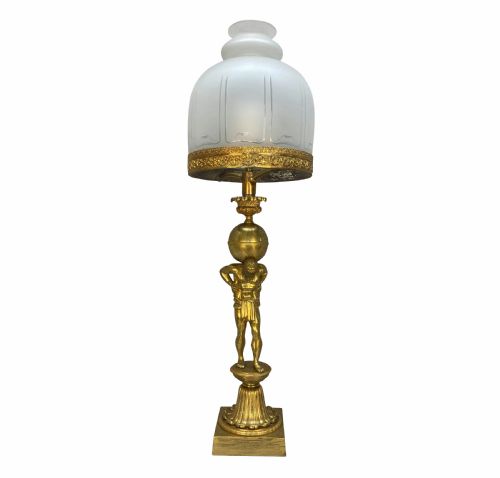


English Regency Bronze
English regency bronze pieces bring classical motifs and rich patinated metalwork into a room.
English Regency Bronze
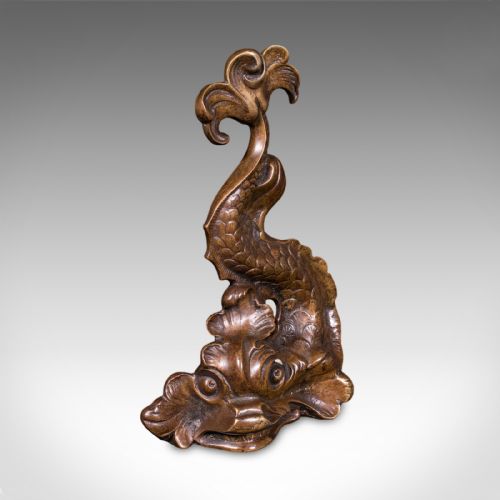
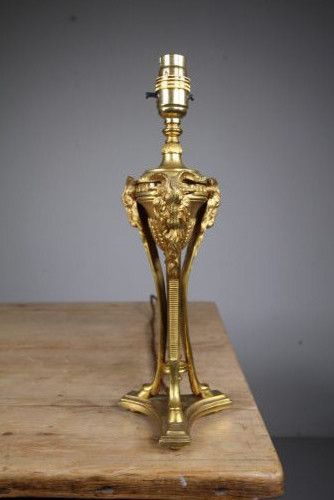
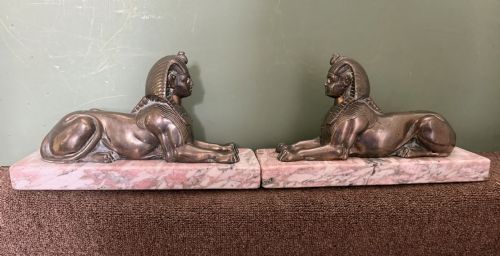
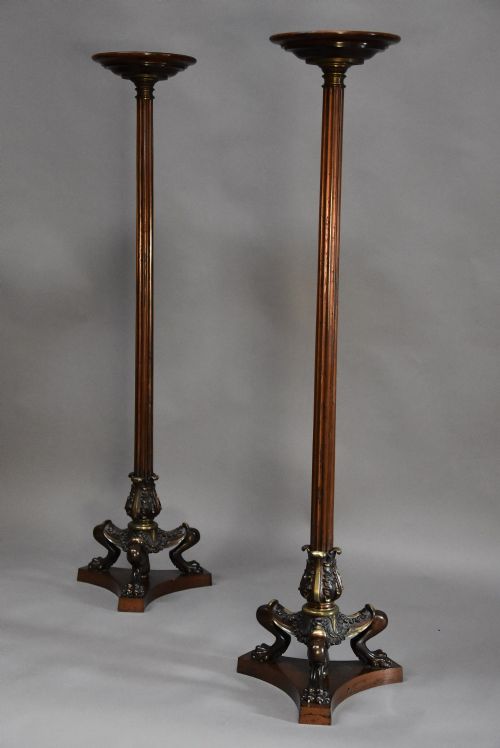
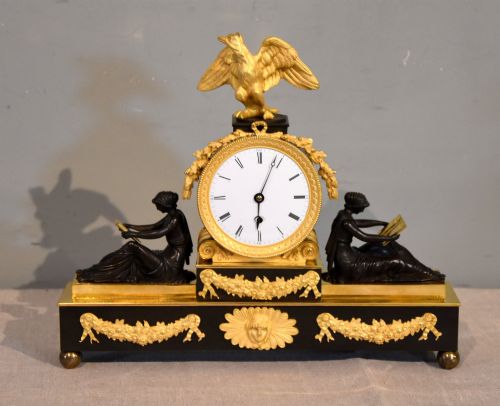
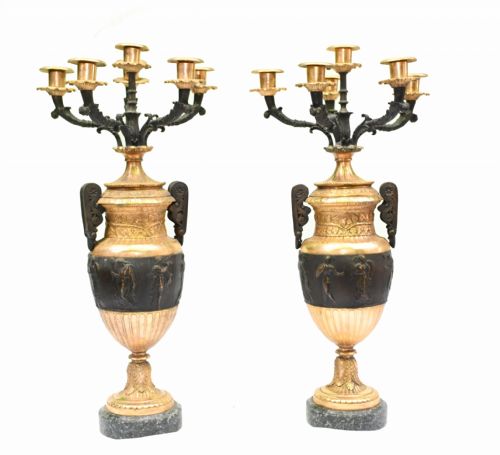
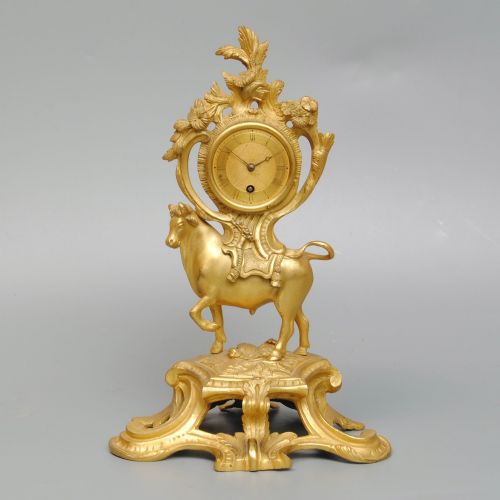
When you examine english regency bronze items, you encounter functional household objects shaped by classical taste. The selection spans mantel clocks, candlesticks, doorstops, lamps, inkwells, and torcheres created during the period or in later revivals. These works draw heavily upon neoclassical design vocabularies established around the early nineteenth century.
Most entries belong strictly to the Regency era or the nineteenth century, alongside later revivals from the late eighteen-eighties and nineteen-thirties. Forms range from utilitarian brass doorstops and strong boxes to elaborate figural mantel clocks and gilt-bronze candelabras. Collectors encounter both genuine period articles from around eighteen-twenty and later interpretations influenced by Regency aesthetics.
Materials and Construction
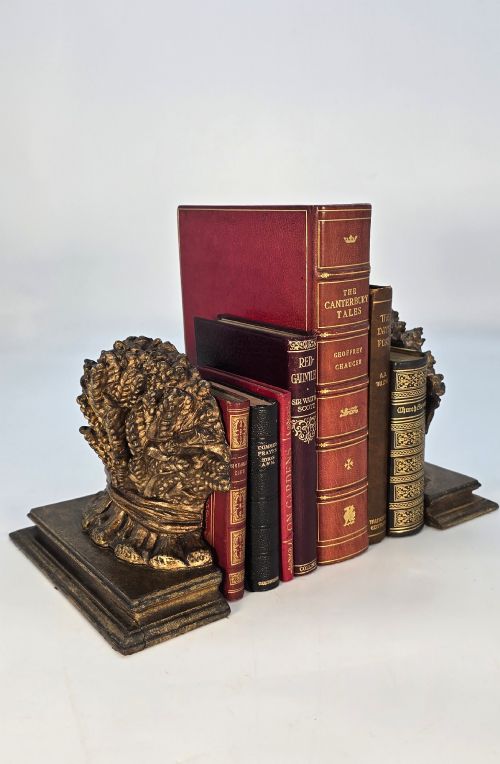
Craftsmen utilised bronze, patinated bronze, and gilt bronze, frequently pairing the metalwork with ormolu, brass, marble, steel, enamel, and mahogany. Foundational components were cast and chased, then finished with varied patination or gilding to create contrast between polished highlights and darker surfaces. Ormolu elements added brilliant golden accents to deep brown or black patinated bronze bodies.
Makers combined these metals with specialised movements for mantel clocks, including chain fusee mechanisms signed by London makers. Structural elements in larger pieces like torcheres incorporated dense hardwoods such as mahogany alongside cast bronze mounts. Surface treatments ranged from hand-applied parcel gilding to rich patination that protected the metal while accentuating crisp cast details.
A cast bronze lurcher dog guards an inkwell, ready to hold your correspondence.
Evaluating Quality and Execution
The distinction between tiers rests upon the crispness of the chasing and the depth of the metal casting. Superior examples display sharp relief in figures, acanthus leaves, and animal motifs like dolphins, rams, and griffins, whereas lesser pieces exhibit softer, blurred details from worn moulds.
Quality also manifests in the integration of mixed materials, such as the precise fitting of ormolu mounts onto patinated bronze bodies or marble bases. In mechanical items like mantel clocks, the sophistication of the fusee movement and the reputation of the London maker elevate the standing of the piece significantly.
Baetens London·James Murray London·Henry Berkeley Square London·FB Adams London·Bently & Beck London·Payne of London·Town and Emanuel
The English Regency Bronze Glossary
- Ormolu
- Finely ground high-carat gold applied to a bronze base through a mercury amalgamation process, or simply gilded bronze. This technique creates a brilliant golden finish that resists tarnish over centuries.
- Patinated bronze
- Metal treated with chemical solutions to produce a stable, dark surface oxidation. This finish protects the underlying alloy while highlighting sculptural contours.
- Fusee
- A conical pulley used in clockmaking to maintain even power from the mainspring as it unwinds. It ensures consistent timekeeping across the duration of the movement run.
- Campana
- A classical vase shape resembling an inverted bell with an everted rim. These vessels frequently appear in bronze urns and light fittings from the period.
- Torchere
- A tall stand designed to support a light fixture or candle. Regency examples often incorporate carved mahogany and cast bronze mounts.
English Regency Bronze: Frequently Asked Questions
How do I identify a true Regency bronze?
Examine the weight, casting sharpness, and patination of the metal. Genuine period pieces from the early nineteenth century display hand-finished chasing and distinct neoclassical proportions.
Compare the construction methods and materials with documented examples from the era. Makers of the time favoured specific combinations of patinated bronze and fire-gilded ormolu.
How were bronze doorstops used?
Heavy bronze doorstops kept interior doors open in grand houses and libraries. Their substantial weight prevented doors from swinging shut in draughty hallways.
Craftsmen cast these practical items into decorative figures like dolphins, animals, or heraldic symbols. This transformed a mundane household utility into an ornament reflecting classical taste.
Where should I place a bronze lamp?
Position these heavy metal lamps on sturdy side tables or desks where their substantial base and classical silhouette can anchor the room. Ensure the surface can support the combined weight of bronze and marble.
Keep them away from damp areas to protect the patination and any delicate ormolu gilding. Soft ambient lighting helps accentuate the varied tones of the metal.