

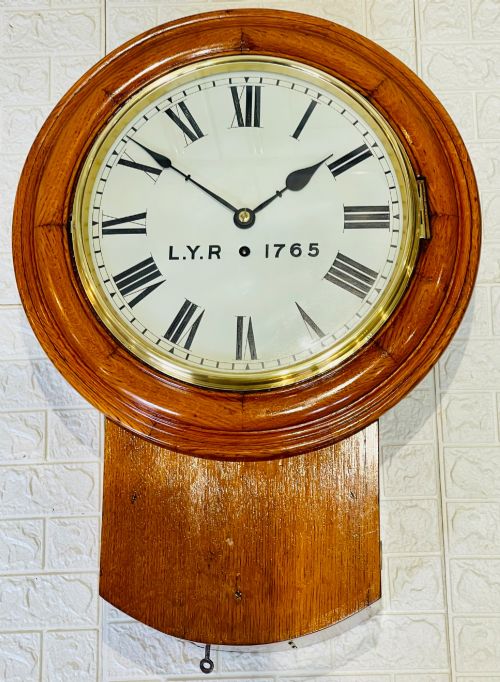

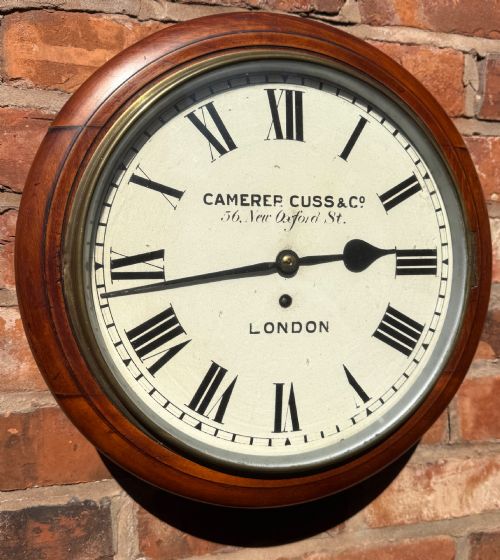
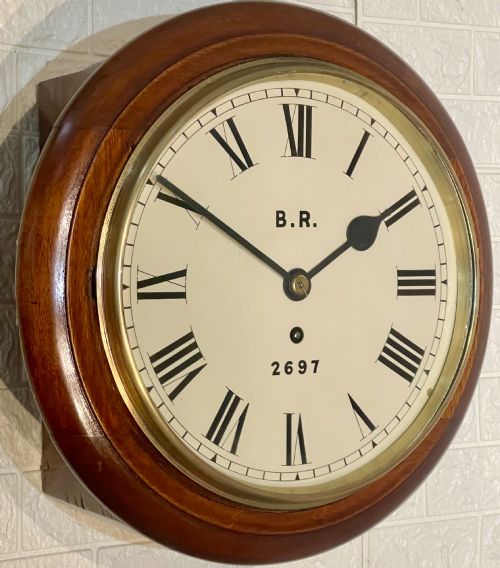
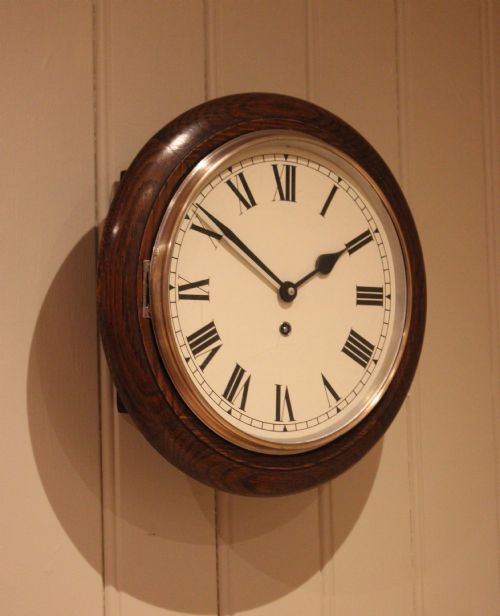


English Railway Clock
An english railway clock is a sturdy circular timekeeper built for stations and offices, prized for its reliable fusee movement and clear dial.
English Railway Clock
When you search for an english railway clock, you encounter round wall timepieces designed for transport networks, administrative offices, and public spaces. The pieces available here span the Victorian era, the Edwardian period, and the mid-twentieth century.
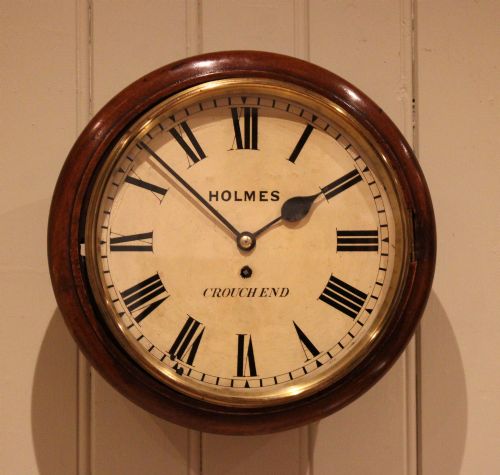
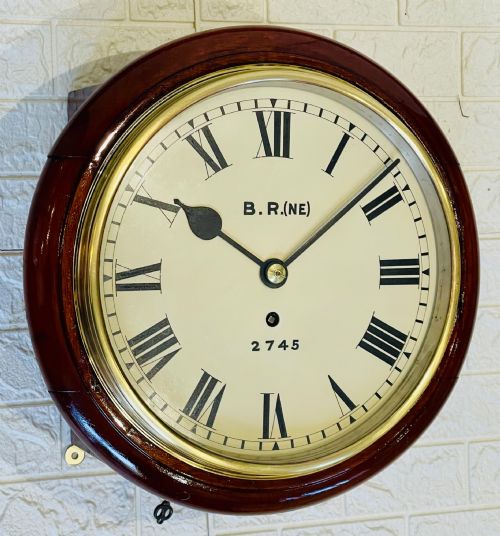
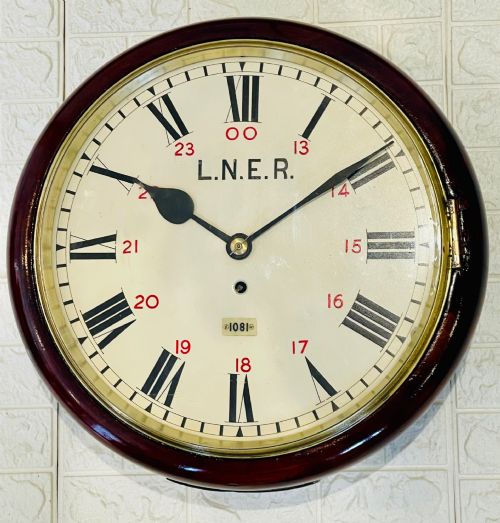
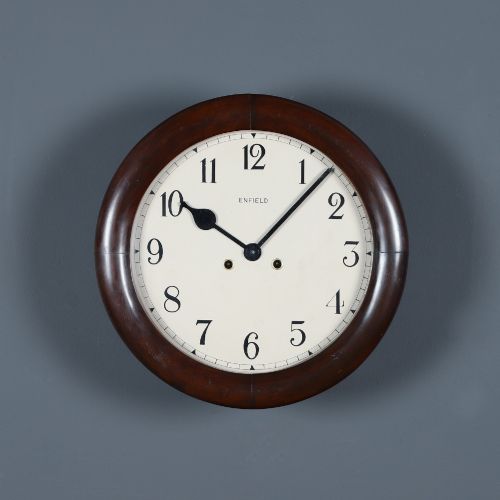
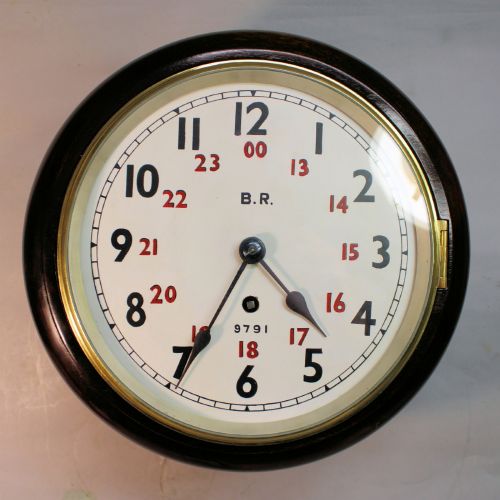
You are most likely to meet circular dial clocks housed in wooden surrounds bearing company initials or station names. These objects range from standard timepieces to double-dial variants and drop-dial formats.
The material evidence shows these functional pieces distributed across major networks such as the Great Western Railway, London and North Eastern Railway, and the General Post Office. They serve as utilitarian survivals from an era of steam travel.
Materials and construction
Makers housed the mechanisms of an english railway clock in robust circular timber frames turned from solid mahogany, oak, or beech. These dense woods protected the interior gears from the coal smoke, steam, and vibration characteristic of busy stations.
The movements relied on fusee mechanisms, which utilised a conical pulley and chain or gut line to maintain even tension as the mainspring unwound. This traditional gear train ensured the precision required for timetabled departures.
Dials featured protective glass bezels framed in brass or iron, backed by painted metal or wood faces with clear black numerals. These components allowed station staff to read the time accurately from a distance.
English Railway Clock Retail Price Guide 2026
Typical asking prices for english railway clock among the pieces listed under this phrase on Sellingantiques today, from the lower quarter to the upper quarter. They describe what is for sale here now, not the wider market.
Some station clocks retain subtle paint ghosting where platform soot and steam hurried the hands along.
Factors that distinguish quality
The grade of an english railway clock rests upon the sophistication of its movement and the crispness of the dial markings. Finer examples feature high-end fusee mechanisms signed by established makers rather than standard spring-driven or chiming alternatives.
Case construction also separates standard utility pieces from exceptional commissions, with well-figured mahogany or oak surrounds and heavy cast brass bezels indicating superior workshop standards. Original company engravings on the dial or fusee box add provenance.
The integrity of the timber and the retention of original components govern the standing of each piece. Clocks retaining their original finish and unblemished dial lettering command greater regard among collectors.
Camerer Cuss And Co·John Walker
The English Railway Clock Glossary
- Fusee
- A conical pulley connected to the mainspring by a chain or cord, designed to equalise the torque as the spring unwinds. This mechanism is central to the accuracy of traditional timekeepers.
- Dial clock
- A wall timepiece featuring a prominent circular face and a short wooden trunk or surround. It represents the standard format for public and office interiors.
- Drop dial
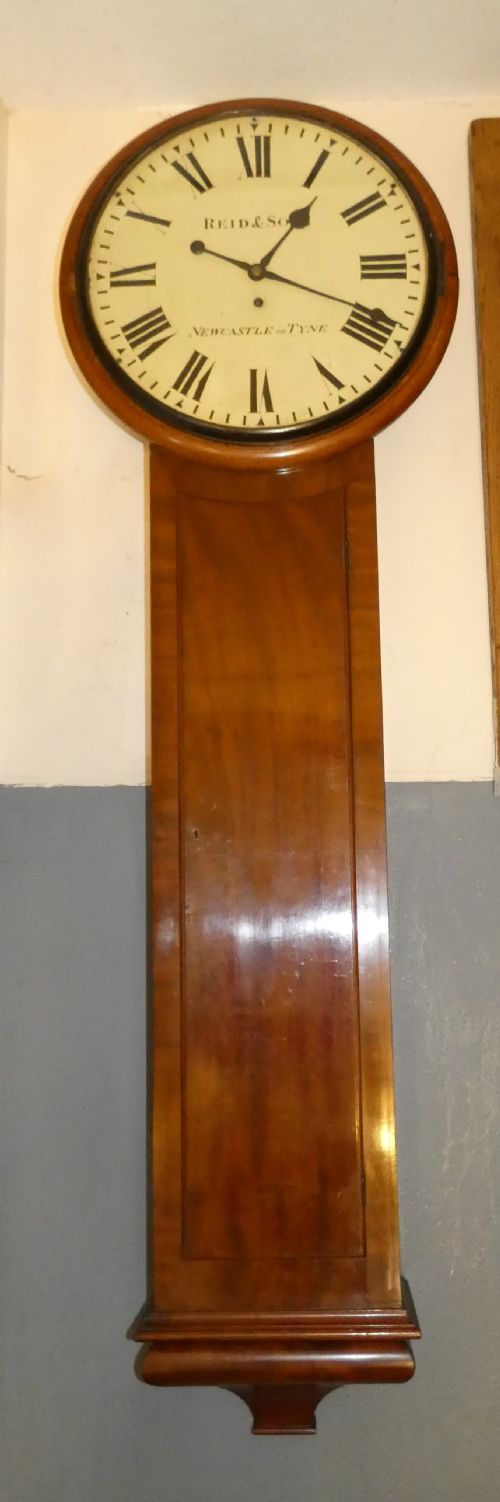
- A wall clock where the circular dial sits above a short, glazed trunk that drops down to house the pendulum. This design accommodates the descending weight or pendulum swing.
- Bezel
- The metal or wooden ring that holds the glass protecting the clock face. It often opens on a hinge to allow hand adjustments.
- Regulator
- A precision timekeeper adjusted to maintain high accuracy. These pieces typically feature longer pendulums and clean, legible dials.
English Railway Clock: Frequently Asked Questions
How do I wind an english railway clock?
Most fusee wall clocks require a winding key inserted directly into a small hole on the painted dial face. Turn the key gently until you feel resistance, taking care not to overwind the mainspring.
Consult the mechanism type before attempting to adjust the hands or tension. Regular, careful winding preserves the historic chain and gear train.
Were all these clocks used on platforms?
Not every piece served on an open platform; many hung inside booking halls, station masters' offices, or railway administrative buildings. Others originated in telegraph rooms, postal sorting offices, or schools.
Company lettering or initials painted on the dial often indicate the specific department or network that utilised the timekeeper.
How can I tell the period of a dial clock?
Victorian examples frequently pair fusee movements with solid mahogany cases and cast brass bezels. Later twentieth-century pieces often adopt simpler oak or beech frames and house electric or alternative striking mechanisms.
Examine the construction of the rear box and the style of the lettering on the dial to determine the era of manufacture.
How should I hang a heavy wall clock?
Support the weight of the timber case using appropriate wall fixings secured directly into masonry or solid studs. Avoid hanging these heavy timekeepers from plasterboard alone.
Ensure the clock hangs completely plumb against the wall so the pendulum swings freely without catching on the case interior.