





English Pottery Holder
These English pottery holder pieces range from Georgian delftware bough pots to Victorian Staffordshire figures and Art Deco lustre vessels, bringing decorative utility to any room.
English Pottery Holder
When you search for an English pottery holder, you are exploring a diverse group of functional and decorative ceramics designed to contain specific household items. The selections on this page span several centuries of British ceramic production, featuring objects intended for desktop use, mantelpiece display, and floral arrangement.
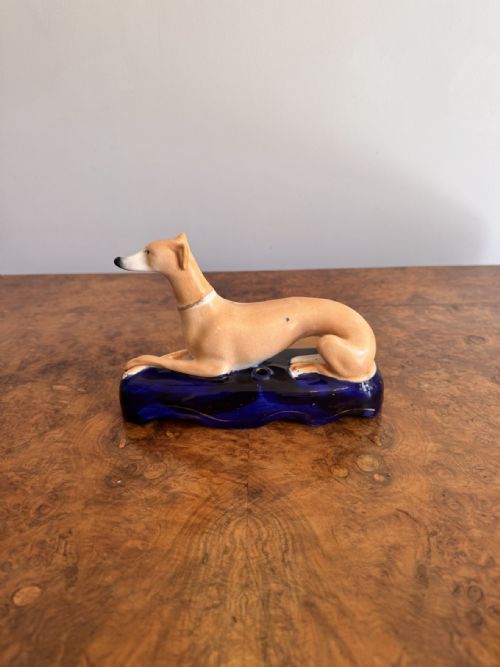
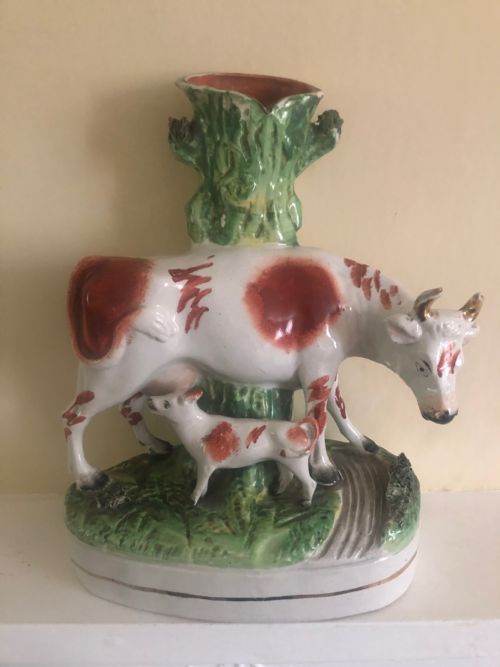
The most frequently encountered examples on this page are Victorian Staffordshire figures incorporating functional compartments, such as greyhound inkwells, quill holders, and watch-holders. These pieces combine sculptural appeal with utilitarian purpose, often depicting animals or literary scenes associated with nineteenth-century domestic life.
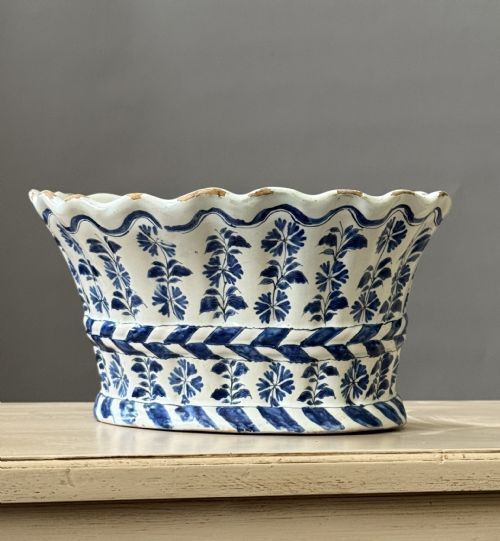
Beyond desk accessories, the listings encompass Delftware bough pots, spill vases shaped as deer and harvesters, and architectural forms like Burmantofts Faience stick stands. Later twentieth-century manufacturing brings Art Deco lustre vases and Decoro candlesticks into the mix, demonstrating how potters adapted utilitarian holders to changing decorative fashions.
How They Were Made
The construction of these pieces relies on traditional ceramic techniques, predominantly utilising earthenware bodies shaped by hand, mould, or wheel. Potters applied various surface treatments, including tin glazes, lead glazes, and cobalt decoration, to seal the porous clay and provide colour.
Finishing touches often involved hand-painting overglaze enamels or lustre pigments, particularly evident in nineteenth-century Staffordshire works and later Art Deco designs. Doulton Lambeth and Burmantofts examples showcase specialised ceramic bodies and faience techniques developed during the late Victorian and Arts and Crafts periods.
English Pottery Holder Retail Price Guide 2026
Typical asking prices for english pottery holder among the pieces listed under this phrase on Sellingantiques today, from the lower quarter to the upper quarter. They describe what is for sale here now, not the wider market.
Listings feature periods spanning from the eighteenth century through to the Art Deco era of the 1920s.
What Varies in Quality
Quality in these ceramics rests primarily on the crispness of the moulding and the execution of the hand-painted details. Finer pieces display sharply defined facial expressions on figures, clean separation of glaze colours without blurring, and well-balanced proportions across pairs.
The sophistication of the glaze application also distinguishes the range, from simple lead-dipped surfaces to complex tin-glazed tinware and lustrous Art Deco finishes. The integrity of the original ceramic body, free from extensive restoration or structural compromise, dictates the standing of each piece.
Charlotte Rhead·Doulton Lambeth·Decoro England·Burmantofts Faience
The English Pottery Holder Glossary
- Earthenware
- Porous ceramic pottery fired at relatively low temperatures and typically glazed to ensure it holds liquids.
- Staffordshire Figure
- Ceramic sculptural pieces produced in the Staffordshire potteries, often incorporating practical holders such as inkwells or spill vases.
- Bough Pot
- A decorative vessel, frequently made in Delftware, designed to hold flowering branches or cut stems for interior display.
- Spill Vase
- A small container meant to hold thin wooden spills used for lighting candles and fires.
- Tin-Glazed Earthenware
- Pottery coated with an opaque white tin-oxide glaze that provides a smooth ground for painted decoration.
English Pottery Holder: Frequently Asked Questions
What is an English pottery holder?
An English pottery holder is a ceramic object designed to contain items such as ink, pens, watches, or floral arrangements. These range from Victorian desk accessories to earlier delftware vessels.
They combine practical utility with sculptural decoration, reflecting the aesthetic priorities of their respective periods of production.
How do I date a Staffordshire figure holder?
Dating relies on stylistic markers, base characteristics, and glazing techniques. Mid-nineteenth-century examples often feature flat backs and hand-painted polychrome details.
Later reproductions and different eras display distinct ceramic bodies and manufacturing stamps that help establish their period of origin.
Where were these pottery holders made?
Many of these pieces originated in the Staffordshire Potteries region of England, which served as the heart of British ceramic production. Other notable manufacturing sites include London and regional art pottery kilns.
Each production centre employed local clays and specialised techniques characteristic of its workshop traditions.
How should I clean my antique pottery holder?
Cleaning requires gentle dusting with a soft, dry cloth to prevent accumulation of dirt in crevices and painted surfaces. Avoid using harsh chemical cleaners or submerging porous earthenware in water.
Careful handling protects delicate glazes and overglaze enamel decorations from unnecessary wear over time.