



English Painted End Table
An english painted end table brings portable surface space and hand-finished colour to a corner or bedside.
English Painted End Table
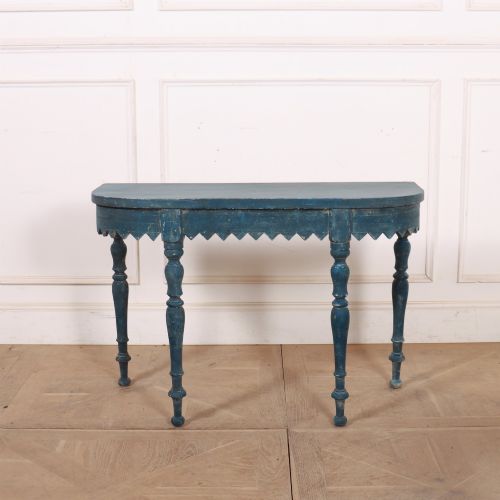
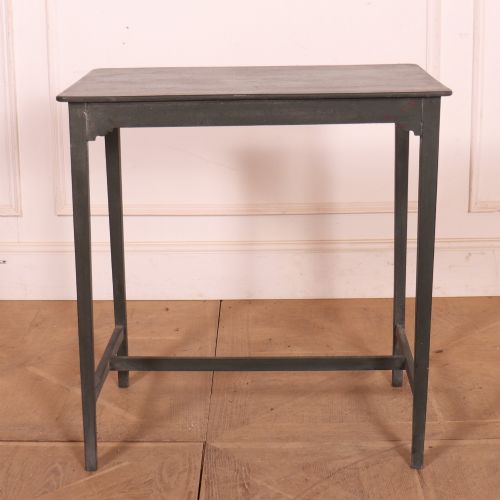
When you search for an english painted end table, you encounter compact side tables, lamp tables, and console tables designed to sit beside seating or against walls. The versions you are most likely to meet on this page span the eighteenth and nineteenth centuries, taking the form of square or bow-fronted tables meant for domestic utility.
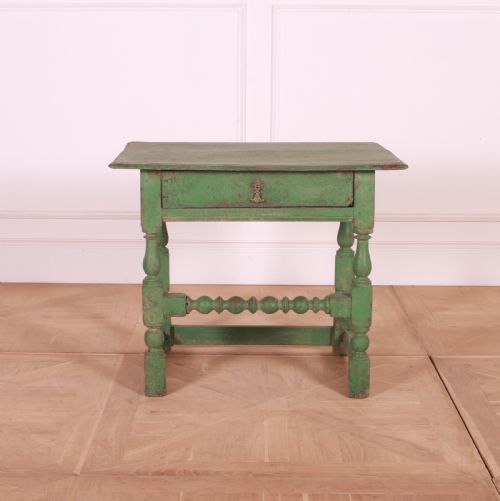
The construction typically relies on solid timbers such as oak and pine, finished with surface paint or decorative schemes. Some examples lean towards straightforward English Country restraint, whilst others display Chinoiserie decoration or Georgian proportions.
These items served practical functions in period interiors, holding lighting, books, or decorative objects. Their enduring appeal lies in the way aged timber meets hand-applied pigment, offering character that bare wood alone cannot replicate.
How they were made
Makers constructed these pieces using woods such as oak and pine, selected for structural stability and availability. Joinery was executed by hand, employing traditional framing and fastening methods suitable for daily household use.
Surfaces were prepared and finished with traditional paint layers, sometimes incorporating decorative motifs or Chinoiserie details applied over the base colour. Brass hardware occasionally appeared on associated side cabinets and console variations to secure doors or drawers.
Several tables were built simply to hold a heavy oil lamp, yet they have outlived every lamp they ever supported.
What varies in quality
The distinction between ordinary and superior examples rests upon the harmony of proportions and the integrity of the original construction. Tables with well-balanced legs and crisp moulding demonstrate a higher standard of cabinet-making than utilitarian pieces built strictly for basic service.
Surface finish significantly influences the character of each piece, distinguishing simple utilitarian coats from deliberate decorative programmes. Surviving decorative schemes that retain their original pigment without excessive later interference command greater appreciation from collectors.
The English Painted End Table Glossary
- Bow end
- A convex curved front edge to a table or cabinet. This shaping softens the rectangular silhouette and requires careful woodworking skill.
- Chinoiserie
- European artistic interpretation of Chinese and East Asian motifs. This style gained popularity across various British decorative periods.
- Lamp table
- A small occasional table designed specifically to support a lighting fixture. These pieces often feature compact tops and sturdy legs.
- Console table
- A table designed to stand against a wall, sometimes secured with brackets. They offer narrow surface space in hallways and principal rooms.
English Painted End Table: Frequently Asked Questions
Where should I place an english painted end table?
These pieces suit positions beside armchairs, sofas, or beds where surface space is required for lamps or books. Their compact footprints allow them to fit narrow hallways or unused corners without crowding the room.
Ensure the height matches the arm of your seating for comfortable daily use. They also function well as small display surfaces for ceramics or decorative objects.
How do I care for painted wooden furniture?
Protect the surfaces from excessive moisture and direct sunlight to preserve the underlying wood and pigment. Dust regularly with a soft, dry cloth rather than using chemical polishes that can degrade historic finishes.
Maintain stable room temperatures to prevent the timber from expanding or contracting excessively. Gentle handling ensures the painted decoration survives intact for future generations.
What periods do these tables come from?
The listings span multiple eras, stretching from the eighteenth century through the nineteenth century and into the early twentieth century. Each period brings distinct construction traits and stylistic influences to the finished piece.
Earlier examples often display simpler country aesthetics or Georgian proportions. Later nineteenth- and twentieth-century items introduce varied decorative schemes, including Chinoiserie motifs.
What is the difference between a lamp table and a console table?
Lamp tables are generally freestanding square or round pieces meant to sit beside seating. They provide intimate surface space for lighting and small personal items.
Console tables feature a linear format designed to stand flush against a wall. Some variations incorporate a curved bow end to soften their profile in a room.