


English Painted Clock Case
An English painted clock case brings together regional craftsmanship and decorative arts, offering a striking focal point for a traditional interior.
English Painted Clock Case
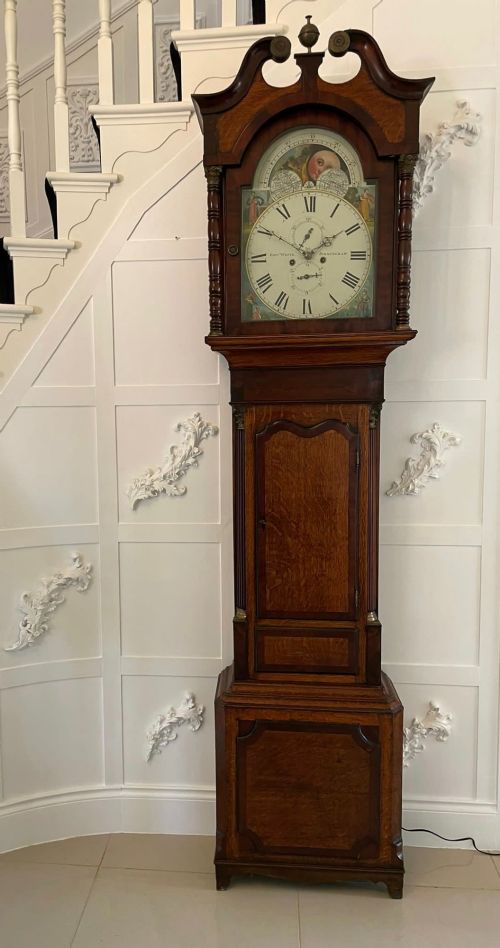
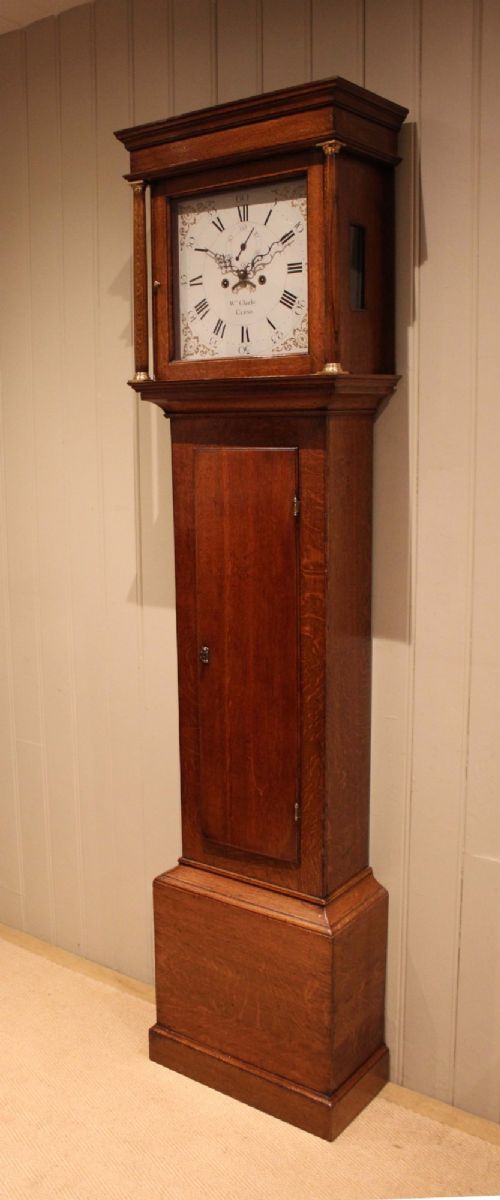
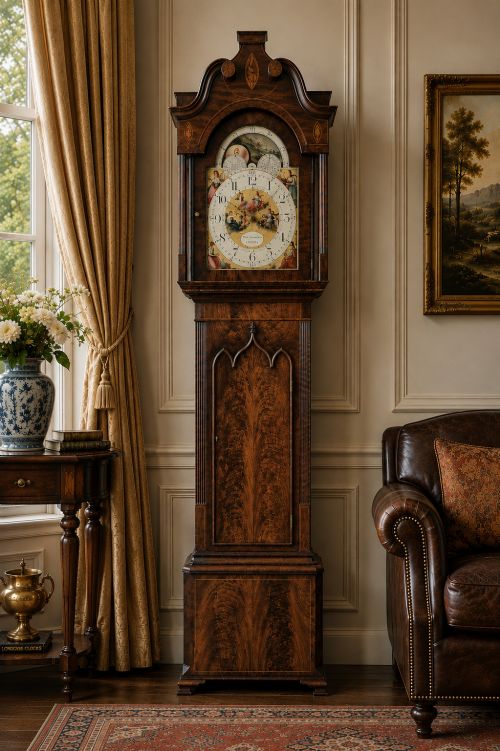
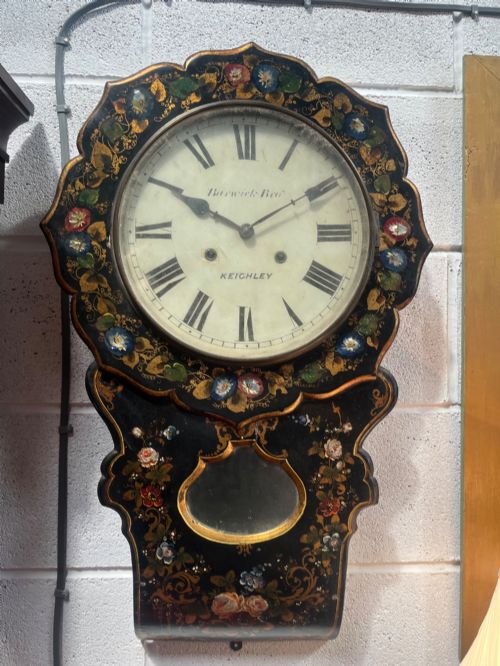
An English painted clock case forms the protective housing for tall timepieces, wall clocks, and longcase mechanisms created across the eighteenth and nineteenth centuries. These pieces appear in forms ranging from grand mahogany grandfather clocks to wall-mounted dial clocks decorated with painted scenes.
The selection on this page centres on sturdy oak, rich mahogany, and lacquered wood surfaces finished with artistic details. Buyers encounter regional variations from makers working during the Georgian, Regency, and Victorian periods.
Tall longcase clocks dominate the selection, accompanied by wall-hanging alternatives featuring glass bezels and brass movements. Each style reflects the interior tastes of its era, utilising decorative schemes such as Georgian Chinoiserie.
Construction and Materials
Cabinet makers built these clock cases using structural timbers like oak and mahogany, often applying lacquered finishes or gold leaf highlights to the exterior. Iron and brass components formed the underlying mechanical support and bezels for glass dials.
Surface decoration frequently involved painted finishes, incorporating floral motifs, rocking figures, and chinoiserie scenes directly onto the wood or dial face. Ebonised wood and inlaid details added textural contrast to the primary timber bodies.
Listings feature oak, mahogany, and lacquered wood clock cases spanning the Georgian, Regency, and Victorian periods.
Evaluating Craftsmanship
The refinement of the painted decoration and the precision of the timber joinery set exceptional examples apart from standard workshop output. Superior cases display balanced proportions, sophisticated inlay work, and finely executed regional artistry on the dial or door.
The reputation of the maker and the complexity of the movement, such as moonphase indicators or eight-day durations, influence the standing of an individual piece. Materials chosen for the case, from figured mahogany to specialised lacquering, reflect the original investment in the clock's production.
John fielder of Alton·Samuel Kellett of Bredbury·Thwaites London·John Denbigh Merton Park·L Morris Islington·James Coster of Henley·John Salmon Nantwich·Hay Wolverhampton·Nicholas of Birmingham·Edward Glase of Bridgnorth·James Rayner of Hull·Herbert of Haversham·John Bishop of Sherborne Dorset·John Hancock of Yeovil Somerset·William Long of Bristol
The English Painted Clock Case Glossary
- Longcase clock
- A tall, freestanding pendulum clock enclosed in a wooden case, commonly known as a grandfather clock. These housing units protect the weights and pendulum while displaying the dial at eye level.
- Fusee movement
- A mechanism utilising a cone-shaped pulley to maintain even tension on the clock's gear train as the mainspring unwinds. This system ensures more accurate timekeeping throughout the duration of the wind.
- Moonphase dial
- A specialised clock face displaying the lunar cycle through a rotating disk behind a shaped aperture. It tracks the phases of the moon alongside standard hours and minutes.
- Chinoiserie
- A decorative style reflecting European interpretations of Chinese artistic traditions, frequently featuring painted figures, landscapes, and pavilions on lacquered wood surfaces.
- Bezel
- The metal or wooden ring that holds the glass protecting the clock face in place. It often hinges open to allow access for setting the hands.
English Painted Clock Case: Frequently Asked Questions
What is an English painted clock case?
An English painted clock case is the wooden housing built to protect a clock's movement, decorated with painted artistry or lacquer work.
These housings range from tall longcase structures to wall-mounted dial designs produced across the Georgian, Regency, and Victorian eras.
How do I identify the period of a clock case?
Stylistic clues such as mahogany inlays, oak construction, or specific painted chinoiserie motifs help determine the era of production.
Examining the materials, regional decorative traits, and the signature of the maker recorded on the dial provides further historical context.
How do I care for a wooden clock case?
Protecting the timber and painted finish requires placing the clock away from direct sunlight, heat sources, and damp environments.
Regular dusting with a soft, dry cloth preserves the original lacquered or polished surfaces without disturbing the finish.