

English Open Armchair
An English open armchair brings substantial seating history into a room, offering exposed wooden frames and supportive arms designed for libraries, parlours and drawing rooms.
English Open Armchair
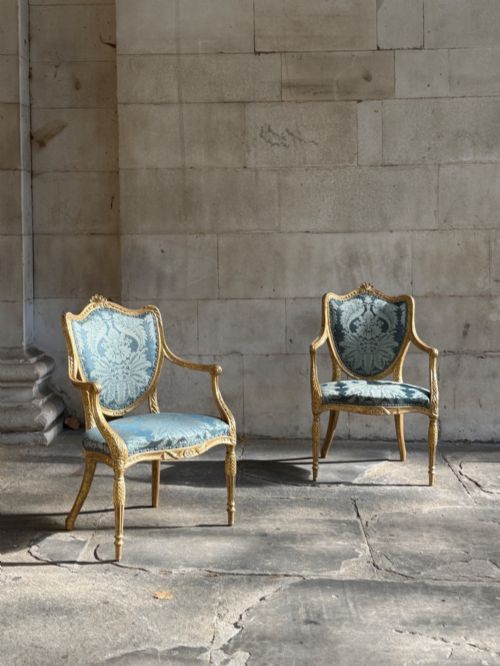
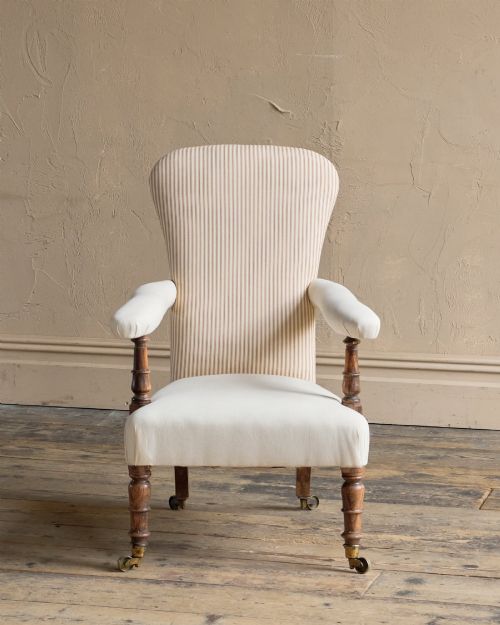
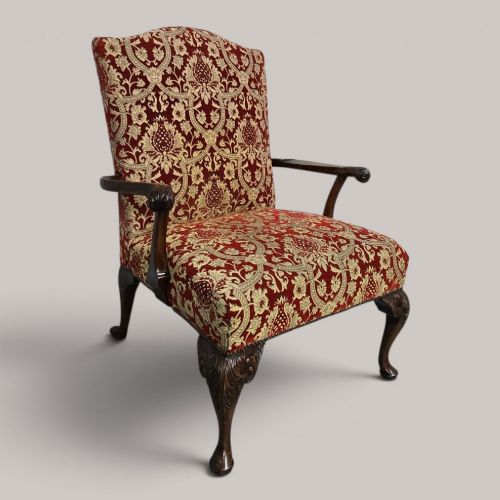
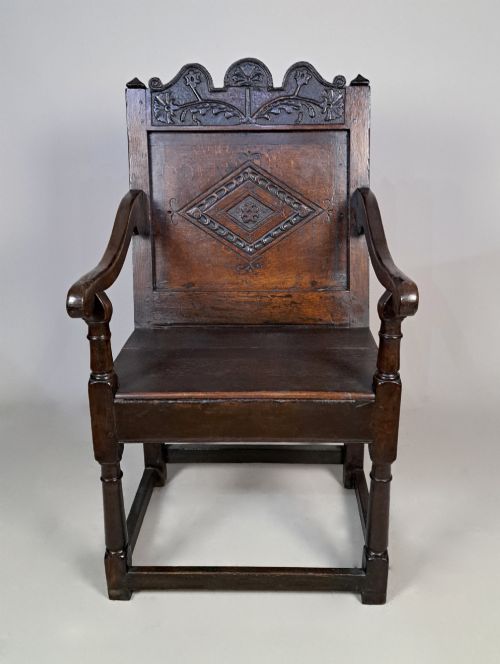
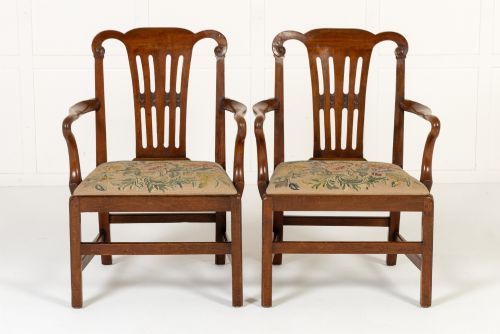
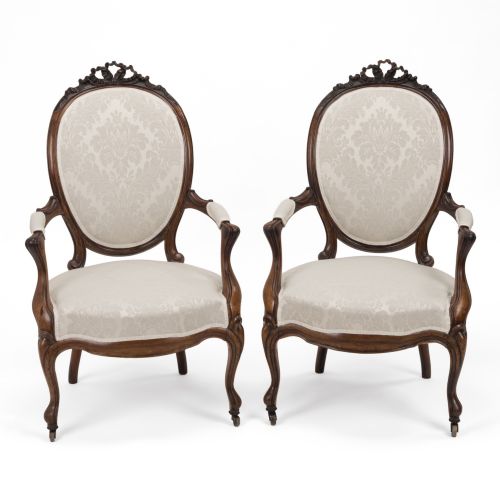
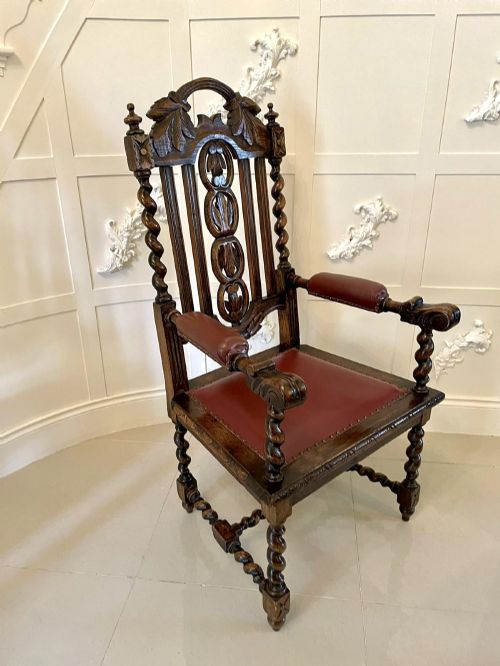
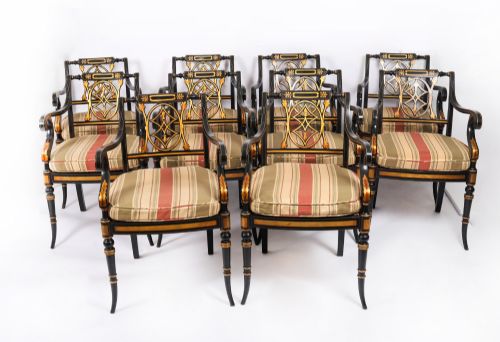
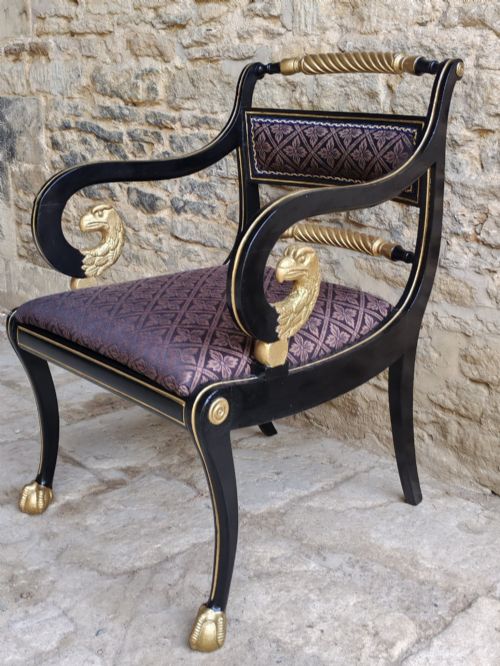
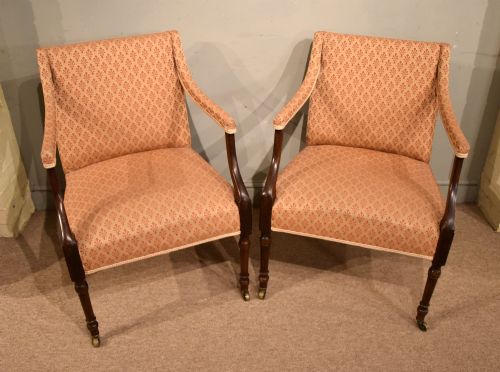
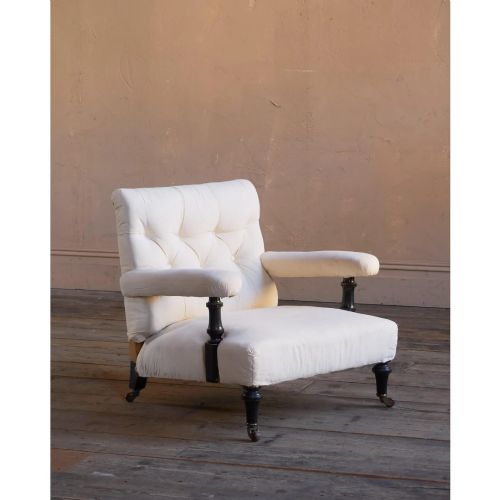
The selection here ranges from heavy oak wainscot chairs and country elm designs to polished mahogany Chippendale and Hepplewhite models. Upholstered drawing room seats and cane-seated elbow chairs appear frequently alongside low-slung library versions and grander Regency creations.
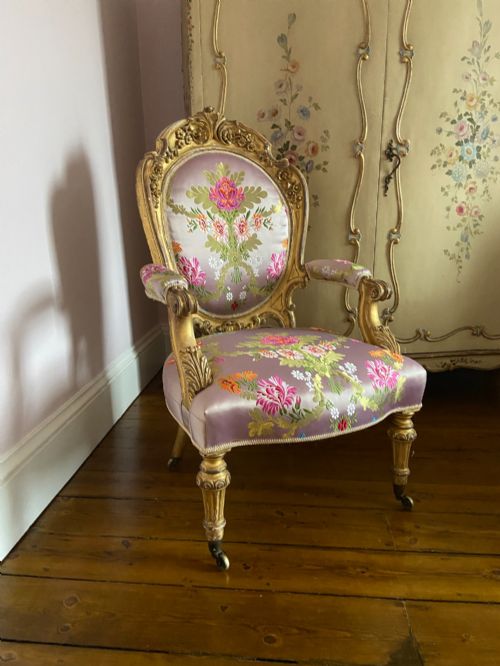
Formal Georgian and Regency examples often feature carved mahogany show frames, while earlier periods rely heavily on solid oak, walnut and mixed timbers like laburnum. Country iterations frequently utilise ash, beech and rush seating, reflecting local materials and straightforward vernacular construction methods.
Materials and construction
Cabinetmakers and joiners constructed these frames using durable hardwoods including mahogany, oak, walnut and ash, often combining secondary timbers for internal rails and supports. Joints typically relied on traditional mortise and tenon construction, secured with wooden pins in earlier wainscot models and tight glue joints in later mahogany frames.
Surface decoration involved meticulous hand-carving, ranging from blind fretwork on Chippendale rails to elaborate gilding on walnut show frames and simple turned spindles on country chairs. Finishing techniques encompassed hand-rubbed wax, polish and painted treatments that highlighted the natural grain of the timber.
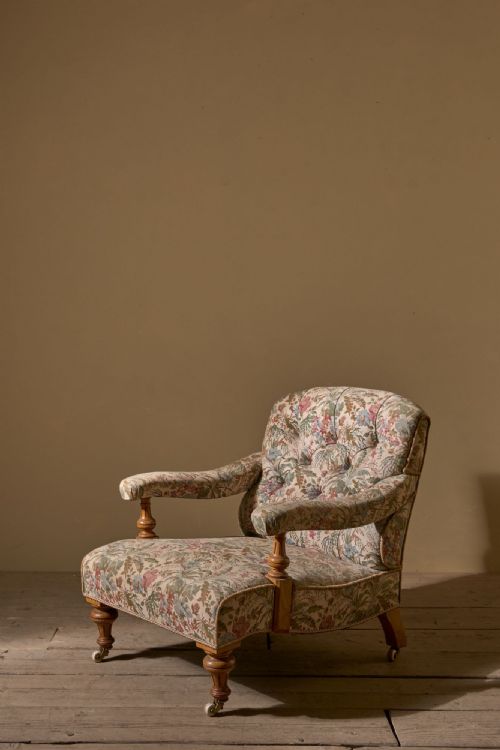
Upholstery methods evolved from drop-in rush seats and simple cane panels to deep-sprung interiors layered with horsehair, hessian and textiles like leather, wool fabric and printed cotton. Show frames left structural wood exposed around the arms and legs, allowing the carved details to frame the upholstered elements.
English Open Armchair Retail Price Guide 2026
Typical asking prices for english open armchair among the pieces listed under this phrase on Sellingantiques today, from the lower quarter to the upper quarter. They describe what is for sale here now, not the wider market.
Listings feature oak, mahogany, walnut, elm and ash timbers alongside leather, cane and woven fabric upholstery.
Markers of quality
Superior examples display crisp, deep hand-carving on the show frame where details remain sharp rather than softened by excessive sanding or historic wear. The choice of timber grain, particularly matched mahogany veneers or highly figured walnut, separates high-status urban pieces from everyday utility seating.
Structural integrity depends on the tightness of the joinery and the survival of original framing members without extensive timber replacement or unsympathetic repairs. Refined proportions, such as well-raked back legs and elegantly curved arm supports, distinguish master cabinetmaker production from provincial copies.
Gillows·Mellier & Co·Holland & Sons·Howard and Sons·Maple & Co
The English Open Armchair Glossary
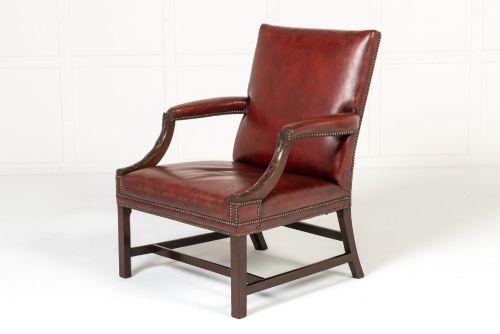
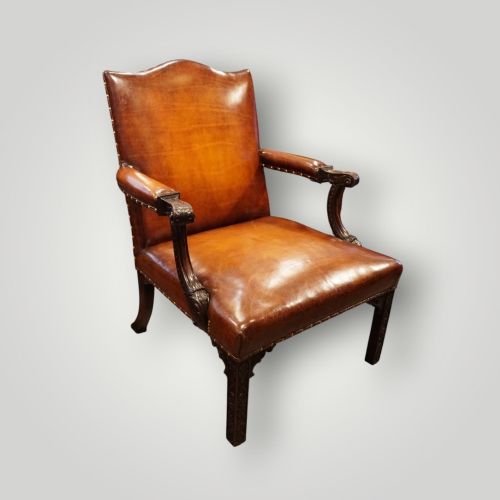
- Gainsborough chair
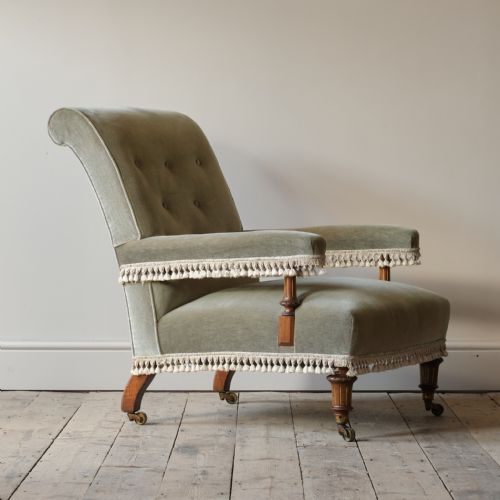
- A wide, upholstered armchair with open padded arms, short legs and a high back, popular during the eighteenth century for library and desk use.
- Wainscot chair
- A heavy wooden armchair dating to the seventeenth century, constructed primarily from solid oak with panelled backs and turned supports.
- Elbow chair
- A traditional term for an armchair, often used in nineteenth-century inventories to describe seating designed with supportive armrests for a desk or drawing room.
- Carver chair
- A term applied to sturdy wooden armchairs, frequently associated with country workshops and dining tables where the head of the household sat.
- Show frame
- The exposed wooden structural skeleton of an armchair that surrounds upholstered elements, allowing carved decoration to remain visible.
- Blind fretwork
- Low-relief geometric carving applied to furniture rails, characteristic of mid-eighteenth-century Chippendale design.
English Open Armchair: Frequently Asked Questions
What is a Gainsborough chair?
A Gainsborough chair is a wide, upholstered armchair featuring open padded arms and short legs, designed primarily for eighteenth-century libraries and studies. These pieces offer deep seating space while keeping the wooden frame partially exposed.
Makers constructed them in mahogany with upholstered backs and seats, often incorporating detailed arm supports and carved rails. They function well today as comfortable fireside or desk seating.
How do I date an oak wainscot chair?
Oak wainscot chairs typically date to the seventeenth century and feature solid panelled backs, heavy timber framing and turned supports. Joinery relies on pegged mortise and tenon construction without modern metal fasteners.
Examining the wear patterns on the arms and seat base helps confirm age, along with the character of the hand-carved details. These early pieces reflect vernacular joinery traditions originating in regional workshops.
What is the difference between a country chair and a salon chair?
Country chairs utilise local timbers such as elm, ash and fruitwood, often featuring rush or cane seats and simpler turned or spindle backs. They prioritise functional durability over decorative refinement.
Salon chairs belong to formal urban interiors, utilising imported mahogany or walnut with intricate carvings, upholstered show frames and refined Regency or Georgian proportions. This distinction separates utilitarian regional work from high-style cabinetmaking.
How should I care for leather upholstery?
Hand-dyed leather upholstery requires regular dusting and occasional treatment with appropriate conditioning balms to maintain flexibility and prevent drying. Keeping pieces away from direct sunlight protects the hide from fading.
Natural patination develops over decades of use, so gentle maintenance preserves the historic surface character without stripping the original finish.