
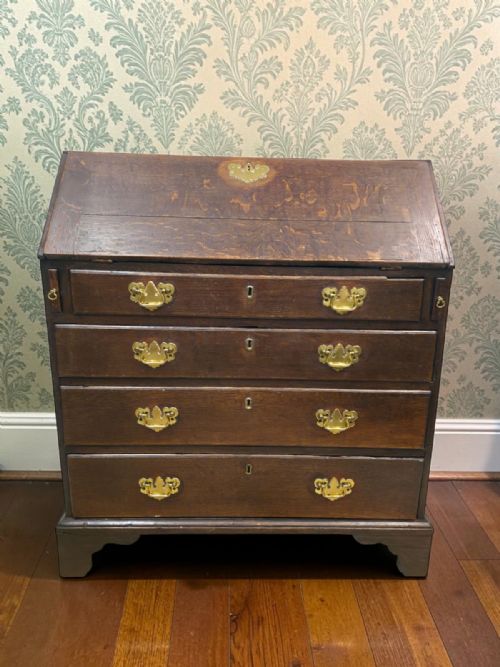
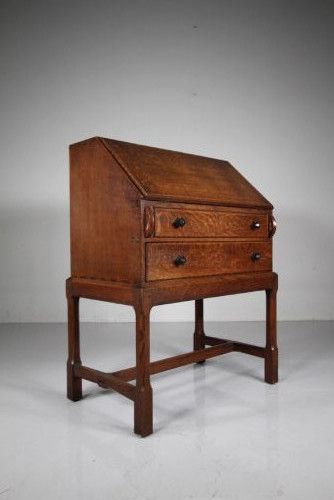


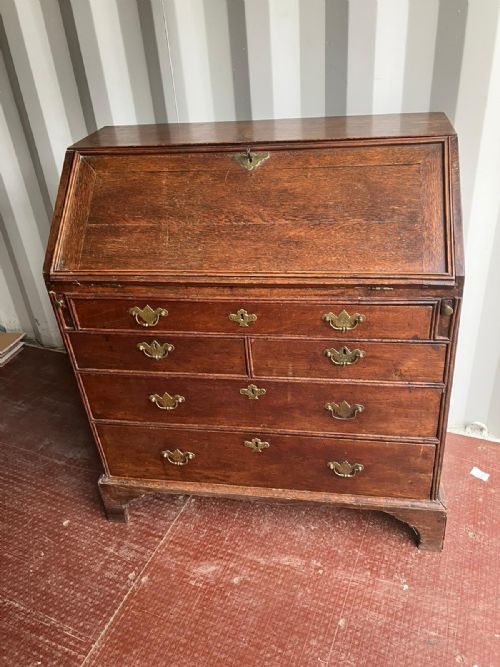


English Oak Writing Slope
An english oak writing slope is a robust portable desk or box designed for correspondence, built from domestic timber to endure centuries of daily use.
English Oak Writing Slope
When you search for an english oak writing slope, you encounter practical portable writing furniture spanning from the seventeenth century through the Edwardian era. These pieces range from compact desk boxes and bible boxes intended for table tops to full fall-front bureaux and slope boxes resting upon original stands.
The selection on this page shows heavy representation of seventeenth-century provincial pieces alongside eighteenth-century Georgian examples and later Edwardian stationary boxes. Form follows function closely, providing hinged writing lids, internal compartments for paper and ink, and occasionally fitted stands designed for domestic or ecclesiastical settings.
How they were made
Makers constructed these slopes primarily from solid oak, sometimes utilising walnut for later decorative effect or integrating brass and iron hardware for hinges and locks. Interiors frequently incorporate writing surfaces lined in baize or leather, while older provincial examples display traditional carved panels and boarded construction.
Joinery techniques evolved from early nailed and pegged frames of the seventeenth century to more refined dovetailed boxes of the Georgian and Victorian periods. Timber selection prioritized durable domestic grain capable of withstanding heavy daily handling.
Listings feature oak as the primary timber, complemented by walnut, brass, iron, baize, and leather across multiple centuries.
What varies in quality
Quality in these pieces rests upon the integrity of the original timber, the subtlety of any period carving, and the retention of original stands or internal fittings. Pieces retaining their early hinges, locks, and fitted stationery compartments command greater attention from collectors.
The proportion and scale of the box, combined with untouched surface patination developed over centuries of use, distinguish superior examples from heavily restored or later constructed items.
Stanley Webb Davies
The English Oak Writing Slope Glossary
- Bible Box
- A small desk box with a sloping lid, originally made to hold a family bible or church documents before serving general writing purposes.
- Fall Front
- A hinged writing flap or door that drops down to form a horizontal writing surface, revealing internal compartments and pigeonholes.
- Baize
- A coarse woolen material used historically to line the writing surfaces of desks and slopes to provide a smooth backing for quill pens.
- Provincial
- Describing furniture made in regional workshops outside London, often characterised by heavier construction and distinctive local decorative motifs.
- Secretaire
- A piece of furniture containing a built-in writing drawer or fall-front desk compartment designed for correspondence.
English Oak Writing Slope: Frequently Asked Questions
What is an english oak writing slope?
An english oak writing slope is a portable desk or stationary box featuring an angled lid designed for writing letters and storing documents.
These pieces range from early seventeenth-century bible boxes placed on tables to later Georgian and Edwardian fall-front bureaux and desk tidies.
How were early writing slopes used?
Users placed these boxes on tables or desks to provide a convenient sloping surface for writing with ink and quills.
The internal compartments stored paper, inkwells, and sealing wax while keeping correspondence secure when closed.
How do I date an oak slope?
Dating relies on examining construction methods such as dovetailing, hinge types, and the style of any exterior carving or paneling.
Seventeenth-century examples often show boarded construction and pegged joints, whereas eighteenth and nineteenth-century pieces feature finer dovetails and different interior layouts.
Where should I place a writing slope?
These pieces sit well on sturdy tables, sideboards, or dedicated desk stands where the sloping lid remains easily accessible.
Keeping them away from direct heat sources protects the antique oak timber and internal baize or leather linings from drying out.