

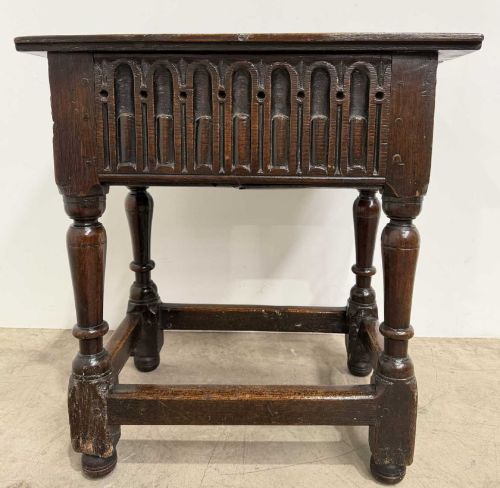
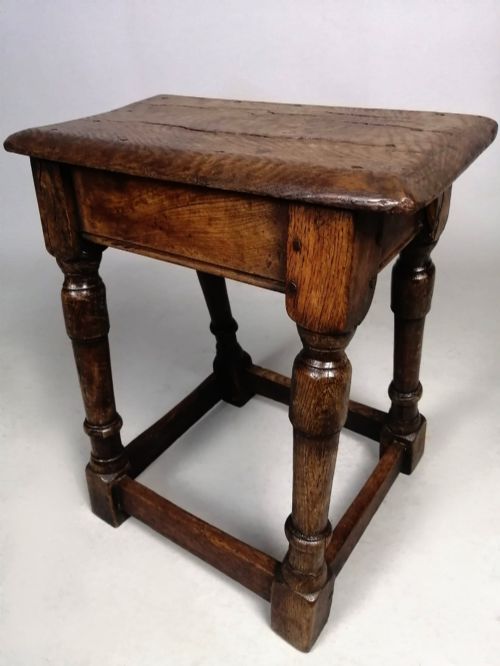
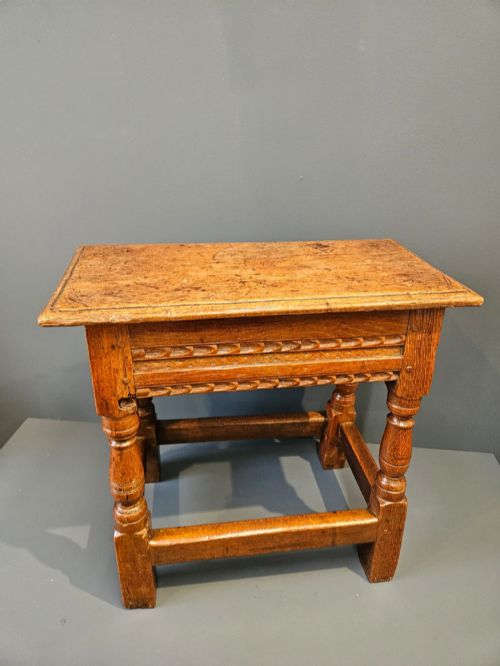
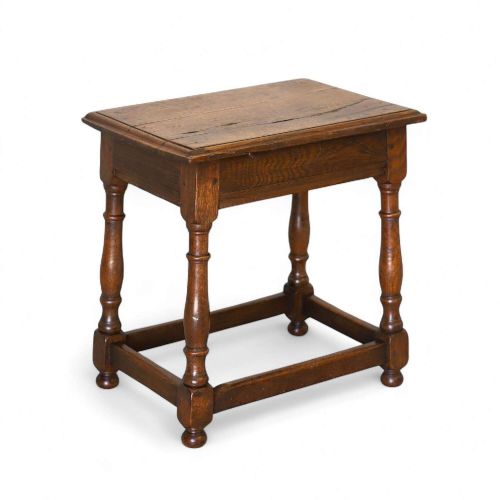


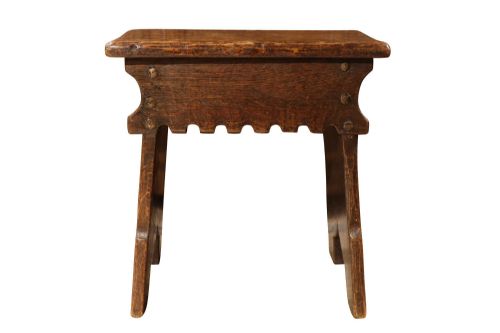


English Oak Side Stool
These English oak side stool examples offer solid utility and sturdy seating rooted in centuries of domestic history.
English Oak Side Stool
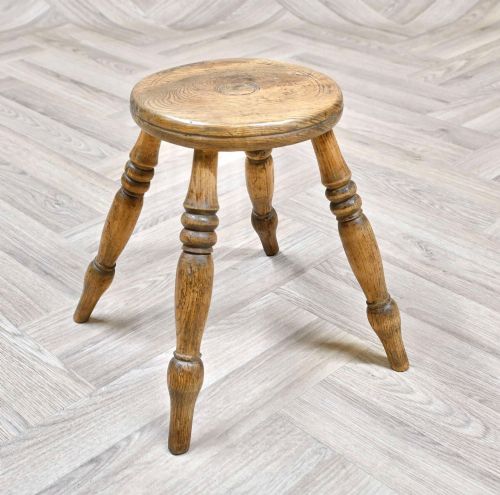
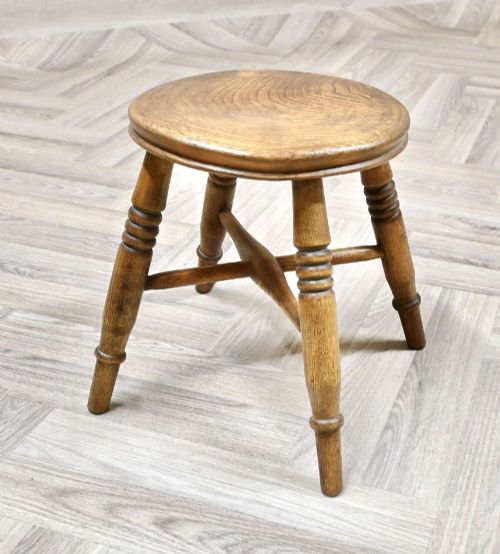
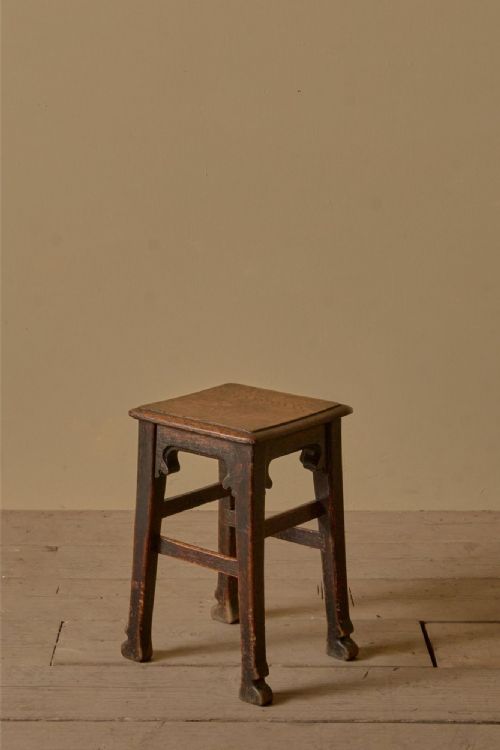
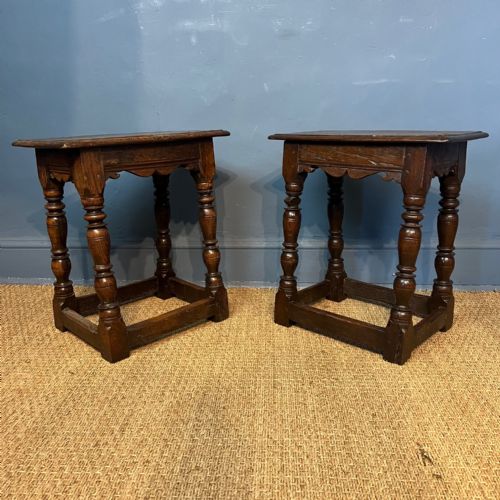
When searching for an english oak side stool, buyers encounter compact seating forms primarily represented by joint stools, box stools, and occasional low tables. The selection ranges from authentic seventeenth-century survivors to later revival pieces from the Victorian and Edwardian eras.
The joint stool dominates the available options, constructed with pegged tenons and rigid rectangular frames. Alongside these, related forms such as side tables and provincial plank stools appear, reflecting domestic utility across multiple centuries.
How they were made
Construction relies heavily on English oak, alongside occasional yew wood, joined using traditional pegged timber techniques. Iron and brass elements appear sparingly as functional hardware or hinges on box variants.
Surfaces display carved details or plain pegged framing, reflecting the stylistic shifts from seventeenth-century Jacobean aesthetics through to later nineteenth and twentieth-century revivals.
English Oak Side Stool Retail Price Guide 2026
Typical asking prices for english oak side stool among the pieces listed under this phrase on Sellingantiques today, from the lower quarter to the upper quarter. They describe what is for sale here now, not the wider market.
Some seventeenth-century box stools cleverly doubled as hidden storage for small household valuables while waiting by the hearth.
What varies in quality
Quality depends upon the integrity of the timber and the depth of the original surface patination. Examples with rich colour and minimal structural replacement hold greater historical interest.
Proportion and the crispness of period carving differentiate standard utilitarian output from superior examples, whether from the seventeenth century or subsequent revival periods.
The English Oak Side Stool Glossary
- Joint Stool
- A sturdy wooden seat constructed with pegged mortise and tenon joints rather than traditional glued joinery. This method provided exceptional strength for domestic tasks.
- Box Stool
- A specialised seating form featuring a lidded compartment beneath the top board for storage. It combines the utility of a small chest with a perch.
- Pegged Construction
- A method of securing timber joints using wooden pins driven through pre-bored holes. It avoids metal nails and allows the wood to move naturally.
- Jacobean
- A seventeenth-century design style characterised by straight lines, dark timber, and geometric carving. Revival periods later copied these heavy geometric motifs.
- Five-Plank Stool
- A simple provincial form constructed from five separate boards joined together. These pieces typify rustic domestic furniture.
English Oak Side Stool: Frequently Asked Questions
What is a joint stool?
A joint stool is a sturdy wooden seat built using pegged mortise and tenon joints. The technique derives its name from the carpenter's jointed construction rather than any folding mechanism.
These pieces served diverse household roles, including seating at the dining table or standing as raised platforms for domestic tasks.
How do I date an oak stool?
Dating relies on examining the timber grain, tool marks, joinery methods, and the style of any carved ornament. Seventeenth-century examples display hand-split oak and pegged framing, whereas revival pieces from the Victorian or Edwardian eras show later manufacturing traces.
Comparing the patination and wear patterns against known period examples helps clarify the likely age of the piece.
Where were these stools used?
Historically, these stools functioned throughout the home for dining, working, or reaching high shelves. Their compact footprint made them easily portable from room to room.
Today, they suit modern interiors as side tables, bedside surfaces, or occasional seats in narrow hallways.
Are all these stools from the seventeenth century?
The selection includes authentic seventeenth-century pieces alongside nineteenth and twentieth-century revivals created in the Elizabethan and Jacobean styles. Revival furniture was produced extensively during the Victorian, Edwardian, and later periods.
Each listing specifies the period or estimated date of manufacture to distinguish early survivors from later interpretations.