




English Oak Dressing Table
An english oak dressing table brings centuries of sturdy craftsmanship and rich grain directly into your bedroom.
English Oak Dressing Table
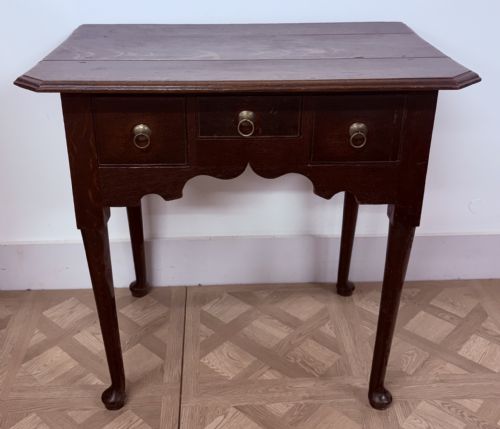
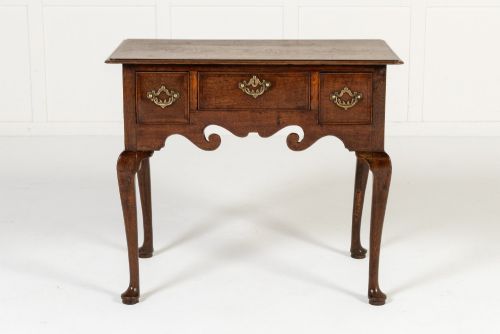
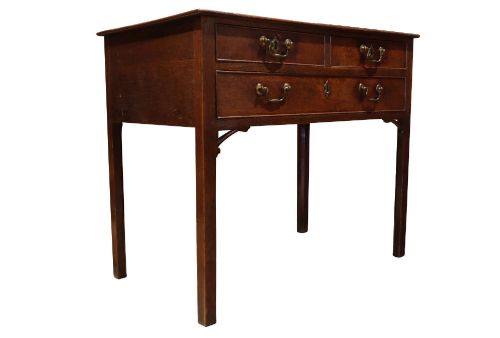
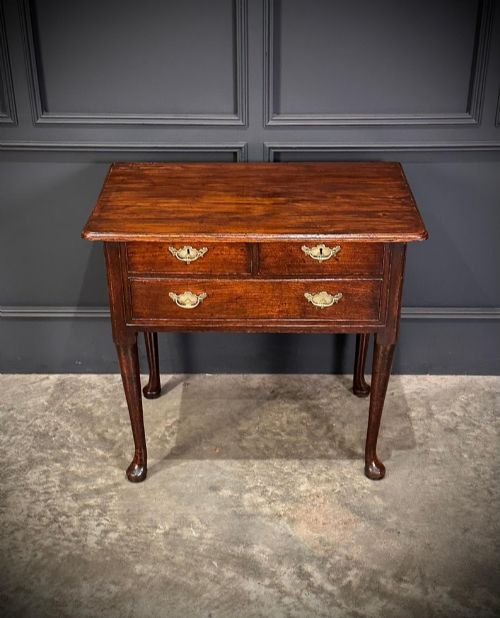
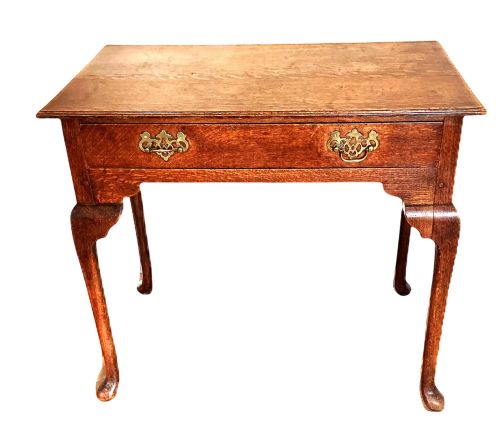
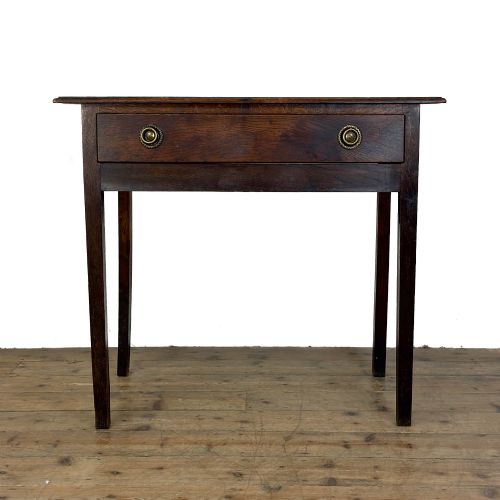
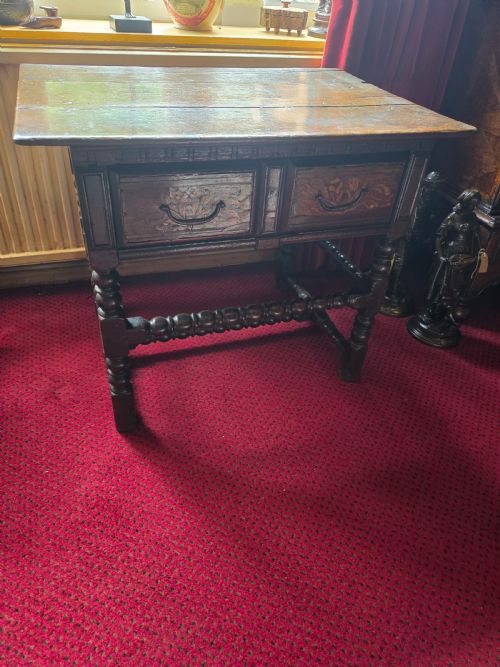
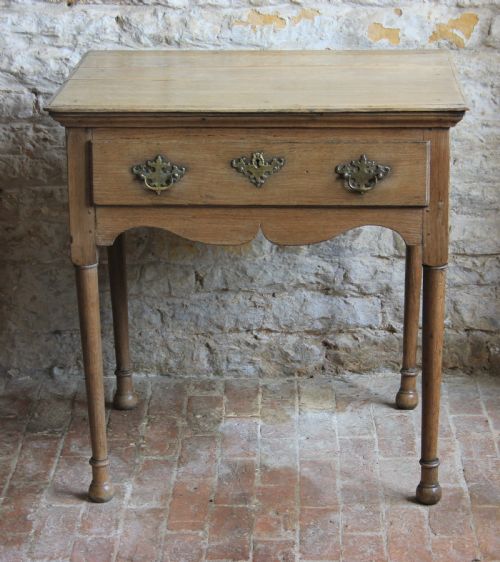
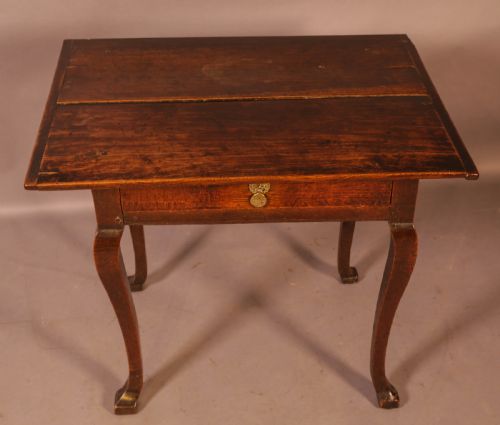
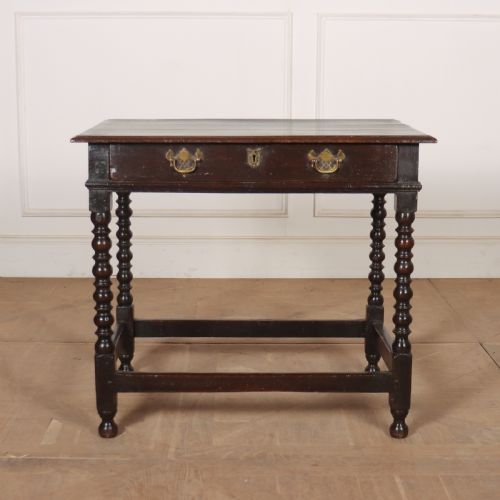
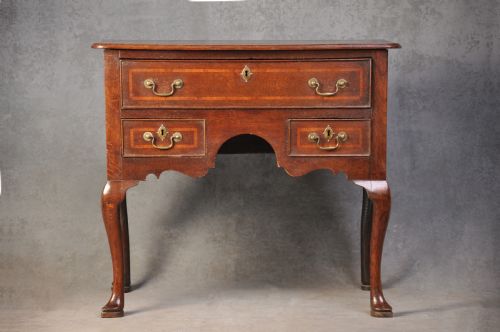
When you search for an english oak dressing table, you encounter lowboys, side tables, and vanity chests spanning from the seventeenth century through to the twentieth century. These pieces serve practical morning routines while doubling as handsome writing surfaces or console tables in hallways and bedrooms.
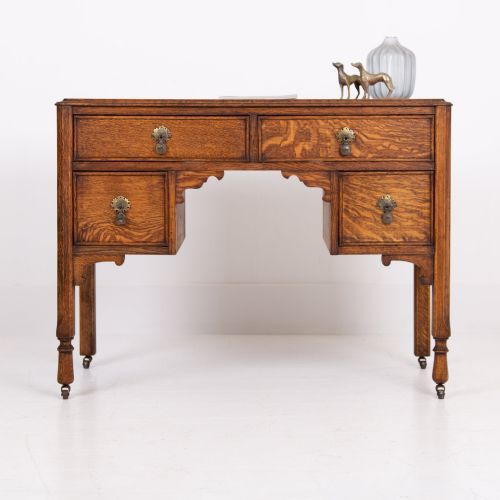
The selection ranges from early George III lowboys and Queen Anne forms to Arts and Crafts designs and Edwardian examples. Many listings blur the line between dressing tables and side tables, as early craftsmen built versatile pieces with drawers that adapted to changing domestic needs over generations.
Older variants often present straightforward plank tops above single or multiple drawers, supported by cabriole or straight legs. Later interpretations incorporate mirrors and carved details, reflecting the evolving tastes of Victorian and Edwardian makers.
Materials and construction
Makers relied primarily on solid oak, frequently augmented with wood inlay, brass handles, and iron fixings. Selected pieces incorporate secondary timbers such as pine, alongside decorative elements like burr walnut and mahogany veneers.
Construction methods evolved from early joined frameworks with pegged mortise and tenon joints to later dovetailed drawer boxes. Surfaces received hand-rubbed wax finishes to protect the grain while highlighting the natural figuring of the timber.
English Oak Dressing Table Retail Price Guide 2026
Typical asking prices for english oak dressing table among the pieces listed under this phrase on Sellingantiques today, from the lower quarter to the upper quarter. They describe what is for sale here now, not the wider market.
Early cabinetmakers occasionally lined hidden drawer bottoms with discarded Tudor documents to stiffen the thin timber boards.
Assessing quality and character
Quality rests in the depth of the timber's patina, the crispness of hand-carved details, and the integrity of the original construction. Pieces retain higher value when their brass hardware, drawer linings, and structural joints remain unaltered by later restorations.
Proportion and balance distinguish finer workshop output from utilitarian items. The careful selection of quartersawn oak boards displaying medullary rays separates superior examples from plain utility furniture.
Heals of London
The English Oak Dressing Table Glossary
- Lowboy
- A small table with drawers, typically standing on four legs, used historically as a dressing table or side table.
- Medullary rays
- Radial sheets of tissue seen across quartersawn oak timber, appearing as flecks or ribbon-like figures.
- Dovetail
- A joint formed by interlocking wedge-shaped fingers, commonly used to construct durable drawer corners.
- Cabriole leg
- A furniture leg that curves outward at the knee and tapers inward at the ankle, characteristic of Queen Anne and Georgian styles.
- Patina
- The deep, lustrous surface sheen developed on wood through age, handling, and wax polishing over centuries.
English Oak Dressing Table: Frequently Asked Questions
How do I date an oak dressing table?
Examine the construction methods, tool marks, and drawer assembly details. Hand-cut dovetails and pegged joints generally indicate earlier centuries, whereas machine-sawn timber points toward the Victorian era or later.
The choice of secondary woods and hardware styles also helps narrow the period. Early pieces often feature simple iron or brass pulls, while Edwardian and later examples show standardised fixings.
Are lowboys the same as dressing tables?
Historically, lowboys functioned as dressing tables or side tables before dedicated vanity furniture became common in the nineteenth century. Their compact size and drawer configuration suited personal grooming and storage.
Today, buyers frequently utilise lowboys interchangeably as dressing tables or hallway consoles. Their versatile proportions allow them to fit easily into modern bedrooms.
How should I care for antique oak?
Maintain the finish by applying natural beeswax periodically and buffing gently with a soft cloth. Avoid placing wooden furniture in direct sunlight or near heat sources to prevent the timber from drying out and splitting.
Keep humidity levels in the room stable to protect the joints and veneers. Simple preventative care preserves the historical surface without stripping away the accumulated patina.
What styles of oak dressing table exist?
The available styles range from seventeenth-century Jacobean and Queen Anne forms to eighteenth-century Georgian and George III designs. Later periods are represented by Arts and Crafts movements and Edwardian interpretations.
Each style brings distinct leg shapes, handle designs, and decorative carving. Comparing these stylistic details clarifies the era in which the piece was built.