

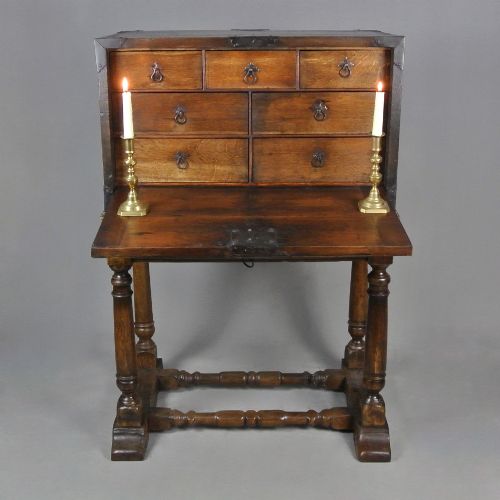
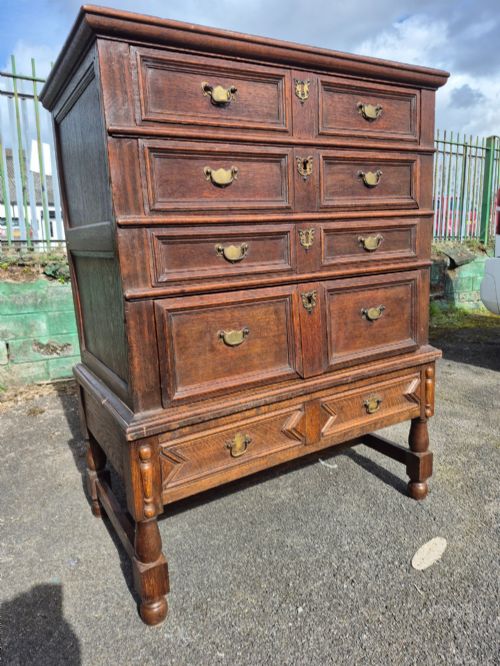

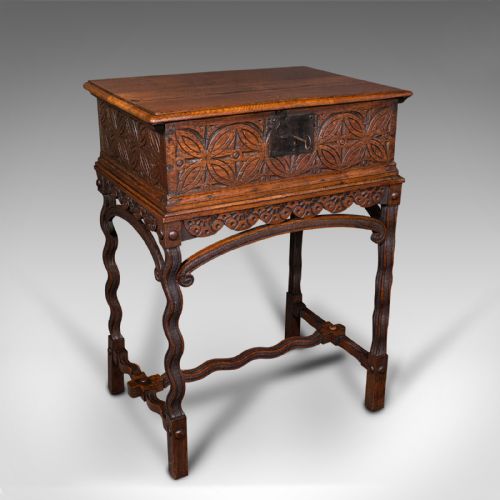


English Oak Chest on Stand
An English oak chest on stand is a raised storage piece built from sturdy timber, offering elevated compartments that collectors prize for utility and historic proportion.
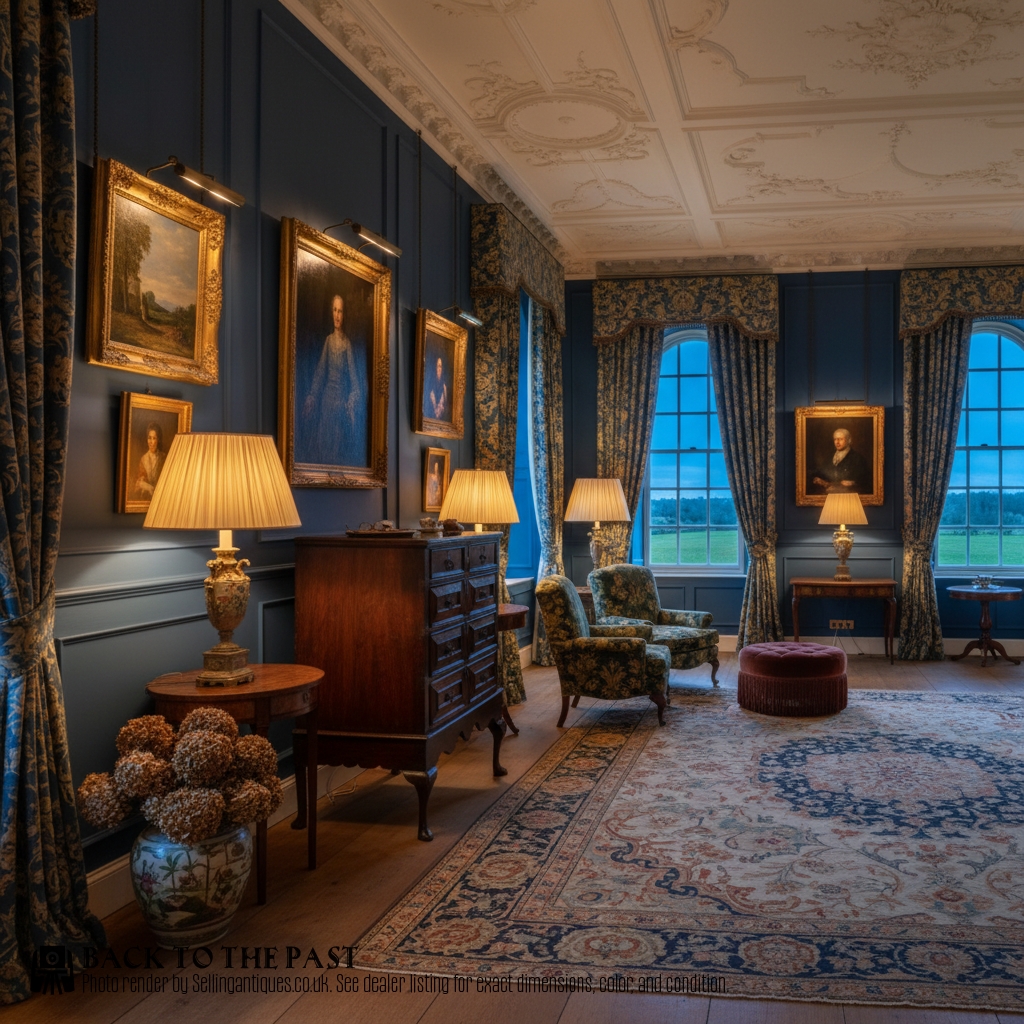
English Oak Chest on Stand
An English oak chest on stand combines a heavy storage box with a raised supporting base, bringing smaller chests up to a comfortable height for daily access. These pieces often pair a lower frame with a lift-top trunk or a set of drawers.
The versions appearing here draw from seventeenth, eighteenth, and nineteenth-century traditions, including revival pieces from later eras. Collectors will encounter seventeenth-century Bible boxes on stands alongside eighteenth-century drawer configurations and Edwardian adaptations.
Materials and Construction
Makers relied primarily on oak for both the primary carcase and the supporting stand, sometimes integrating walnut or mahogany details. Structural hardware typically included brass drop handles, escutcheons, and iron reinforcing straps or hinges.
Joinery methods involved traditional framing techniques, panel construction, and pegged joints to handle the weight of dense timber. Later or adapted pieces occasionally incorporate secondary woods while maintaining an external oak appearance.
English Oak Chest on Stand Retail Price Guide 2026
Typical asking prices for english oak chest on stand among the pieces listed under this phrase on Sellingantiques today, from the lower quarter to the upper quarter. They describe what is for sale here now, not the wider market.
Some chests double as games compendiums, proving that ancestors took their evening entertainment just as seriously as their record-keeping.
Assessing Quality and Proportion
Quality rests in the harmony between the upper chest and its supporting stand, particularly where stands are later additions or bespoke frames. Pieces retaining their original timber surfaces and integrated structural framing command greater interest.
The crispness of the oak grain and the restraint of any carved decoration dictate the visual weight of the piece. Well-balanced proportions on the stand prevent the heavy upper storage section from looking clumsy.
Mappin & Webb·Roberson & Co
The English Oak Chest on Stand Glossary
- Chest on stand
- A storage box or small chest of drawers raised upon a separate supporting frame with legs.
- Bible box
- A small, sloping or flat-topped desk box traditionally used to hold sacred texts and writing materials.
- William and Mary
- A style period spanning the late seventeenth and early turn of the century, known for trumpet legs and architectural turning.
- Escutcheon
- A protective plate surrounding a keyhole, often fashioned from brass to accent the timber drawer fronts.
English Oak Chest on Stand: Frequently Asked Questions
What is an English oak chest on stand?
It is a raised storage furniture form that pairs a lidded box or set of drawers with an elevated timber stand. This design lifts the primary storage compartment off the floor.
Such pieces evolved to make accessing stored linens, documents, or valuables more convenient without requiring a full-height wardrobe.
How do I date an oak chest on stand?
Dating relies on examining the construction methods of the joints, the style of the turning on the legs, and the materials used for the hardware. Seventeenth-century examples often feature pegged framing and heavier mouldings.
Later revival pieces from the Edwardian period or the nineteenth century mimic earlier styles but reveal different tooling marks and secondary woods upon closer inspection.
Were these stands always made with the chests?
Not all stands are contemporary with the upper chest, as many portable boxes were mounted onto custom frames at later dates. Historical records show that owners frequently had bespoke stands built to elevate existing bible boxes or blanket chests.
Examining the interface between the box and the stand helps determine whether they originated together as a single commissioned piece.
Where were these pieces used in the home?
They served as versatile storage furniture in bedchambers, parlours, and studies for keeping personal items secure and organised. The elevated height allowed the surface beneath to remain clear while providing accessible top or drawer storage.
Today, they function well in hallways or living spaces as focal points that offer practical concealed storage.