






English Mahogany Serving Table
An English mahogany serving table brings architectural proportion and dense timber grain to dining spaces.
English Mahogany Serving Table
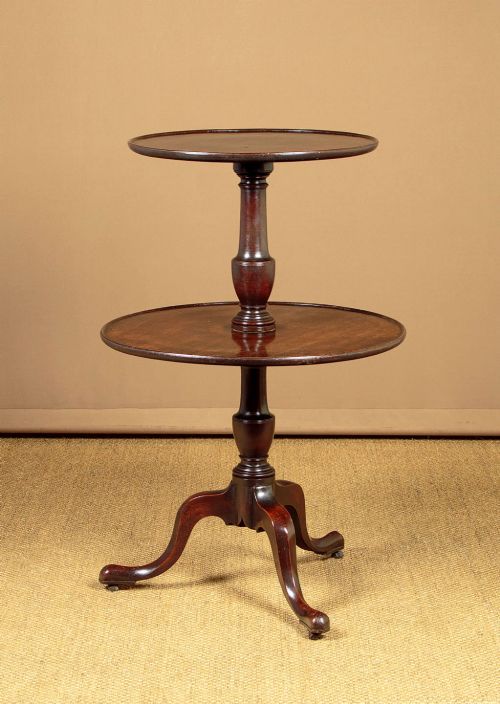
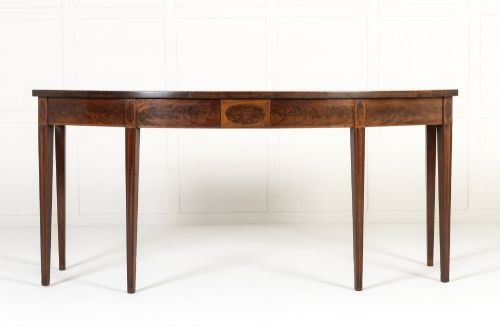
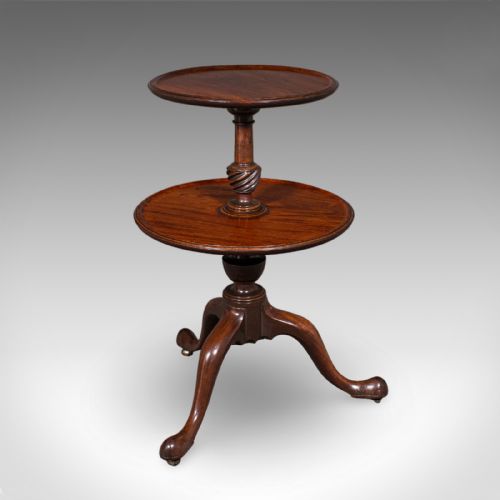
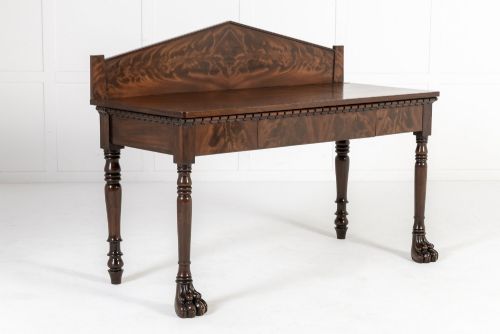
An English mahogany serving table is a sturdy, formal surface designed for dining rooms, hallways, and drawing rooms to hold dishes, trays, and silver. When searching for this phrase, buyers encounter examples stretching from the eighteenth century through the Victorian and Edwardian eras, encompassing side tables, console tables, and tiered dumb waiters.
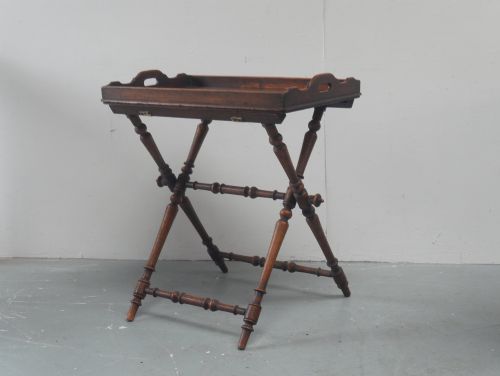
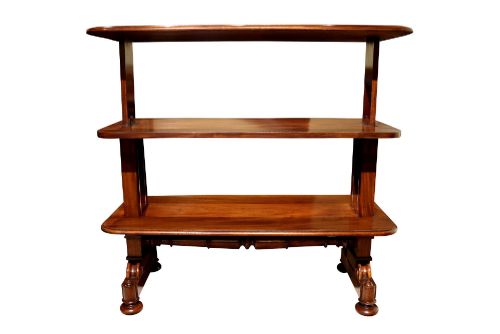
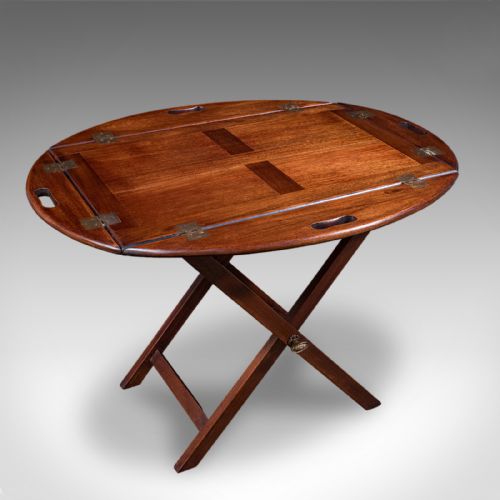
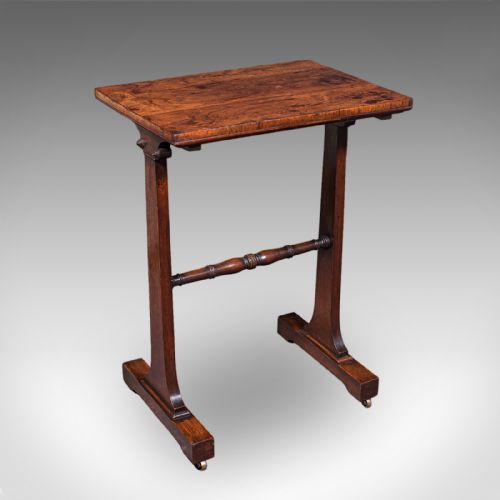
The pieces appearing on this page span Georgian origins, Regency formal lines, William IV heft, and Edwardian interpretations, alongside related forms such as butler's trays, sideboards, and tiered buffets. Mahogany remains the dominant timber, often enhanced by flame veneers, rosewood, oak, and satinwood inlay.
Originating primarily from domestic dining rooms and country houses, these tables range from large formal console and serving pieces down to folding stands and rotating lazy susans. The selection reflects the changing demands of hosting and service across multiple centuries of English cabinet-making.
How they were made
Cabinet-makers relied on solid mahogany and flame mahogany veneer applied to secondary timbers such as oak, creating sturdy surfaces that withstood heavy use in dining rooms. Timber selection governed the visual weight, with dense grains polished to a deep, natural lustre.
Construction techniques included brass fittings, cast iron elements, and delicate satinwood inlay work to accent the structural lines of the tables and serving trays. Joinery was built to support the heavy loads of silver, porcelain, and food service without sagging.
Current listings feature serving tables, dumb waiters, and tray tables spanning the Georgian, Regency, Victorian, and Edwardian periods.
What varies in quality
The hierarchy of quality rests on the selection of timber, particularly the depth of flame mahogany veneer and the crispness of hand-carved details. Superior examples exhibit tightly grained primary timber paired with disciplined proportions and robust internal construction.
Refinement in secondary woods, the quality of brass castors or mounts, and the integration of satinwood inlay distinguish standard utility furniture from exceptional commission pieces designed for grand country houses.
The English Mahogany Serving Table Glossary
- Flame mahogany
- A veneer cut from timber where the branches join the trunk, producing a distinctive, flickering flame pattern. This decorative grain was favoured for the primary surfaces of high-end tables.
- Dumb waiter
- A multi-tiered serving stand or revolving tray used to hold dishes and wine without the need for attendants. These items appeared in various formats from the Georgian period onward.
- Satinwood inlay
- Contrasting light-toned wood inserted into recessed channels in the darker mahogany surface. This technique created geometric or floral borders on formal tables.
- Console table
- A table designed to stand flat against a wall, frequently supported by wall brackets or ornate legs. These pieces functioned both as decorative ledges and practical serving spaces.
- Lowboy
- A small, low table with drawers, often utilised as a side or serving table during the Georgian period. It combined storage with a compact surface area.
English Mahogany Serving Table: Frequently Asked Questions
Where did they place serving tables?
Serving tables stood against dining room walls to hold heavy dishes, silver platters, and wine coolers during large meals.
Servants used these auxiliary surfaces to plate food before bringing it to the main dining table.
How do I date a mahogany table?
Dating relies on observing leg styles, timber thickness, drawer construction, and secondary woods like oak.
Georgian pieces show straight or carved cabriole legs, while Regency examples lean towards classical reeding and brass mounts.
Can I use one in a modern hall?
These tables fit narrow hallways, entryways, and living rooms as console surfaces for keys, lamps, and mail.
Their shallow depth allows them to sit flush against walls without blocking movement through domestic spaces.
What maintenance does old mahogany need?
Antique mahogany requires regular dusting with a dry cloth and occasional feeding with traditional beeswax to nourish the dry timber.
Avoid placing these tables in direct sunlight or near heat sources to prevent the wood and veneer from warping.