



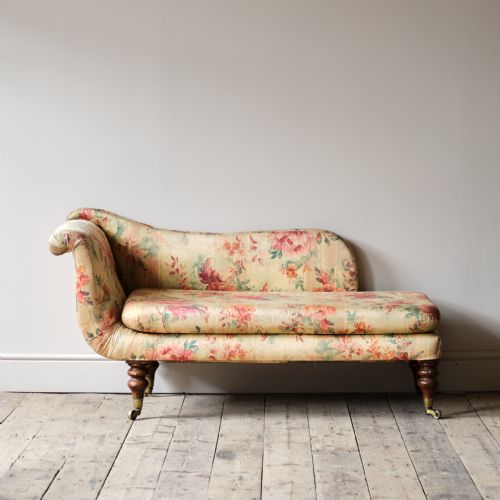

English Mahogany Fainting Couch
An English mahogany fainting couch brings nineteenth-century elegance and a place for daytime repose into a room.
English Mahogany Fainting Couch
An english mahogany fainting couch, also recorded as a chaise longue or day bed, is a long seat designed for reclining during the nineteenth century. These seating forms appear across the Regency and Victorian periods, spanning dates from around 1800 through the 1880s.
The pieces listed on this page include examples attributed to prominent cabinet makers of the nineteenth century alongside grand Regency and Victorian forms. Makers such as Miles and Edwards, Hindley and Sons, Holland and Sons, Howard and Sons, Jas Shoolbred, and Gillows appear in the attributions.
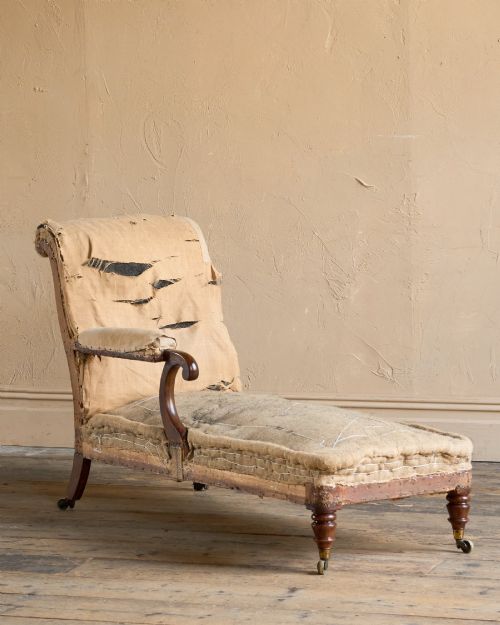
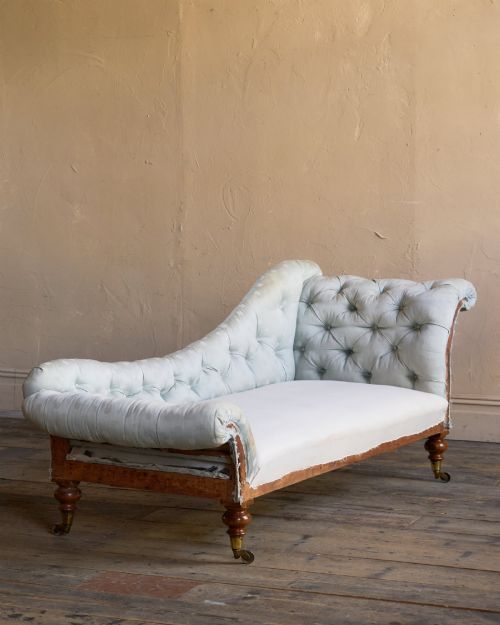
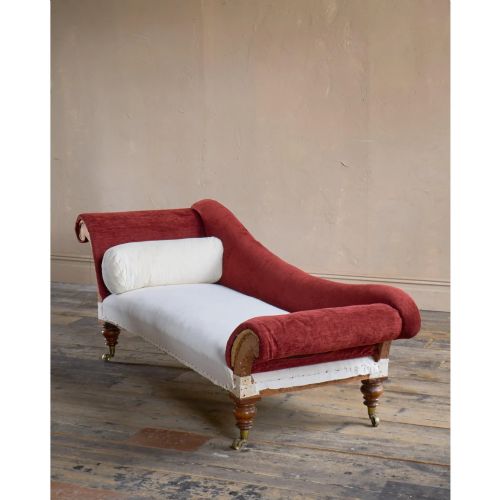
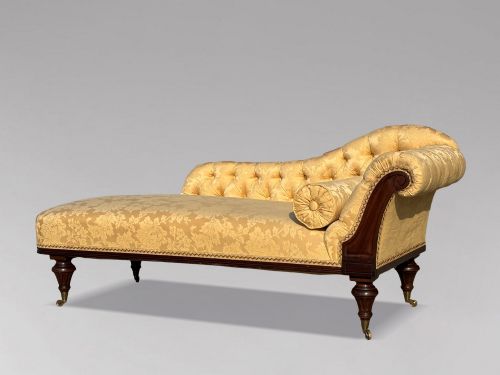
Buyers will find single day beds as well as a matched pair, constructed in mahogany and upholstered in fabrics including velvet, calico, satin, and hessian. The forms range from clean Regency lines to more ornate Victorian Chesterfield styles.
How they were made
The structural framework of these day beds is built from solid mahogany, often shaped to follow the sweeping curves of the scroll end and backrest. Cabinet makers employed traditional joinery to support the extended length required for reclining.
Upholstery forms a major part of the construction, utilising materials like hessian and calico beneath top coverings of velvet, satin, and standard upholstery fabric. Brass details frequently appear in the form of castors supporting the legs.
English Mahogany Fainting Couch Retail Price Guide 2026
Typical asking prices for english mahogany fainting couch among the pieces listed under this phrase on Sellingantiques today, from the lower quarter to the upper quarter. They describe what is for sale here now, not the wider market.
Listings span the nineteenth century, including Regency designs from around 1800 up to Victorian pieces dated into the 1880s.
What varies in quality
The distinction between standard nineteenth-century production and the work of premier London cabinet makers lies in the crispness of the mahogany carving and the sophistication of the frame proportions. Pieces attributed to distinguished workshops display superior timber selection and finer joinery detail.
Upholstery finish and the retention of original structural webbing or brass castors contribute to the integrity of a piece. The fluidity of the scroll end and the balance of the single raised back demonstrate the skill of the maker.
Miles and Edwards·Hindley and Sons·Holland and Sons·Howard and Sons·Jas Shoolbred·Gillows
The English Mahogany Fainting Couch Glossary
- Chaise Longue
- A long upholstered chair for reclining, literally translating from French as long chair.
- Regency
- An English design period spanning the early nineteenth century, characterised by classical restraint and elegance.
- Victorian
- The period of the nineteenth century covering the reign of Queen Victoria, known for eclectic and substantial furniture styles.
- Mahogany
- A durable tropical hardwood with a rich reddish-brown tone, widely utilised by nineteenth-century cabinet makers.
- Chesterfield
- A deep-buttoned upholstered style associated with nineteenth-century seating furniture.
English Mahogany Fainting Couch: Frequently Asked Questions
What is a fainting couch?
A fainting couch is a nineteenth-century day bed or chaise longue featuring a raised headrest at one end for semi-reclining.
These pieces were designed for drawing rooms, allowing individuals to rest in a comfortable semi-recumbent posture.
How do I date a chaise longue?
Dating relies on stylistic clues such as the classical proportions of the Regency period versus the heavier Victorian ornamentation.
Attributions to specific nineteenth-century makers and the presence of materials like mahogany also help place the piece in its era.
Where should I place a day bed?
These long seating forms suit large living rooms, studies, or master bedrooms where they can sit freestanding against a wall.
Ensure there is sufficient floor space to accommodate the extended length and curved scroll end of the frame.
What materials are used?
The primary structural timber across these pieces is solid mahogany, complemented by brass castors on the feet.
Upholstery materials range from exposed calico and hessian foundations to decorative top fabrics like velvet and satin.