


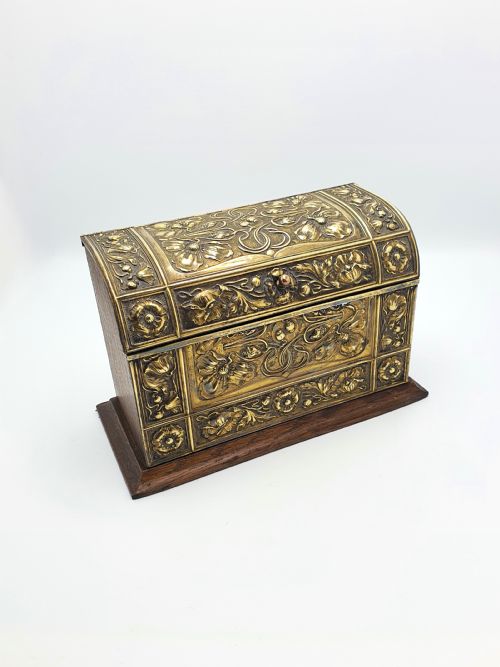


English Letter Box
An English letter box brings order to daily correspondence, housing letters and papers within finely crafted timber and metal cases.
English Letter Box
An English letter box encompasses desk accessories, stationery boxes, and wall organisers designed to sort and store mail. These pieces range from compact tabletop cases to substantial country house post boxes intended for heavy daily use.
The selection includes items spanning the 18th century through to the mid-20th century, capturing shifts in domestic administration. Common forms include fall-front cabinets, brass-bound oak chests, and wall-mounted receptacles with dedicated delivery slots.
Makers produced these receptacles for domestic halls, studies, and institutional offices. Many incorporate specialised compartments for answered and unanswered correspondence, telegrams, and hotel keys.
How they were made
Cabinetmakers utilised durable hardwoods such as oak, walnut, mahogany, and rosewood, often pairing them with contrasting satinwood or exotic veneers. Structural integrity relied on robust joinery suited to daily opening and closing.
Metal mounts in brass, bronze, and steel provided both structural reinforcement and decorative accenting through corner brackets, hinges, and cut inlay. Glass panels and hand-painted porcelain plaques occasionally served as decorative facade elements.
Leather lining protected interior documents, while cast iron appeared in heavier utilitarian post boxes from the later periods. Exterior surfaces received hand-polished finishes to highlight the natural grain of the timber.
English Letter Box Retail Price Guide 2026
Typical asking prices for english letter box among the pieces listed under this phrase on Sellingantiques today, from the lower quarter to the upper quarter. They describe what is for sale here now, not the wider market.
Listings feature periods spanning the 18th century through to the 1940s, with Victorian oak and brass items forming the largest group.
What varies in quality
Materials and construction depth dictate the tier of a piece, with solid exotic hardwoods and Pollard oak standing above standard softwoods. The weight and finish of applied brass mounts and working locks reveal the standard of workshop output.
Interior fittings reveal the thoughtfulness of original construction, from simple divided wells to elaborate compartment systems with spring-loaded mechanisms. Hand-cut inlay, hand-painted porcelain, and integrated porcelain letter tiles separate standard utility items from luxury pieces.
Gillows of Lancaster·Houghton & Gunn·Briggs Piccadilly London·Halstaff & Hannaford London
The English Letter Box Glossary
- Fall-front desk tidy
- A box featuring a hinged front panel that drops forward to reveal interior letter slots and stationery compartments. This form allowed quick access to writing materials on a desktop.
- Stationery box
- A tabletop cabinet designed to hold writing paper, envelopes, and correspondence. They often feature sloping or domed lids with internal tiered dividers.
- Deed box
- A secure container built from steel, iron, or heavy timber to store legal documents and valuable papers. Many incorporate robust brass locks and reinforced corners.
- Ormolu
- Gilded bronze mounts applied to furniture and boxes for decorative effect. This technique was favoured by cabinetmakers during the Regency and Victorian periods.
- Writing slope
- A portable slant-topped desk that encloses a storage cavity for paper and writing implements. Some variants integrate dedicated letter compartments within the interior.
English Letter Box: Frequently Asked Questions
How were antique letter boxes used?
These boxes served as secure holding places for daily post, incoming correspondence, and writing paper in domestic and hotel settings. Household staff or family members placed incoming mail inside, often sorting it into categories such as answered and unanswered.
Larger wall-mounted versions and country house post boxes received mail deliveries directly, keeping documents organised before processing. Smaller tabletop versions sat on desks to maintain order among personal stationery.
What woods appear most often?
Oak is the timber most frequently encountered in these pieces, appearing in both polished domestic varieties and heavy dark finishes. Walnut and mahogany also feature prominently across Victorian and earlier examples.
More decorative items utilise exotic woods such as rosewood, satinwood, and olivewood, sometimes enhanced with brass inlay or coromandel veneers.
How do I date a letter box?
Dating relies on a combination of timber choice, construction methods, and hardware styles. Georgian and Regency pieces tend to feature rosewood with brass inlay, while Victorian examples lean toward heavy polished oak with substantial brass mounts.
Later Edwardian and 20th-century items often show simpler construction or industrial materials like steel and cast iron. Maker stamps and lock signatures can also narrow down the production era.
Where should I place one?
An English letter box functions well in an entrance hall to collect modern post, keys, and daily notes. They also suit a home study or office desk where they can organise modern stationery and correspondence.
Wall-mounted variants can be hung in hallways much as they were originally intended, while tabletop models sit securely on sideboards or console tables.