





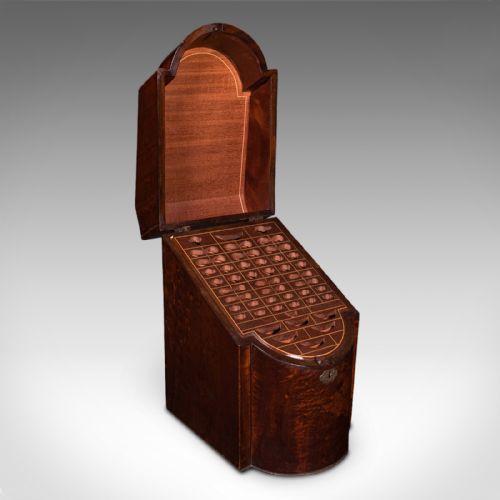

English Inlay Box
An English inlay box brings together fine cabinet-making and intricate geometric or floral decoration, offering a handsome place to store letters, jewellery or tea.
English Inlay Box
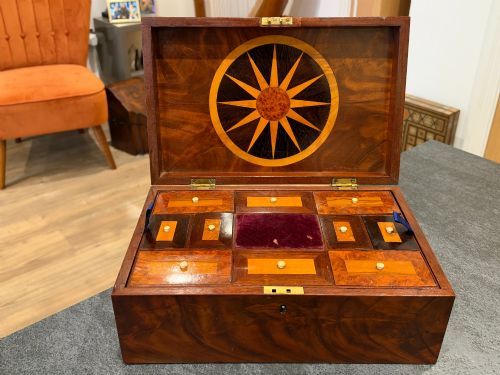
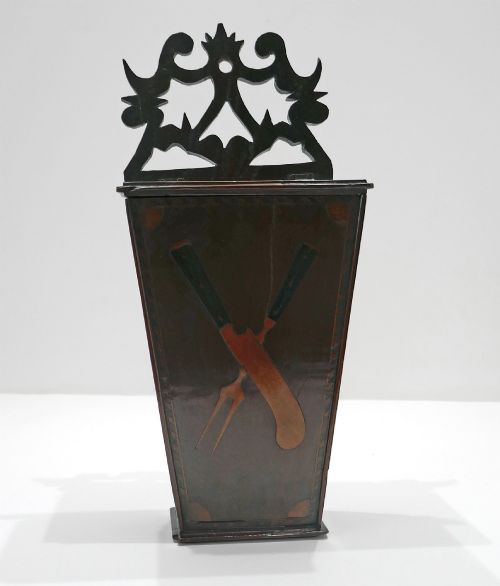
An English inlay box encompasses a variety of functional receptacles created to hold personal valuables, writing equipment, cutlery or tea. Examples range from compact trinket containers and glove boxes to larger tea caddies and fitted writing slopes.
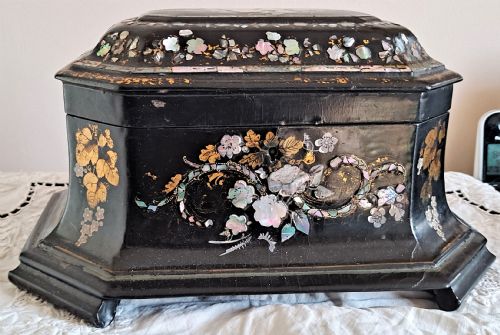
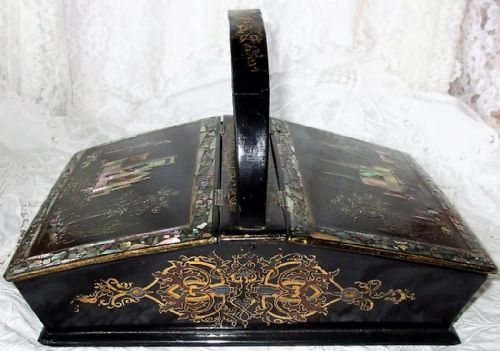
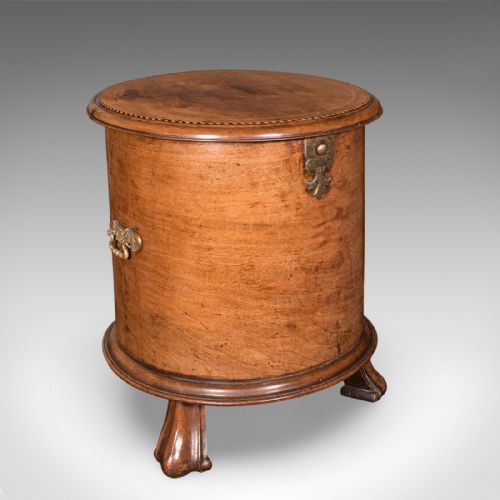
The pieces appearing here span several centuries, with particular concentrations from the Georgian, Regency and Victorian eras. Buyers frequently encounter rosewood and mahogany carcases embellished with contrasting light woods, brass or mother-of-pearl.
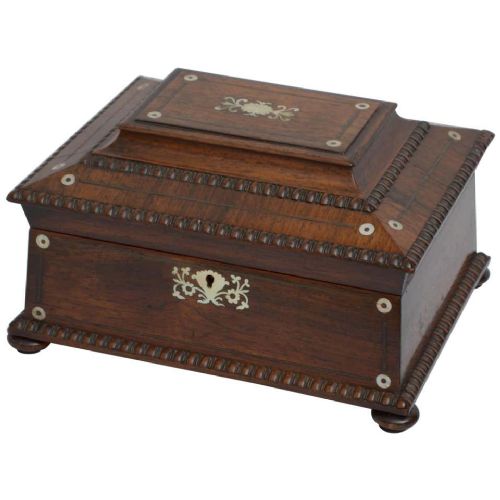
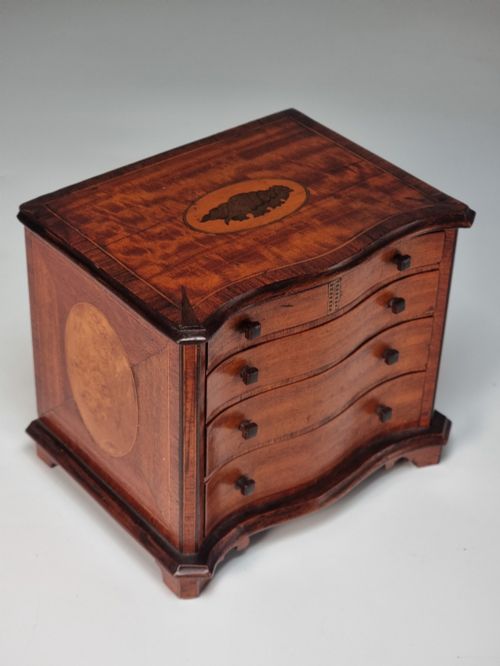
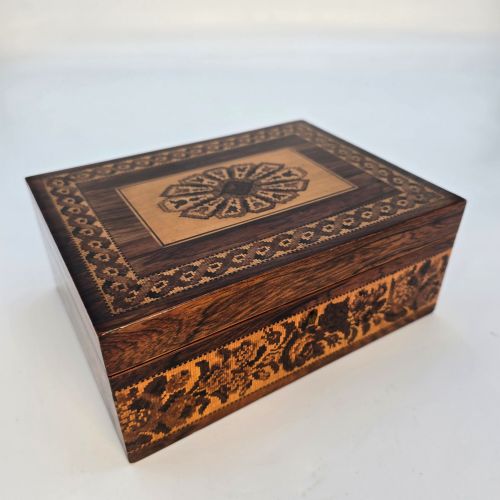
Forms are dictated by their original domestic uses, leading to compartmentalised tea chests, sarcophagus-shaped caddies, and miniature chests of drawers. Each box reflects the prevailing stylistic tastes of its period, from neoclassical satinwood banding to ornate Tunbridge Ware mosaics.
How they were made
Cabinet-makers constructed the carcase from solid timbers such as mahogany, walnut or rosewood, often applying fine veneers to curved or flat surfaces. Tunbridge Ware pieces utilised hundreds of tiny, individually dyed wood blocks to build up pictorial mosaics or geometric tessellations.
Inlay work involved recessing contrasting materials like boxwood, ebony, bone or mother-of-pearl directly into the wood ground. Regency and Victorian makers frequently combined these wooden veneers with finely engraved brass stringing and cut-brass scrolls.
English Inlay Box Retail Price Guide 2026
Typical asking prices for english inlay box among the pieces listed under this phrase on Sellingantiques today, from the lower quarter to the upper quarter. They describe what is for sale here now, not the wider market.
What varies in quality
The standard of an English inlay box rests on the precision of the joinery and the sharpness of the contrasting wood or metal insertion. Superior examples display tight, seamless joints where the inlaid elements sit perfectly flush with the surrounding timber grain.
Quality also shows in the complexity of the interior fittings, such as original velvet linings, mirrored compartments, cut-glass mixing bowls in tea caddies, and working brass locks with matching keys. Hand-engraved detailing on brass cartouches and escutcheons further separates standard production items from masterwork pieces.
Edmund Nye·Henry Hollamby·A. F. Lloyd·Waring & Gillow
The English Inlay Box Glossary
- Tunbridge Ware
- A specialised form of woodwork originating from Kent, featuring mosaic decoration made from thousands of minuscule pieces of naturally coloured wood. It creates detailed pictorial or geometric surface patterns.
- Tea Caddy
- A container designed originally to store loose tea leaves securely under lock and key. Many surviving examples feature internal partitions or mixing bowls.
- Writing Slope
- A portable desk that opens to reveal a slanted writing surface, inkwell recesses and compartments for stationery and letters.
- Escutcheon
- A protective plate surrounding a keyhole, often fashioned from brass or bone and occasionally integrated into the surrounding inlay design.
- Sarcophagus
- A box style featuring a stepped, domed lid resembling a stone coffin, popular during the Regency and William IV periods for tea storage.
English Inlay Box: Frequently Asked Questions
What were tea caddies used for?
Tea caddies served to store expensive black and green teas safely in the Georgian and Victorian drawing room. Because tea was a precious commodity, these containers were routinely fitted with working locks to prevent servants or guests from taking the contents.
Inside, the boxes usually featured lidded compartments or canisters to keep different varieties separated and dry. Some caddies also included a central glass bowl used for blending leaves before brewing.
How do I care for rosewood and walnut boxes?
These wooden boxes require stable indoor humidity away from direct sunlight and heat sources to prevent the veneers from drying out or warping. Gentle dusting with a dry, soft cloth is normally sufficient for routine maintenance.
Avoid applying modern silicone polishes, as they build up residue over time. A light application of microcrystalline wax can help preserve the polish on older wood surfaces.
What is the difference between inlay and marquetry?
Inlay involves cutting recesses into a solid wood base and fitting contrasting materials like brass, mother-of-pearl or light woods directly into those cavities. It results in crisp geometric lines and stringing patterns.
Marquetry, by contrast, assembles an entire picture or pattern from veneered sheets on a backing board before applying the completed design to the carcase. Tunbridge Ware represents a specific, highly detailed form of this mosaic craft.
How can I tell a Regency box from a Victorian one?
Regency boxes, dating from the early nineteenth century, typically favour architectural forms, rosewood carcases, and precise brass inlay or lion-paw feet. Their lines tend to be clean, geometric and heavily influenced by classical revival styles.
Victorian pieces often embrace greater ornamentation, including heavy burr walnut, elaborate sarcophagus shapes, papier-mâché, and intricate Tunbridge Ware mosaics. Interiors from the Victorian era also show more diverse internal fittings for sewing, correspondence and jewellery.